South Australia has declined to commit to the proposed national firearms buyback scheme, as a key March 31 deadline for agreement between the Commonwealth and the states passed without resolution.
The Federal Government has been seeking a 50–50 funding arrangement with states and territories to support the buyback, but a lack of consensus has cast doubt on whether the scheme will proceed in its current form.
South Australian Police Minister Michael Brown confirmed that the state would not sign on without further consultation, and emphasised that no changes to firearm laws are currently being considered.
“South Australia already has some of the strongest firearms laws in the country,” Mr Brown said, pointing to strict fit-and-proper-person requirements, time-limited licences, and ownership limited to citizens and permanent residents.
“We’re proud that many of our laws are now being looked at as a model nationally.”
Mr Brown made it clear that the state would not support any reform without proper stakeholder engagement.
“The state government will not sign up to any firearms reform proposal that requires regulatory change before undertaking genuine consultation,” he said.
He also noted that without a clear national position, it would be premature for South Australia to commit to the buyback.
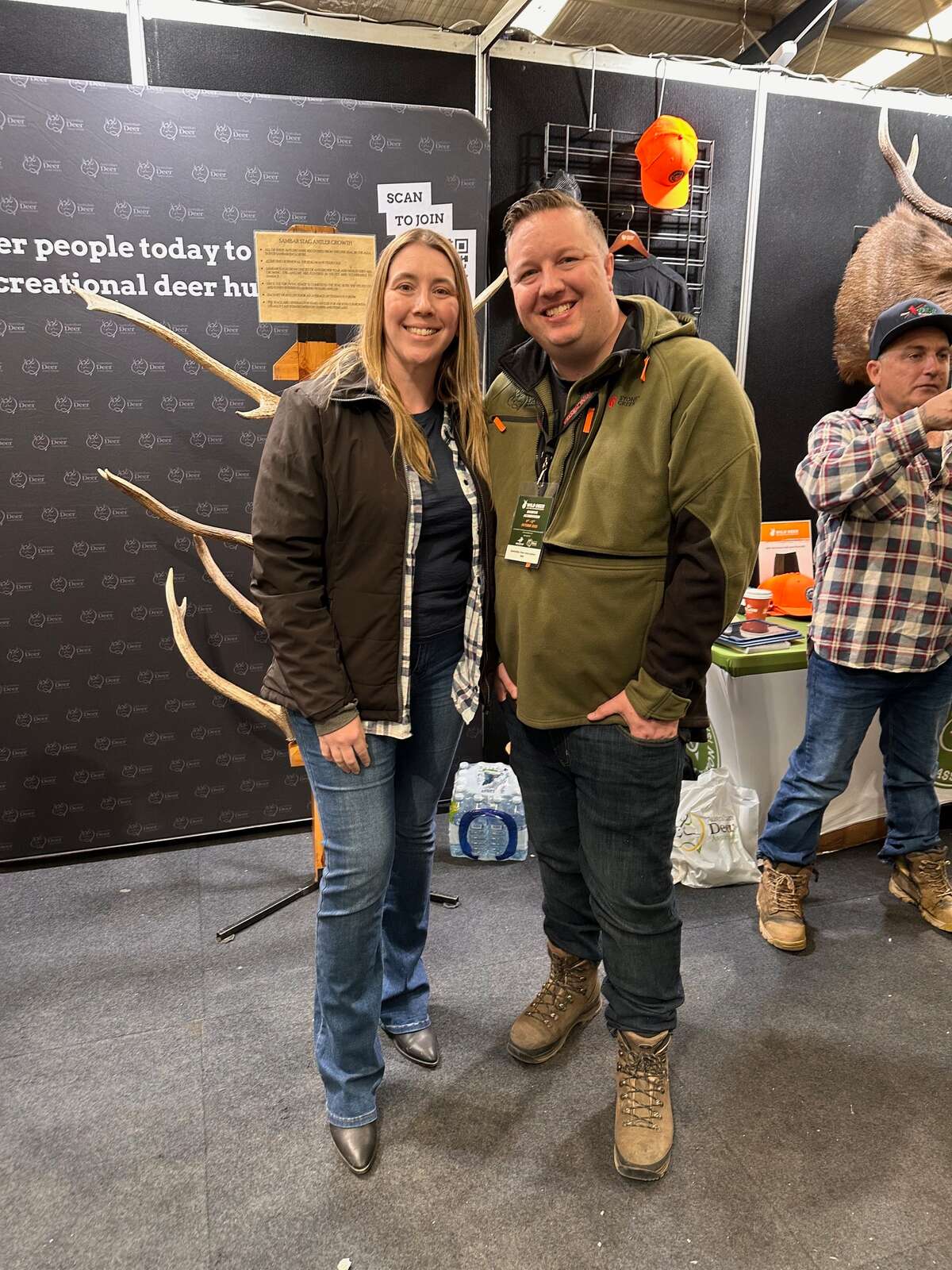
The Australian Deer Association (ADA) welcomes the appointment of Board member Naomi Jackson to the New South Wales Game and Pest Management Advisory Board.
Established under the Game and Feral Animal Control Act 2002, the Advisory Board provides independent advice to the NSW Minister for Agriculture and the Department of Primary Industries on regulated hunting and pest animal management.
The Board plays a key role in shaping policy, influencing pest management strategies, and ensuring the interests of licensed hunters are considered in government decision-making.
Naomi’s appointment reflects her strong leadership within the hunting and conservation community and reinforces the importance of having informed, experienced voices at the policy table.
This appointment is particularly significant for the ADA and the broader deer hunting community. Representation on the Advisory Board ensures that deer hunters are not only included but actively heard in decisions that directly impact hunting access, regulation, and the future of sustainable game management in New South Wales.
At a time when hunting policy continues to evolve, it is critical that practical, on-ground perspectives are part of the conversation. Naomi strengthens dedicated ADA and deer-hunter representation, helping ensure policy is informed by real-world experience, ethical hunting practices, and a commitment to conservation outcomes.
The ADA looks forward to Naomi's contributions in advocating for responsible hunting and ensuring deer hunters have a strong, credible voice in the future of game and pest management in NSW.
It all starts in the pitch black before dawn with a hot chocolate and a coffee.
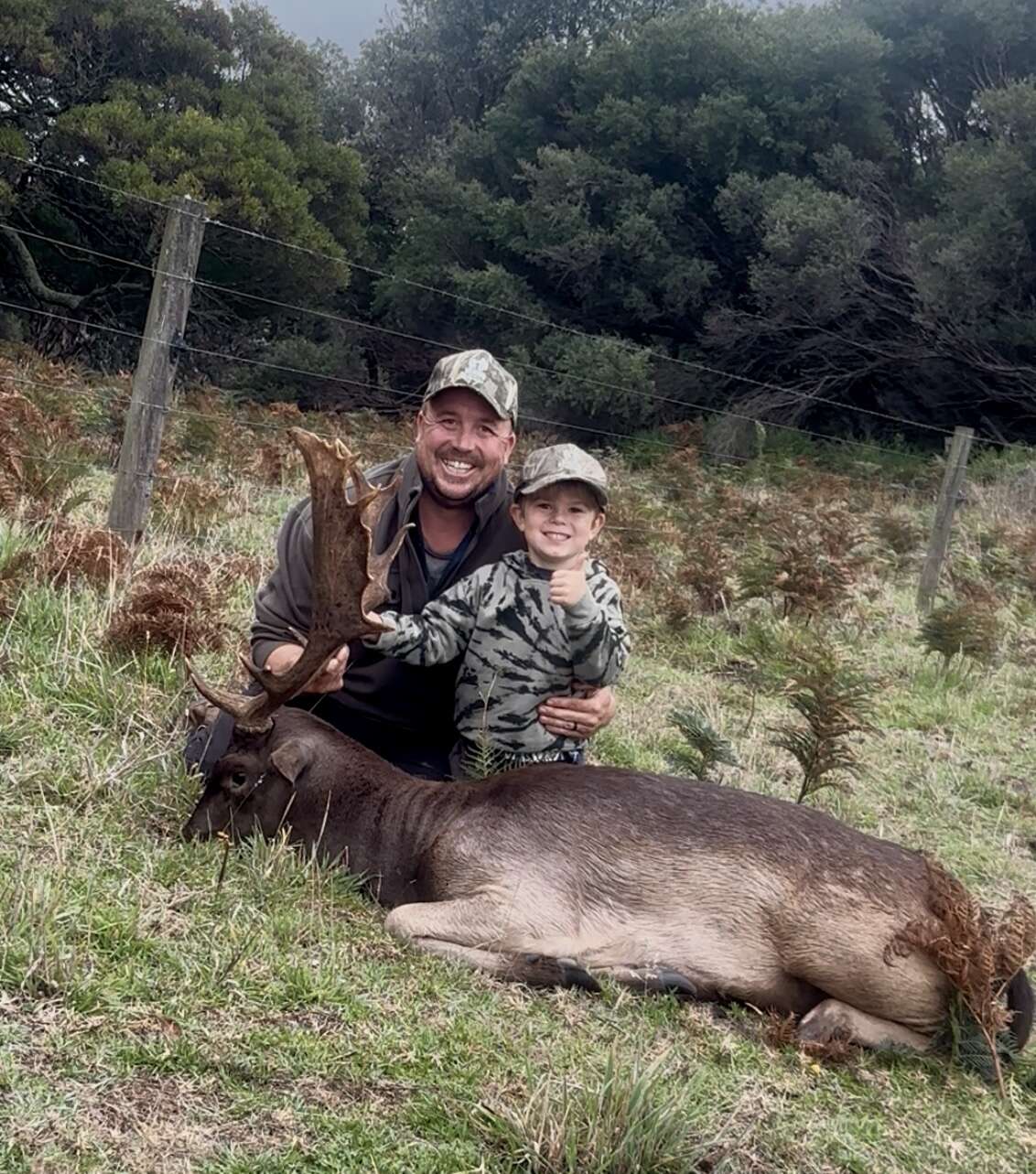
We arrived at a friend’s property to chase some meat for the freezer. A proud Dad and an excited 4-year-old left the car on first light. The old tradition of following your Dad’s footsteps and trying to be quiet while asking a thousand questions.
We found a group of young fallow does on top of a hill. I was teaching Ned as to why we were waiting until they move below the crest so they have a backstop. With Ned’s approval we selected a young doe. Earmuffs on and a soft squeeze on the trigger the job was done.
With big smiles and a hug we shared the moment. Then while looking for young Ned’s nerf bullet in the grass, which he had fired as the does departed, we spotted two bucks walking side by side down the far end of the paddock.
With a short run (long for little legs) we got to the rise where we could take a shot. Only one buck was still in the paddock. I got into position. I glanced back at Ned to see if he was ready, with his earmuffs on he gave me a thumbs up. Another squeeze of the trigger on the Sako .243 and the job was done once again. Then that moment, the high fives and hug.
The long walk back to the car was made easier with a very happy boy and a proud Dad.
On the way out we saw our friend and Ned explained to him the events of the morning and losing another Nerf bullet. Once home Ned couldn’t wait to tell Mum and Sis about his morning and we re-lived it all once again.
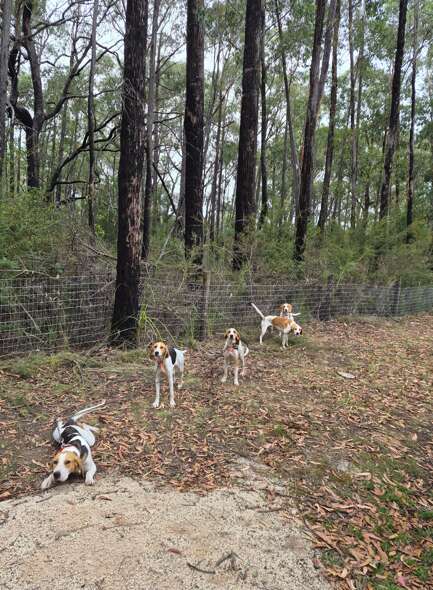
On Sunday, February 22, 2026, the Australian Deer Association (ADA) hosted another hound assessment day at the Tonimbuk Hall. The Tonimbuk Hall location has served as a valuable venue for the ADA's hound assessments for nearly 50 years.
Traditionally held on the last Sunday of February, the assessment day is ever popular with hound owners who are keen to have their hounds assessed early before the season and beat the crowds and any of summer's heat.
This year reflects a change in prescribed breeds, with black and tan and blue tick coonhounds now being available to use by hound hunters.
The Harrier remains the most popular breed of hound by far for hound hunting, with around 71% of hounds registered being Harriers.
This is down to the Harrier being incredibly well-suited to the Australian bush: long enough in the legs to athletically manoeuvre through both thick scrub and fallen trees, yet not a heavy-set hound that can impact endurance. Their smaller size also makes them much easier to handle; smaller crates are required, and ultimately, they are more affordable to manage as a pack, making them the obvious hound of choice for most.
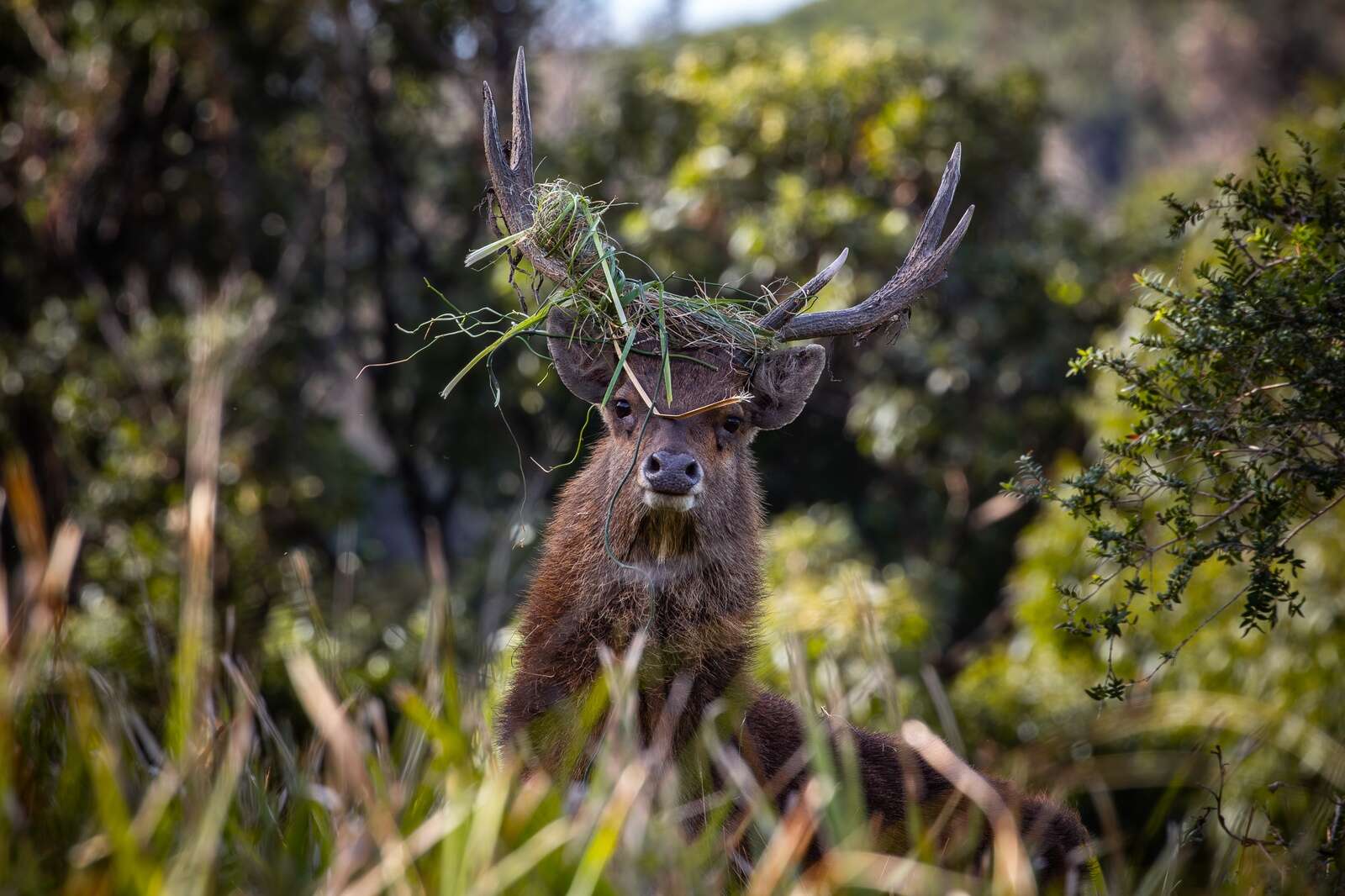
Two members have had cool encounters with rusa stags around the time of the rut.
Rob Harvey set up fully camouflaged watching over a small grassy clearing and had been there for a few hours. He heard movement in the nearby heavy thick cover, then suddenly a loud rusa stag bellow filled the air. With loud crashing a hind rushed out followed by the mature stag. Rob had to compose himself as everything was happening very quickly and he did not want to miss the moment. With the Nikon camera set up on the tripod he took a series of photos then, as they had both locked eyes on Rob, both deer bolted back to the safety of the rainforest. An amazing experience according to Rob.
Then Douglas Simkin took this photo of a decent rusa stag in the Illawarra with the rut round the corner.
Recreational hunters and motorists across Tasmania’s Central Highlands have earned praise for their responsible and law-abiding behaviour as the 2026 deer season got under way.
Over the opening weekend (February 28 to March 1), Tasmania Police partnered with Tasmania Parks and Wildlife Service (PWS) compliance officers and Transport Tasmania in a large-scale traffic operation designed to promote safety on regional roads and support lawful hunting practices.
Senior Constable Jessica Weston highlighted the overwhelmingly positive outcomes of the operation, noting that “the vast majority of motorists and hunters were found to be operating within the law.”
More than 300 vehicles were stopped and checked as part of the coordinated effort, which included random breath tests, drug tests, vehicle safety and compliance inspections, and firearm checks. Remarkably, there were no drink or drug driving detections, a strong indicator that road users were taking safety seriously during the busy opening weekend.
“We commend those who were adhering to regulations and hunting responsibly,” Senior Constable Weston said, thanking the public for their cooperation.
While a small number of vehicle defect notices were issued and one speeding matter was recorded, officials stressed that these points of concern were far outweighed by the positive conduct of the community throughout the operation.
The successful weekend underscores the strong working relationship between enforcement agencies and the broader hunting community, with joint efforts continuing throughout the season to raise awareness of hunting regulations and firearms safety.
Hunters and members of the public are encouraged to continue observing all safety and legal requirements, and to report any concerns about non-compliance through established channels.
As deer season progresses, Tasmania’s responsible hunters and road users are demonstrating how recreational activities can be enjoyed while prioritising safety, respect for the environment, and community cooperation.
It is exciting to see the Gippsland branch of the Australian Deer Association (ADA) taking its first steps in a much-anticipated comeback, once again representing local members and deer hunters across the region.
The revival began after a discussion at a Westernport branch meeting, which prompted me to reach out to local hunters interested in re-establishing a strong Gippsland presence. I was fortunate to connect with a small but passionate group of volunteers who have stepped up with real enthusiasm. We now have an excellent home base at Willow Grove, providing the perfect foundation to build our local community.
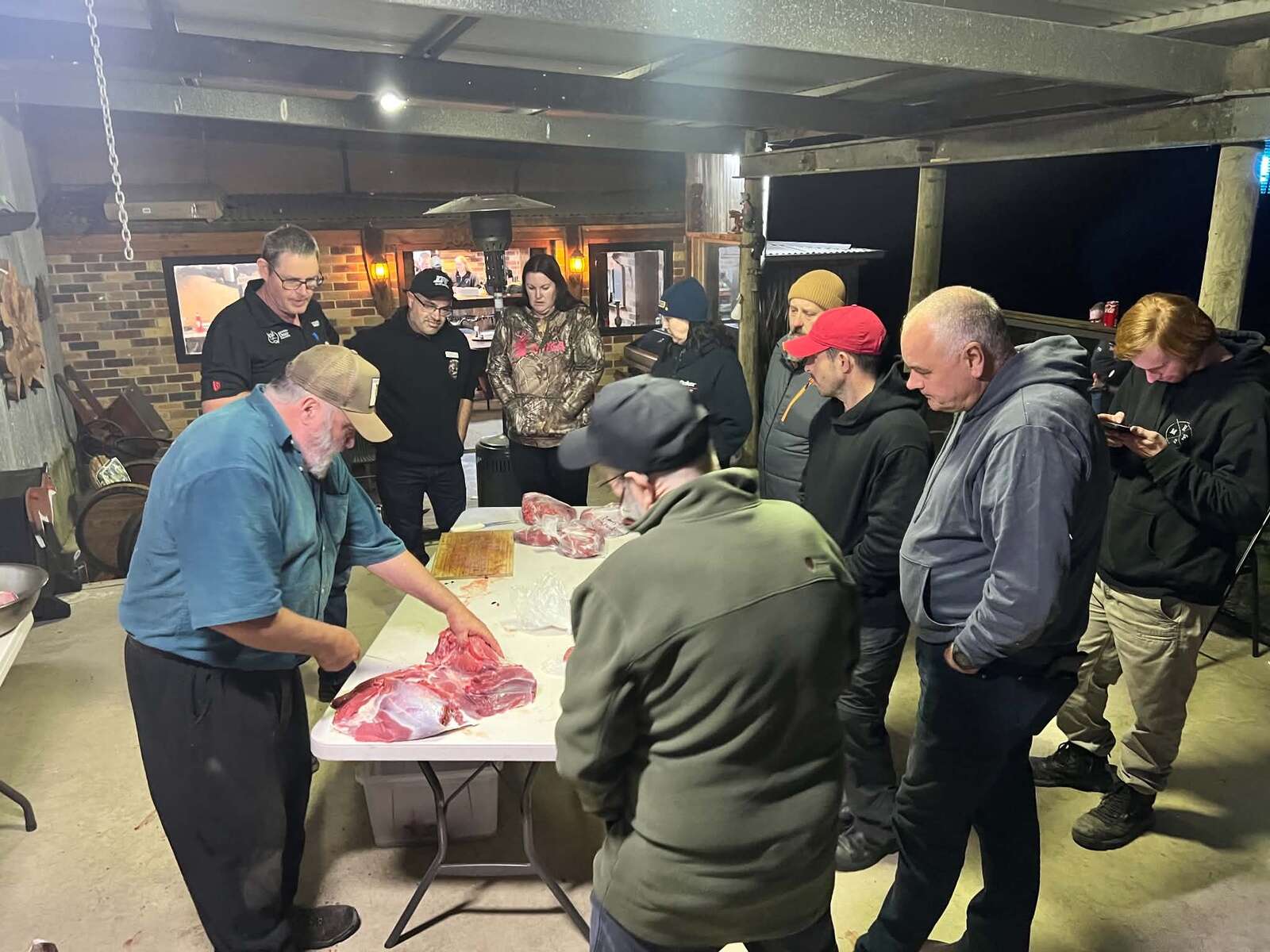
Our second meeting for the year featured a standout event: a butchery and caping demonstration by Peter Christian from Noojee. It was, without doubt, one of the best demonstrations I have ever seen — highly informative, showcasing exceptional knife skills, and delivered with plenty of humour that kept everyone engaged.
As someone who unfortunately missed the previous Gippsland branch meetings, I used the opportunity to present the fundamentals: different ways to hunt deer and, most importantly, what to do with your animal after a successful harvest. Pete then showed us the practical steps for getting the deer home cleanly and safely.
Our next meeting promises to be another highlight, with the legendary game chef Ross O’Meara joining us to share ideas on cooking with venison. I attended one of Ross’s presentations a few years ago and I’m still regularly using the tips and recipes I learned that night. I have no doubt he will deliver another memorable and practical session.
We look forward to hosting many more successful meetings and, most of all, welcoming both existing ADA members and potential new members to the Gippsland branch. If you’re in the region and passionate about deer hunting, we’d love to see you at our next event.
The Gippsland branch is back — and it’s off to a very promising start.
TASMANIA MOVES ON FIREARMS LAW CHANGES
Tasmania’s Liberal Government has flagged a suite of firearms law changes that will directly affect a segment of the hunting community, particularly those using modern straight-pull and lever-release firearms.
Announced in February, the reforms are being positioned as a public safety measure, but they also represent one of the most significant shifts in Tasmanian firearms regulation in recent years.
The key change for hunters is the proposed reclassification of certain centre-fire rifles and shotguns - specifically straight-pull and button or lever-release designs. Under the proposal, these firearms would move into Category C, a licence class generally restricted to primary producers and a limited group of occupational users. For many recreational hunters, that effectively removes access unless they meet those criteria.
For those currently using these platforms, the change creates a clear decision point: transition to another firearm type, seek eligibility under Category C, or exit ownership through the buyback. To support the transition, the Tasmanian Government has committed to an uncapped buyback scheme, meaning there is no overall spending limit on compensation.
Importantly, the scheme's structure distinguishes between mandatory and voluntary participation. Firearms that are reclassified under the new laws will be eligible for compensation at 1.5 times their assessed market value. This premium is intended to recognise that owners are being required to surrender firearms that were lawfully acquired under previous regulations.
Separately, a voluntary buyback stream will operate alongside the reforms. Firearms not directly affected by reclassification can be surrendered under this scheme at standard market value, based on make, model, condition and prevailing prices in the commercial and second-hand market.
While detailed valuation tables are yet to be released, the government has indicated the process will reflect real-world pricing rather than flat-rate payouts. The scheme is also expected to include relevant parts and accessories captured by the reclassification, such as detachable magazines, with final definitions to be confirmed in legislation.
For hunters, the key takeaway is that those forced to relinquish affected firearms should receive above-market compensation, while others can exit ownership at fair-market rates if they choose.
Beyond firearm categories, the package includes tougher penalties for theft and illegal possession, as well as expanded enforcement powers. Licensing requirements are also set to tighten, with Australian citizenship expected to become the default standard and increased background checking and information sharing between jurisdictions.
These measures are aimed at criminal misuse rather than licensed owners, but they will add another layer to the administrative side of firearm ownership.
One point of note is what hasn’t changed. The Tasmanian Government has confirmed it will not introduce limits on the number of firearms an individual can own, rejecting calls for numerical caps. For hunters, particularly those managing different calibres and setups for varied game and terrain, this maintains an important level of flexibility.
For most deer hunters, the immediate impact will depend on equipment choice. Those running traditional bolt-action rifles are unlikely to see any change. However, hunters using modern straight-pull or lever-release platforms - often valued for fast follow-up shots - will be directly affected.
The buyback offers a pathway out, with above-market compensation for reclassified firearms, but replacement options may be more limited depending on individual preferences and licensing pathways.
The legislation is expected to be introduced later in 2026, with further details to come around definitions, valuation processes and implementation timelines.
As always, the detail will matter. Hunters in Tasmania, and those watching from interstate, will be closely watching how the final laws are drafted and how they balance public safety with the realities of lawful firearm use in the bush.