I’ve been hunting for forty years, but for various reasons had never hunted sambar. That’s mainly because they weren’t to be found on the private properties I hunt, with plenty of other game to chase. We are so fortunate in Australia to have such a wealth of accessible hunting opportunities. But after seeing so much great content in Australian Deer magazine and online, and hearing exciting stories at ADA ACT and Southern Highlands meetings, I’d decided 2025 was the year to add sambar to my repertoire. I re-read Errol Mason’s Secrets of the Sambar and started looking in likely places, helped of course by the massive increase in sambar range and numbers in recent years.
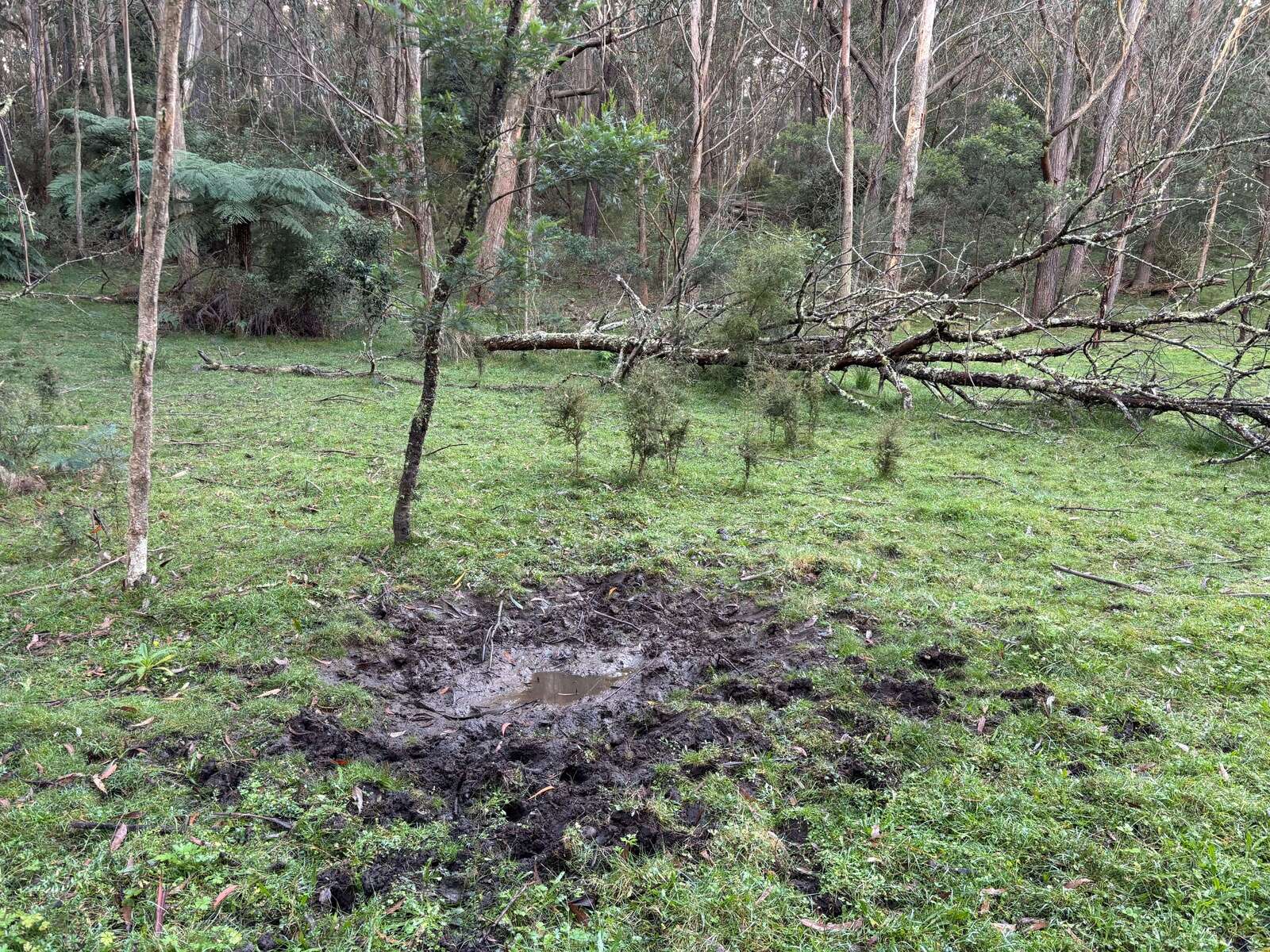
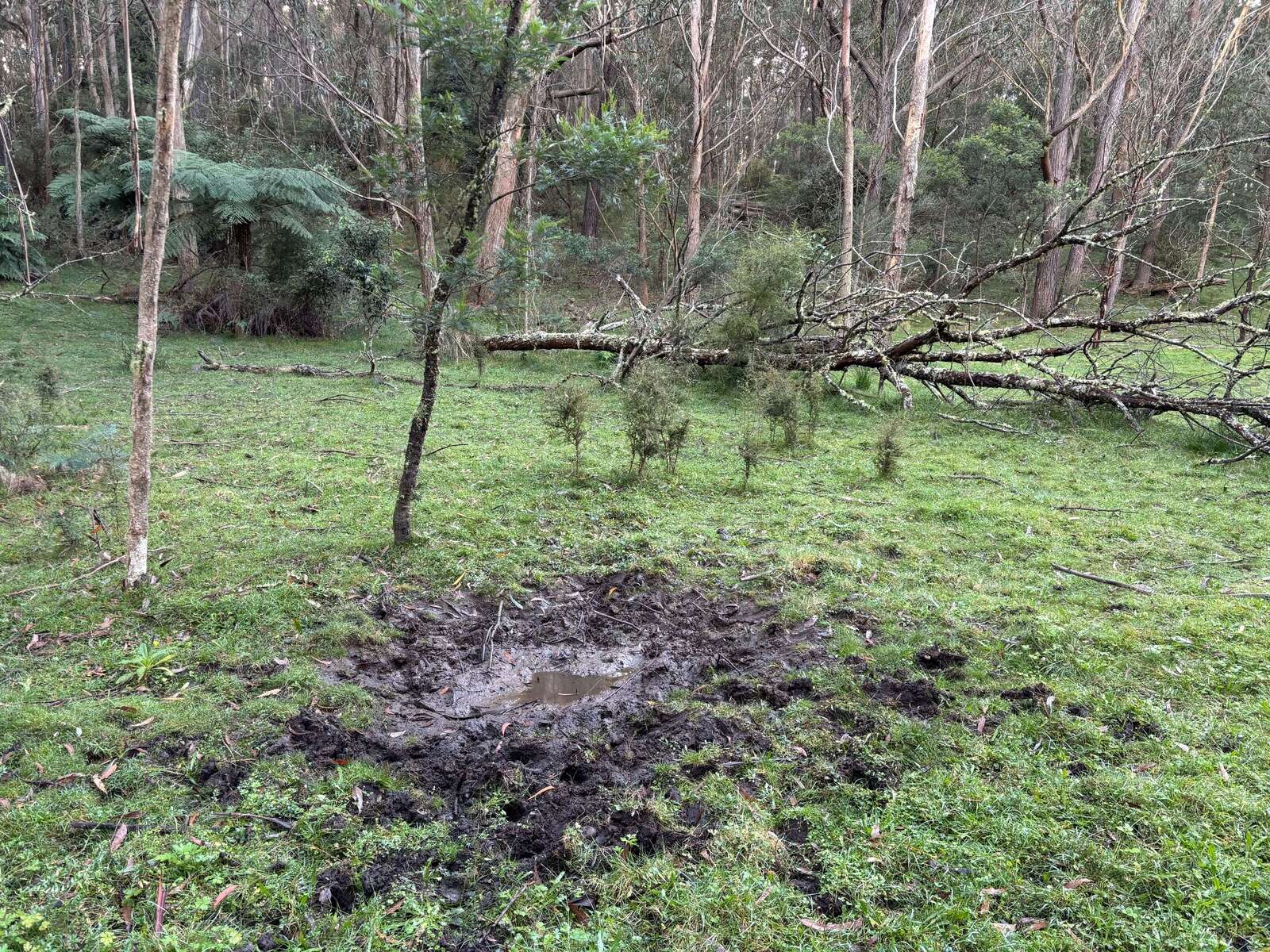
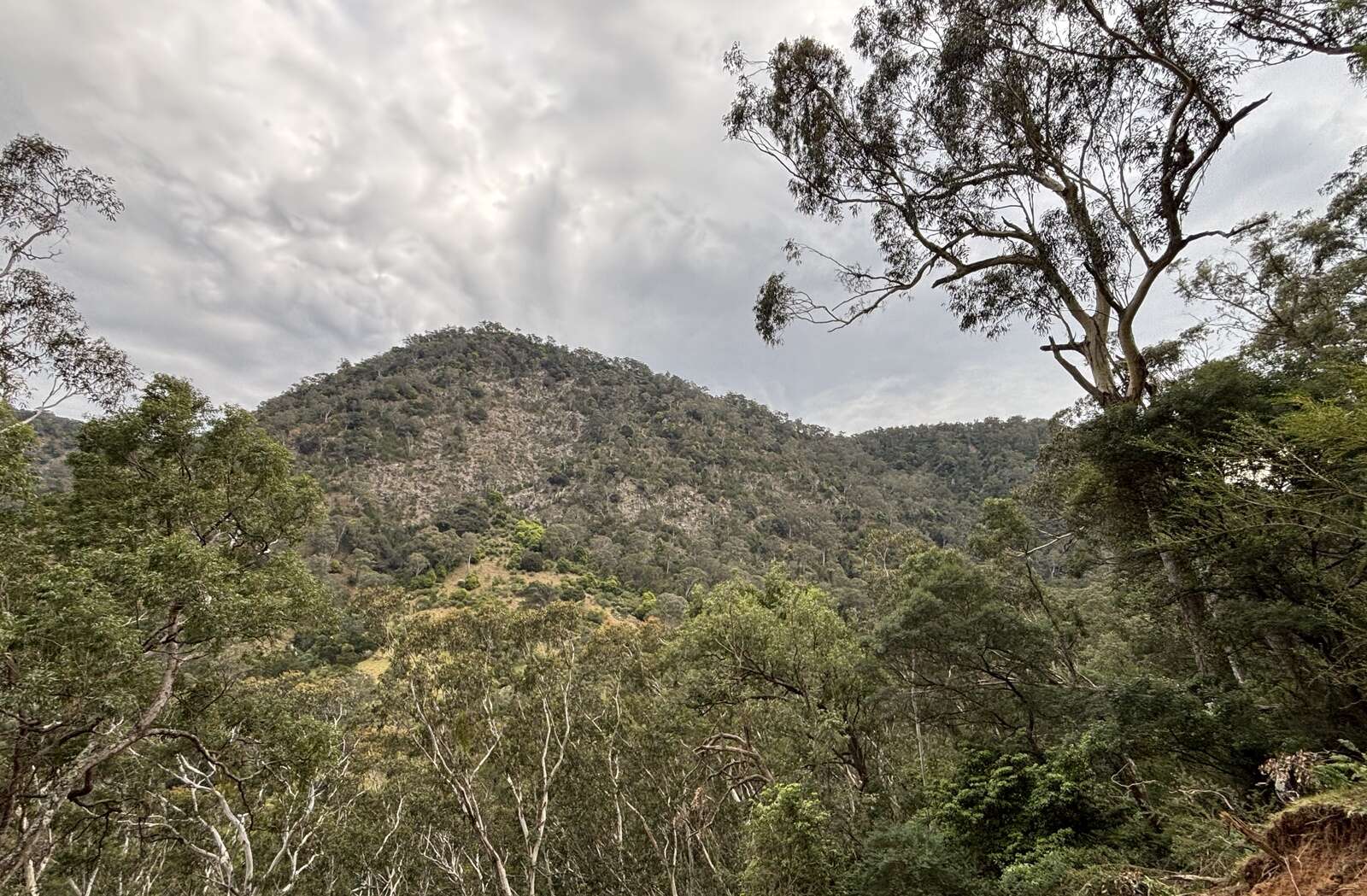
One of the more rugged properties I hunt has steep country and thick forest in the Dividing Range where it approaches the NSW South Coast. The farmer had told me about ‘big deer’ being seen around, which could mean sambar, reds or rusa, all of which were an exciting prospect. I headed out for a look and pushed up into the more isolated back country. It was a beautiful area to hunt, with massive trees, occasional grassy clearings, and expansive views. I didn’t see any deer but found a couple of well-used wallows and trails, and generally got the lay of the land. I set up some trail cameras, really curious to see what was there.
A few weeks later I was back, accompanied by friend Simon who’d recently returned to hunting after many years of other pursuits. We were kindly given the use of a well-appointed hut on the edge of the property with a view across the range. We hunted up to my trail cameras and eagerly downloaded the results. Not many photos, but a young red stag had been around, plus the occasional boar, and a couple of dingoes. There were quite a lot of days when nothing was seen, emphasising the challenge of hunting in this area. I’d figured that red deer were the least likely species to find there, but the photographic evidence was clear, so I guess I fixated on that expectation. We didn’t see any deer ourselves, but enjoyed the companionship and time outdoors, plus a great meal and a couple of beers in front of the pot belly stove in the hut.
Not long after I got a call from the farmer telling me that more ‘big deer’ had been seen on another part of the property, accessible from the bottom of the range, and encouraging me to take a look. Always happy to explore new country, I gladly accepted and was there a few days later. I’d arranged to hunt the afternoon, then stay the night nearby with a member of the farmer’s family who needed some pest control spotlighting done (with the applicable permits in place).
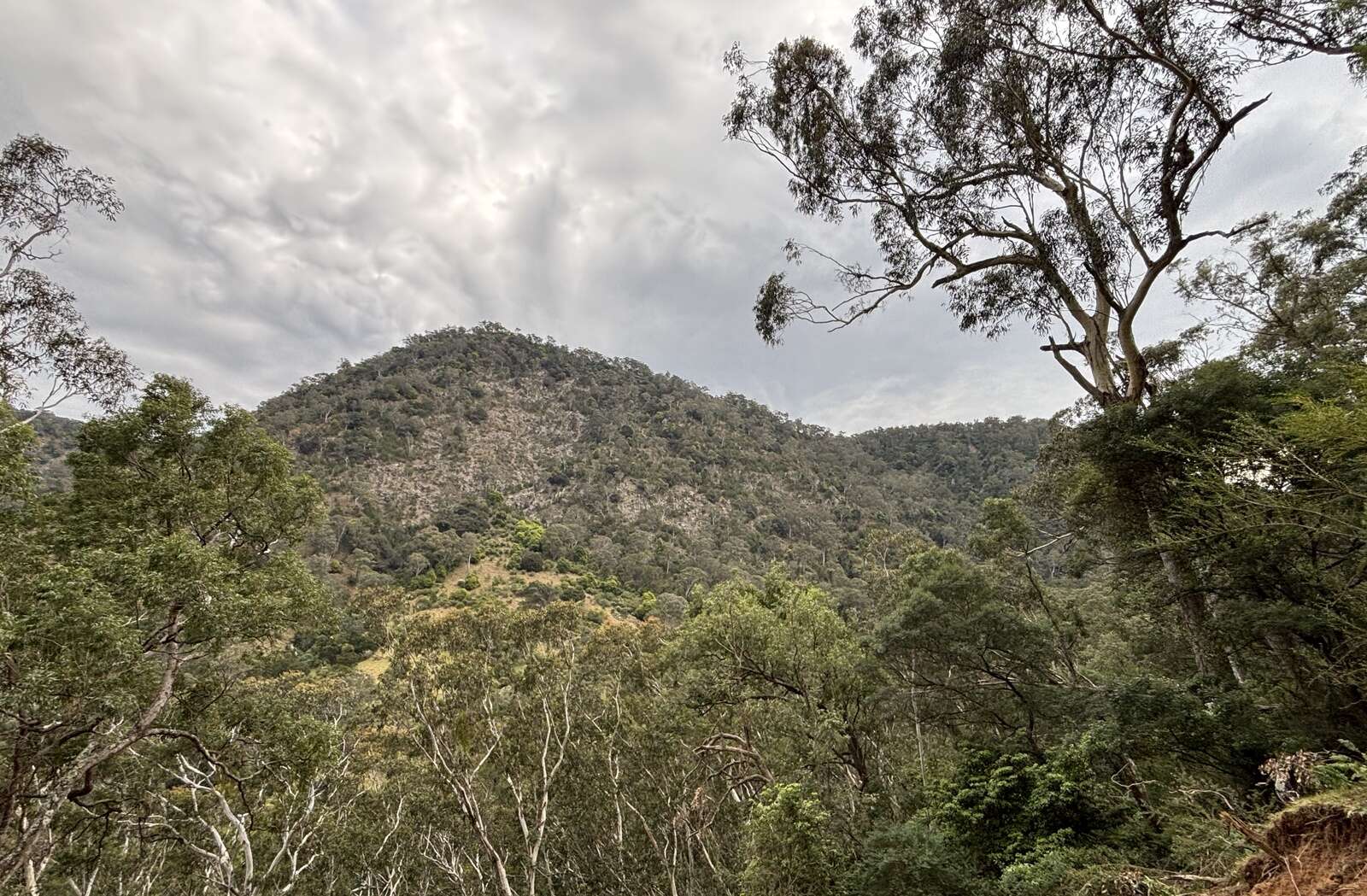
It was a majestic place, with the range looming high above and very little sign of other people having been in there. I progressed slowly along the track in my 4WD, dismounting regularly to explore promising ridges and gullies, using my binoculars constantly. I found deer prints and several thoroughly rubbed trees, all quite fresh. My sense was that there was not a high density of game, but that with patience and good fieldcraft I would find something eventually. My mind had become focused on red deer, and I was thinking how good it would be to hunt here in the roar. I envisaged hunting the same way but with the sound of roaring stags to narrow in on. In the meantime, it was a delightful afternoon, rich in promise.
Much as I enjoy the companionship of hunting with friends, I also love hunting solo occasionally. It provides a liberating combination of freedom and sole responsibility, plus an enlivening awareness of the various risks that could manifest. A younger and less sensible me had a couple of experiences where I realised that if I was seriously injured or bitten by a snake then I would have been completely on my own and in real danger. Now I am strict about always informing someone of my itinerary and carrying a personal locator beacon. My wife doesn’t love it when I go hunting alone, but she understands it’s part of who I am, and something that fills me up spiritually.
The farmer had encouraged me to keep an eye out for feral goats, and to cull any that I could. On another property he’d made good money from herding them up for sale, but this place was too rough for that. So, when I heard bleating from the hillside above me, I headed up for a look. There were plenty of scrubby gullies for them to hide in and they eluded me this time. It had been quite a climb, so I paused for a breather, sitting down against my backpack and relishing the peace of the early evening. There wasn’t much hunting light left, but I was ever hopeful and scanned the opposite side of the valley as I relaxed. And there it was, a big dark-coloured deer, laying down in a small clearing slightly above my level, clear as day, and oblivious to my presence. I could make out antlers of some sort, and my excitement level quickly rose. I quickly took a (rather distant) photo then readied myself to shoot.
Luckily there was a small knoll just in front of me, allowing me to lie down comfortably with the bipod down on my Sako 85 .270 Winchester. I had time to range the deer (180 metres), adjust my scope, align naturally onto the target, then take some deep breaths and set the trigger. I carefully sighted 1/3 of the way up his chest, in line with the front leg, and squeezed off the shot. It felt good, though he leapt to his feet immediately and ran into the trees, followed by several other deer I hadn’t seen.
In rapidly fading light I found a way through the scrub-choked gully and clambered up to where the stag had been. I easily found where he’d been lying, though there was no blood or any other sign. I searched the area for as long as I dared then descended the steep hillside before it got too dark. I hadn’t intended to come back in the morning but was able to change my plans. I felt confident that my shot had been good, albeit pensive with various doubts and eager to get back.
I made my way to the other property, where I was made very welcome with a home-cooked meal. I was tired but managed a successful couple of hours’ pest control spotlighting with my .222, to good effect. Not something I particularly enjoy, but when farmers have the necessary permits and ask for help it is a good way to reciprocate for the privilege of hunting access. Since the 2018 drought, the laws in NSW have made this a commendably straightforward process.
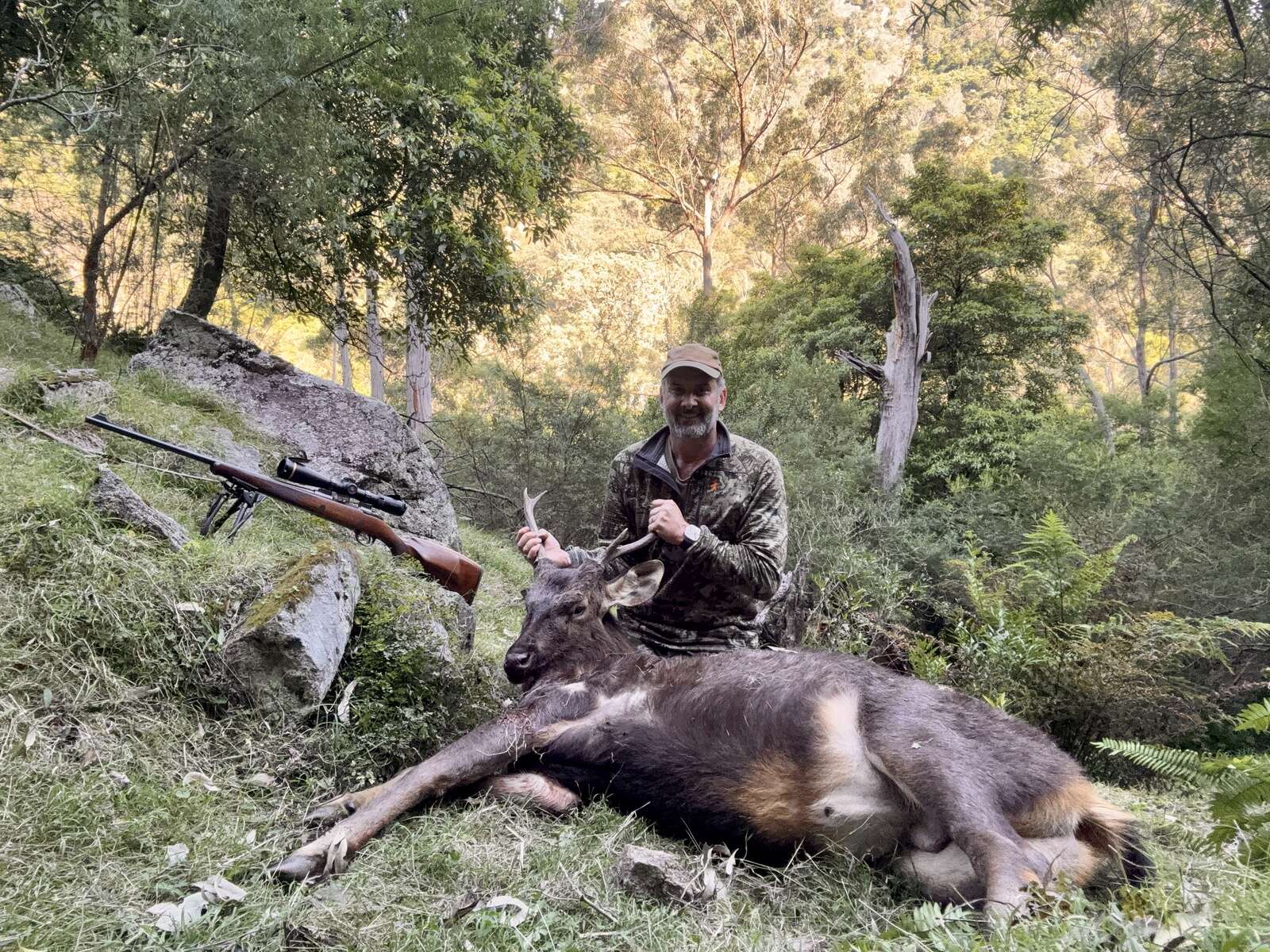
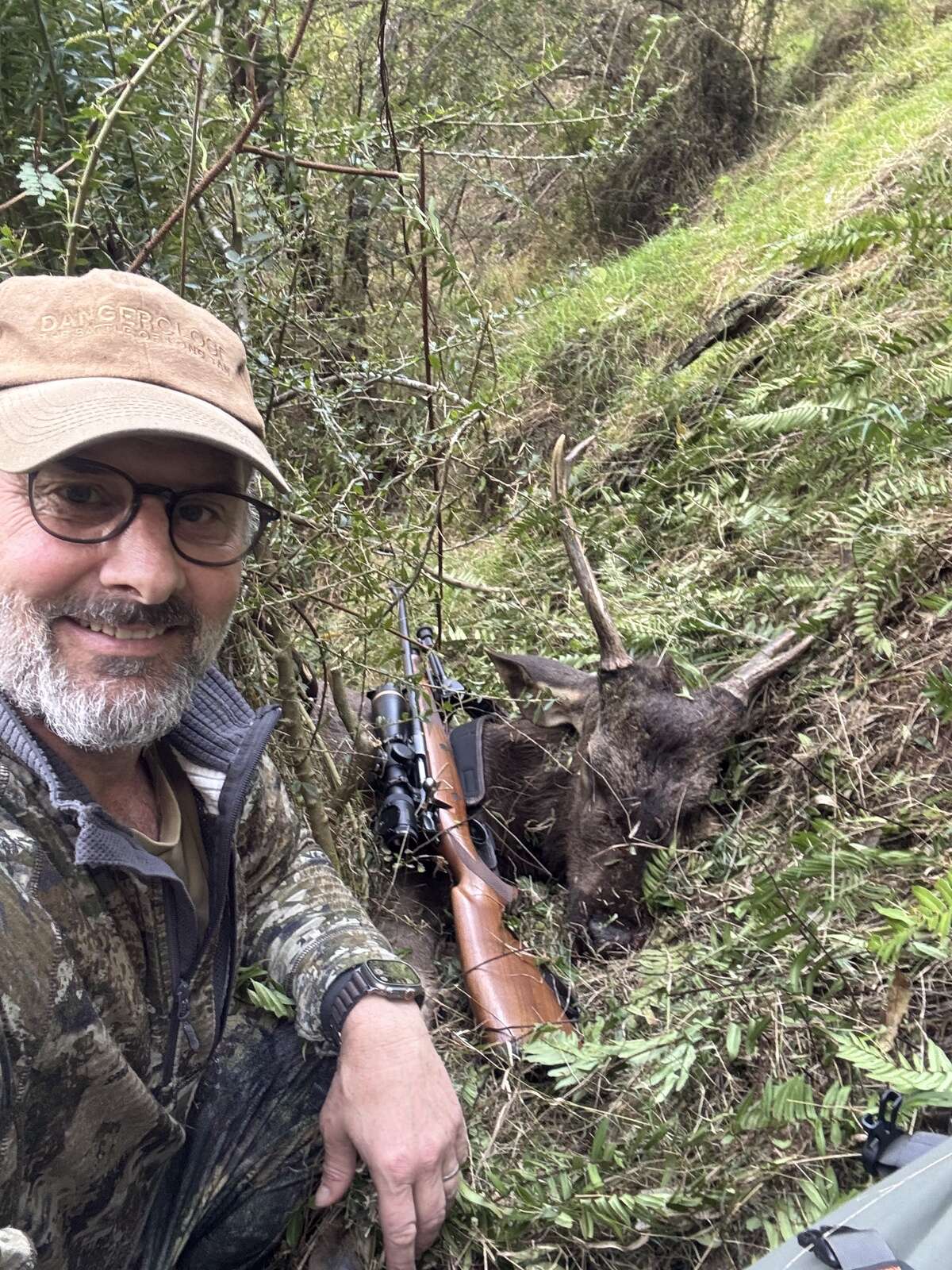
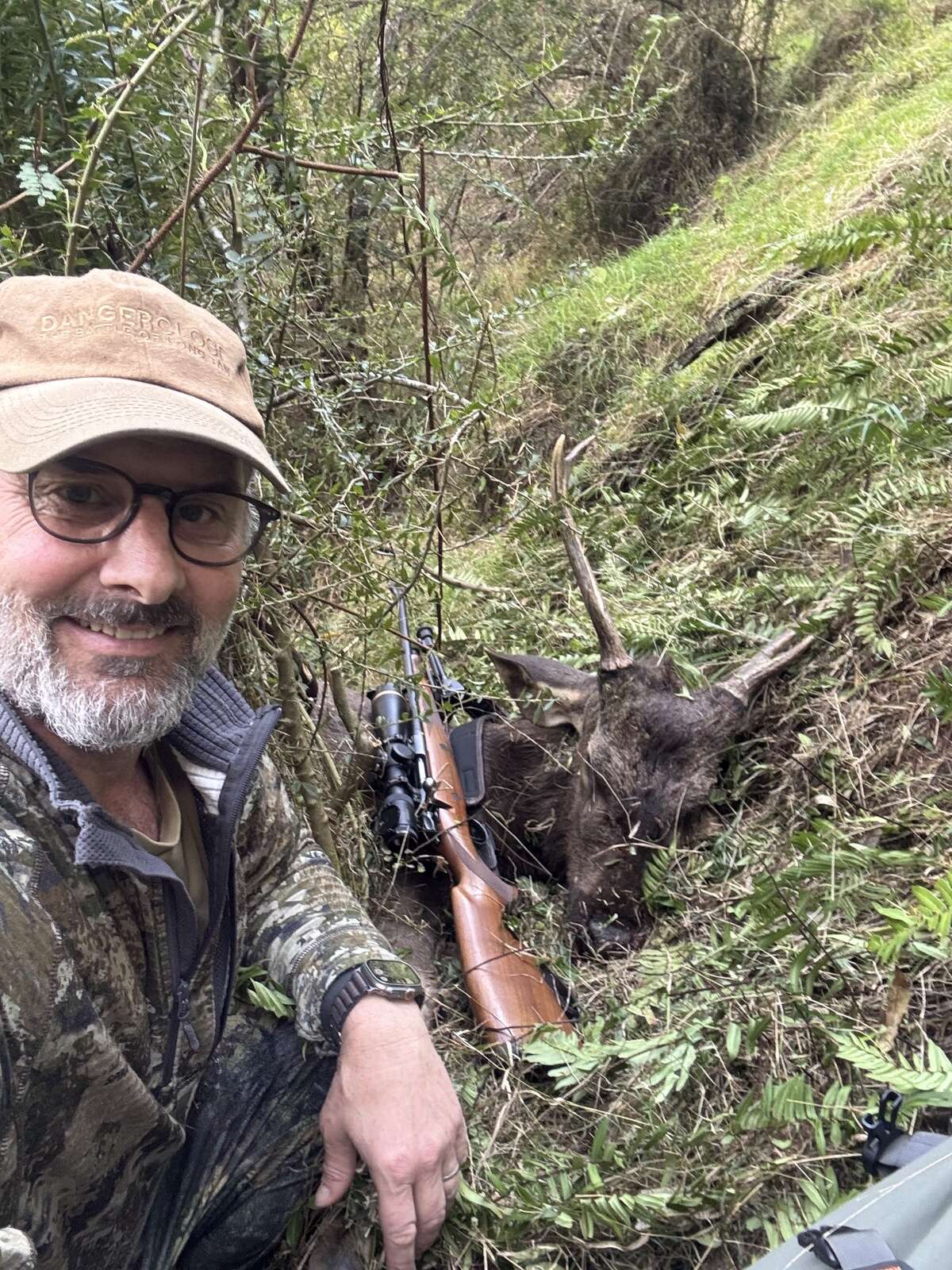
After a short night’s sleep, I was back out on the property. I searched again, going further and more widely along the direction I thought he’d run. Nothing seen, no blood, no tracks, no deer, so I was starting to feel quite concerned. I paused to gather my thoughts and try a new perspective. Something drew me to look a little further uphill, where I noticed several fresh divots in the exposed roots at the base of a large tree. As I looked, I realised these could have been from the staggering hooves of a fleeing stag. I held this image in my mind and kept going in the same direction. Fifteen metres along I saw some deep hoof prints in a patch of turf, also indicating a staggering, heavy gait. Still no blood trail, but I felt curiously sure of what I was seeing and feeling as I advanced along the same line. Sure enough, there he was, not more than 60 metres from where he’d been shot, tumbled into a gully and very much dead. Such a relief, and my goodness what an impressive beast he was.
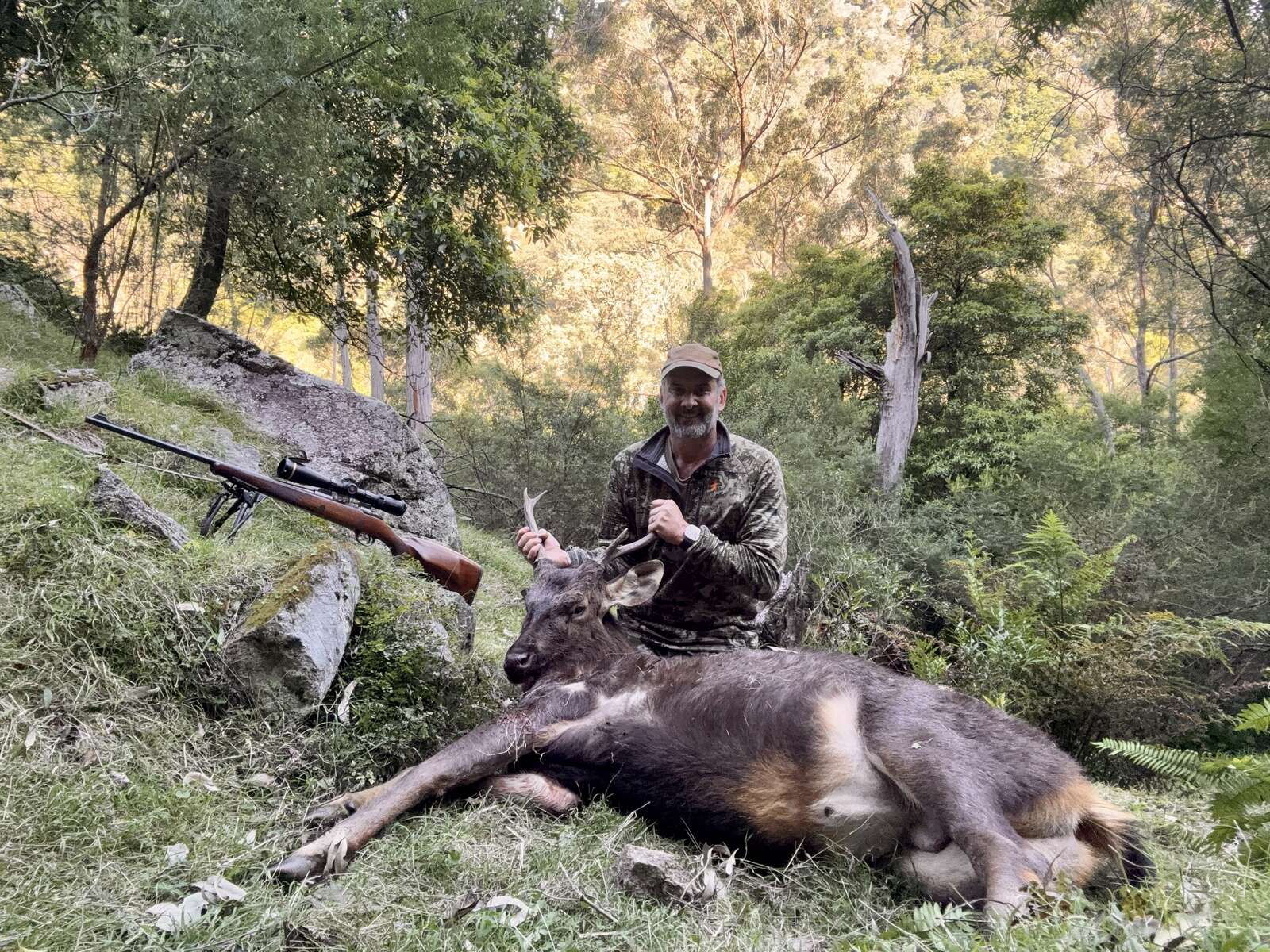
I feel foolish now recounting that I was so fixated on red deer that I initially thought that was what he was, despite the shape of his antlers. Realisation didn’t come until later when I texted photos to my hunting friends, and one of them queried the species. Of course, as the photos show, he was very much a sambar stag, albeit a youngish one with pale reddish tinges to his hair. There is a fascinating book by Nobel Prize-winning Israeli-American psychologist Daniel Kahneman called Thinking Fast and Slow, in which he describes how human beings use mental shortcuts that cause certain biases which distort our thinking. In this case, my mindset was anchored in the images of red deer on my trail camera and all my subsequent imaginings, then the confirming evidence of the red hair. Like I said, a bit embarrassing now, but that’s what happened.
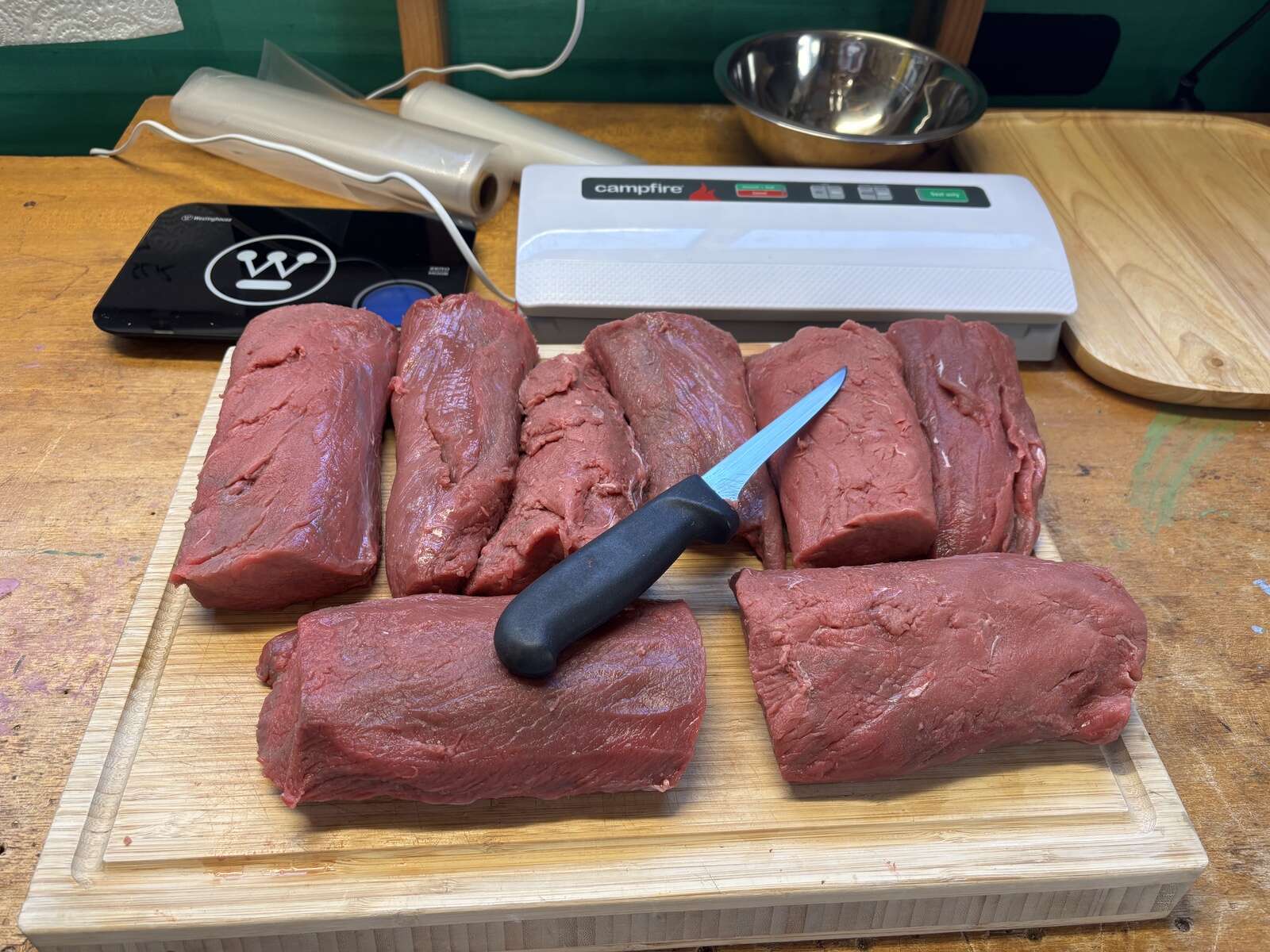
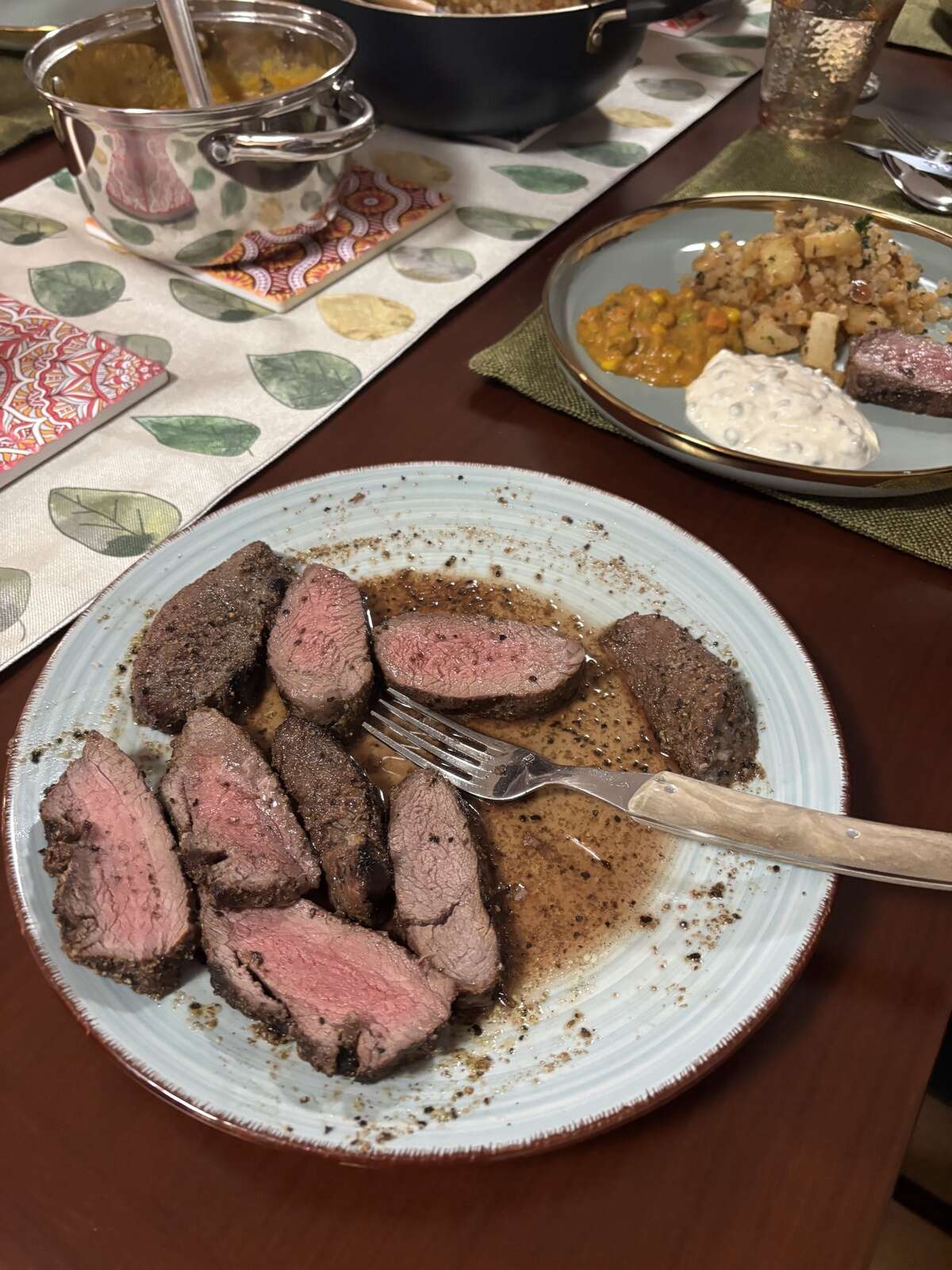
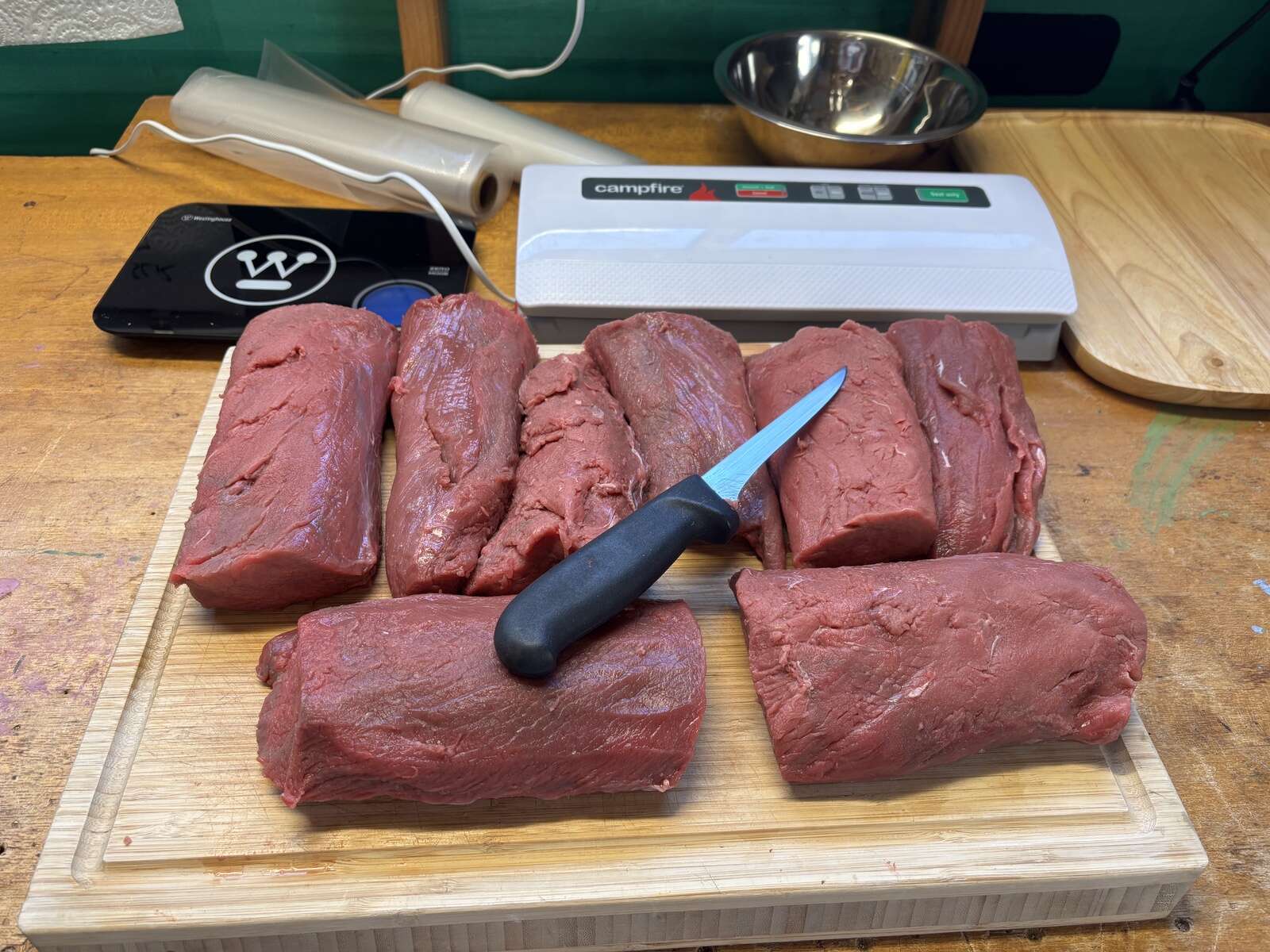
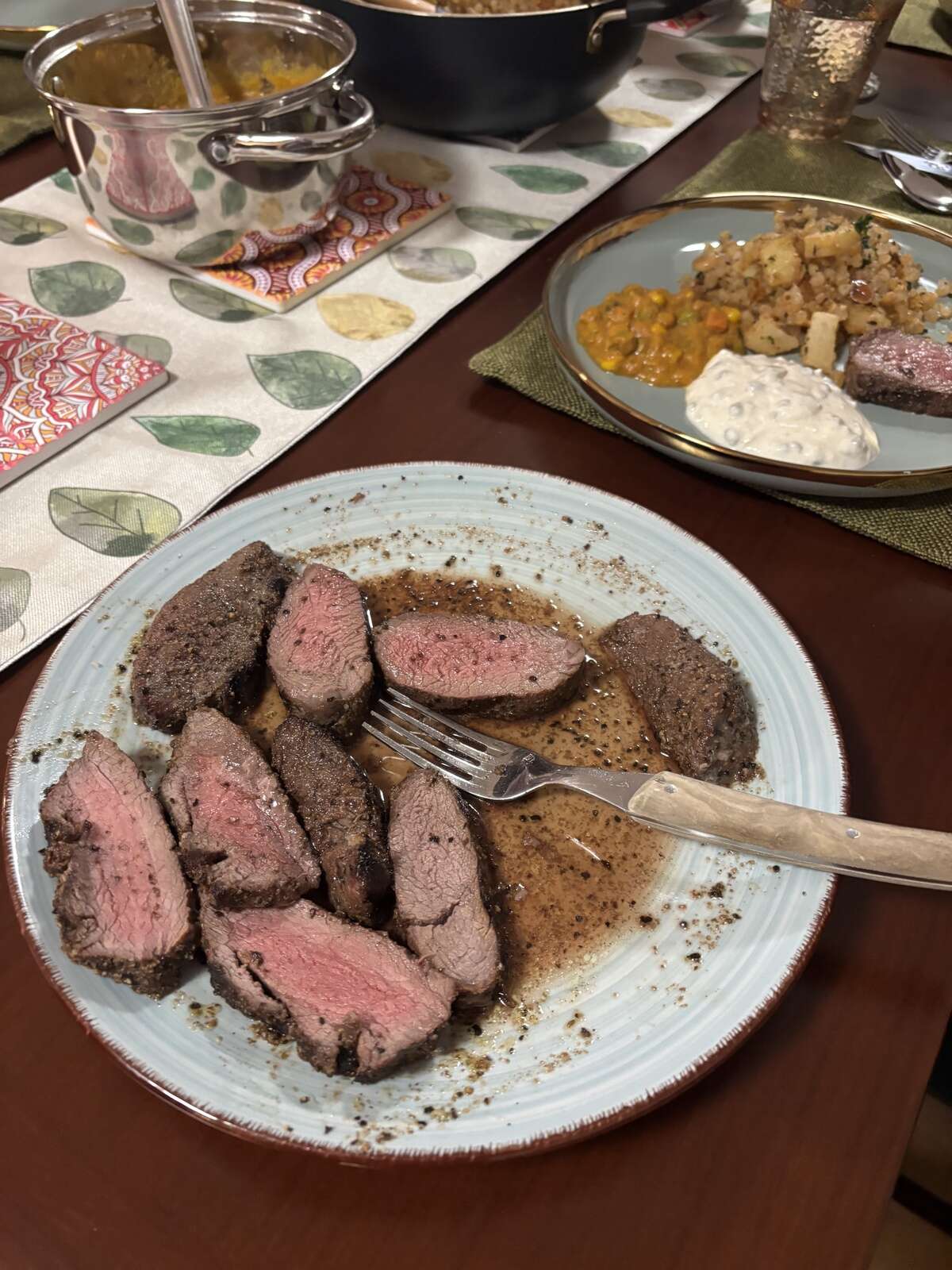
I manhandled the stag into a better position for some photos, then got to work on butchering him. I’d hit him exactly where I’d aimed, and the 130-grain Nosler TTSX bullet had exited higher up on his far side, leaving a substantial wound channel through both heart and lungs. In future, if presented with such ideal circumstances for a well-aimed shot, I’d try anchoring the animal on the spot with a high shoulder or neck shot. I’d been a little concerned about the warm weather and the time passed since he was shot, but the meat was fine. Fortunately, the carry out was downhill and not too far, so I was able to take the head and plenty of meat. He has already provided flavoursome Cornish pasties, tender BBQ backstrap steaks, and tasty jerky.
So, my sambar hunting career is off to a good start, despite my initial identification problem. A new chapter opens, providing compelling reasons to keep fit and able for stalking into rough and hilly country. I find this motivating at a time of life when the right choices will influence health and fitness for decades to come - yet another benefit of being a hunter.