New South Wales has confirmed that its participation in the National Gun Buyback Scheme will begin on 2 November 2026. For deer hunters, the announcement provides the first firm compensation figures, but it also leaves important questions unanswered about value, eligibility and firearms that do not fit neatly within the published tiers.
The buyback follows major changes to NSW firearms laws, including new limits on the number of firearms an individual may own and the reclassification of several action types. The NSW Government estimates that as many as 274,000 registered firearms, held by about 50,000 licence holders, may be affected.
Under the new ownership limits, most individual licence holders may hold no more than four firearms. Strict exemptions allow eligible primary producers and sport shooters to hold up to 10. Straight-pull, pump-action and button- or lever-release firearms have also been moved into Category C, substantially restricting access to them, particularly for recreational hunters.
Phase 1 will use a fixed-price schedule. Revolvers will attract $1,000 and semi-automatic handguns $850. Double-barrel shotguns are listed at $850, single-barrel shotguns at $650, rimfire rifles at $600, centrefire rifles at $1,000 and air rifles at $450.
The Commonwealth and NSW governments have also said that associated ammunition will attract a flat fee, although the amount and practical arrangements have not yet been published.
Phase 2 is expected to begin in early 2027 and is intended to provide a valuation pathway for eligible firearms with an indicative market value above $3,000. Owners will have to pay a fee to use that pathway, and compensation will be capped at $10,000 for each firearm. The size of the fee, the evidence required, who will perform valuations and whether owners can challenge an assessment remain unknown.
Those gaps matter because the Phase 1 schedule groups together firearms with vastly different values. A basic, well-used centrefire and a near-new premium hunting rifle are both assigned the same $1,000 payment. Make, model, age, condition and configuration appear to have no effect within that tier.
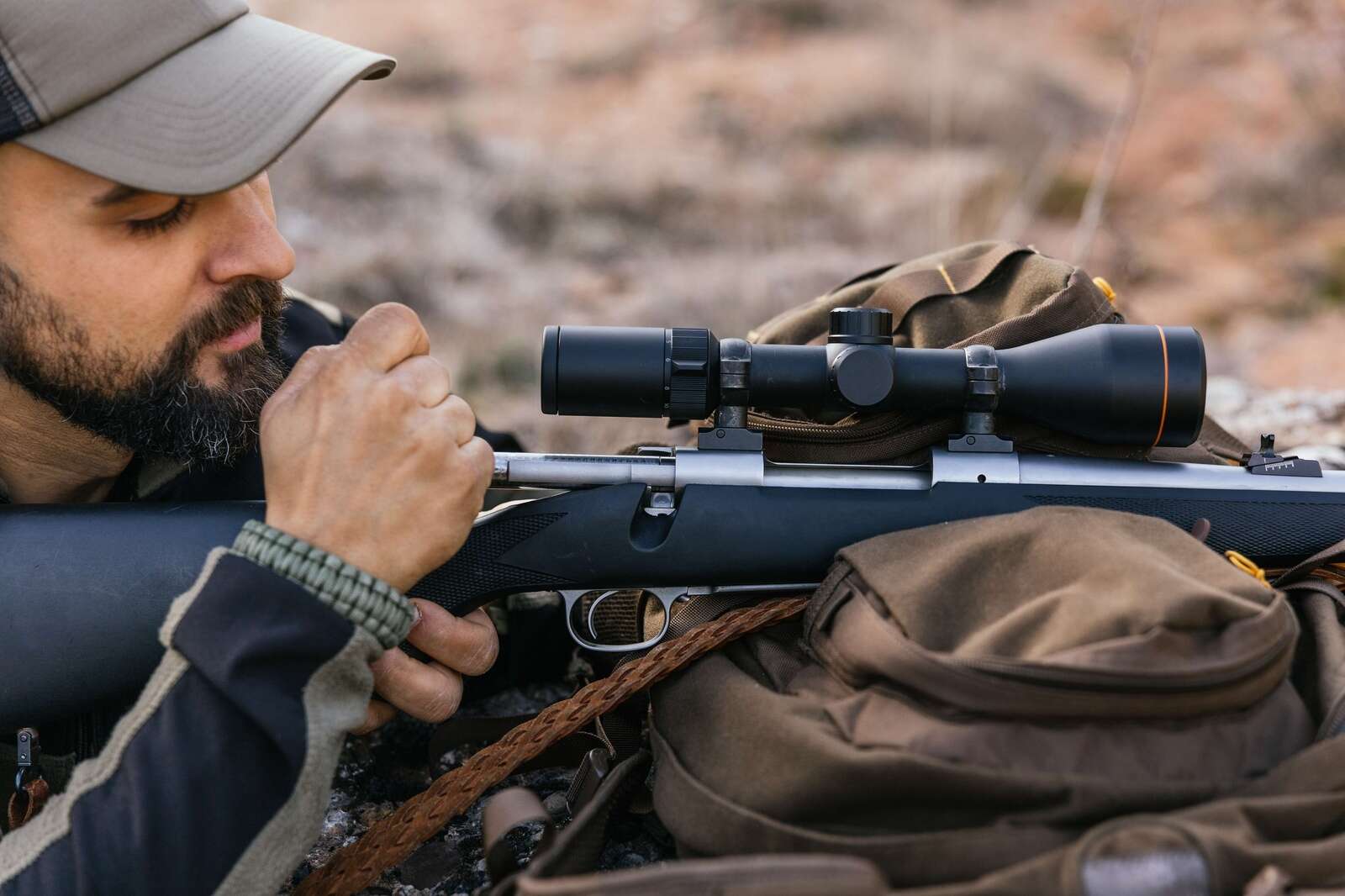
The Tikka T3 Lite in .308, and its current T3x successor, are among Australia’s most recognisable modern deer-hunting rifles. They are conventional bolt-action centrefires and are not among the action types being reclassified. However, one may still be caught by the buyback if its owner exceeds the new numerical limit and must reduce the number of firearms they hold.
A Tikka T3x Lite Stainless in .308 is currently advertised by an Australian retailer for $2,039 before a scope, rings, sling or other accessories are added. Under the published Phase 1 schedule, it would attract $1,000 as a centrefire rifle.
Retail replacement cost and second-hand market value are not the same thing, and the value of an individual rifle will depend on its age and condition. Even allowing for depreciation, however, the flat payment may leave the owner of a well-maintained Tikka significantly short of the amount needed to replace an equivalent rifle. Compared directly with the advertised new price, the gap is $1,039 before optics and other equipment are considered.
The same problem becomes more pronounced with premium rifles selling for $2,500 to just under $3,000. On the information currently available, they appear to remain in the $1,000 Phase 1 centrefire tier while a firearm valued above $3,000 may enter Phase 2. That creates a sharp and seemingly arbitrary threshold. A rifle assessed at $2,950 could receive $1,000, while one assessed at $3,050 may have access to an individual valuation, subject to an unspecified fee.
It is also unclear how fitted accessories and custom work will be treated. Many deer rifles carry valuable scopes and mounts, while others have aftermarket stocks, triggers, barrels or gunsmithing work. Owners may be able to remove some accessories, but the government has not explained what must accompany a firearm or whether permanent modifications contribute to its assessed value.
Reclassified firearms present another problem. Modern straight-pull and release-action rifles and shotguns can retail well above the fixed amounts published for centrefires and shotguns. Owners who lawfully purchased them may now have little practical choice but to surrender or dispose of them, yet the Phase 1 categories do not appear to recognise their often substantially higher value.
Firearm ownership among deer hunters is usually purpose-based. Different deer species, terrain, hunting methods and animal-welfare considerations can require different calibres and configurations. A hunter may own a rimfire for practice or pest control, a shotgun for game birds, a lighter centrefire for smaller deer and a larger centrefire for sambar or other large-bodied deer. Left-handed rifles, family heirlooms and specialised setups add further legitimate reasons for owning more than four.
The new cap forces many hunters to decide which lawful activities or valued firearms they will give up. Although an owner above the limit may be able to nominate less-used firearms for disposal, that does not cure the underlying problem. A numerical cap treats the number of firearms as the risk, rather than the suitability and conduct of the licensed person who possesses them.
The Australian Deer Association’s position is that these measures, including the reclassification of established hunting firearm designs, were not necessary. Firearms regulation should be evidence-based, proportionate and directed at demonstrable risk. Licensed recreational hunters are already subject to background checks, fit-and-proper-person requirements, secure-storage rules and ongoing compliance obligations. There is no demonstrated connection between the number of firearms lawfully held by a compliant hunter and an increased risk of violent crime.
The greatest public-safety gains will come from intelligence-led licensing, effective information sharing and action against illicit manufacture, trafficking and criminal misuse. Reclassifying lawfully owned hunting firearms and imposing arbitrary limits directs regulatory effort and public money away from those risks.
Before the scheme begins, affected owners need clear answers about how eligibility will be determined, how firearms near the $3,000 threshold will be treated, what the Phase 2 assessment fee will be, whether accessories and modifications are included, how ammunition payments will work and what review rights will apply.
Compensation cannot be described as fair simply because a payment is offered. Fairness depends on whether the payment bears a reasonable relationship to the property an owner is compelled to surrender.
For many NSW deer hunters, the practical result may be the forced loss of useful, legally acquired equipment at a fraction of its replacement cost. That is not a minor implementation issue. It is a foreseeable consequence of reforms that are unnecessarily broad, insufficiently connected to risk and, on the information published so far, financially inequitable.
Information in this article is current as at 18 August 2026 and is general information only. Further implementation details are expected from the NSW Government and NSW Police.