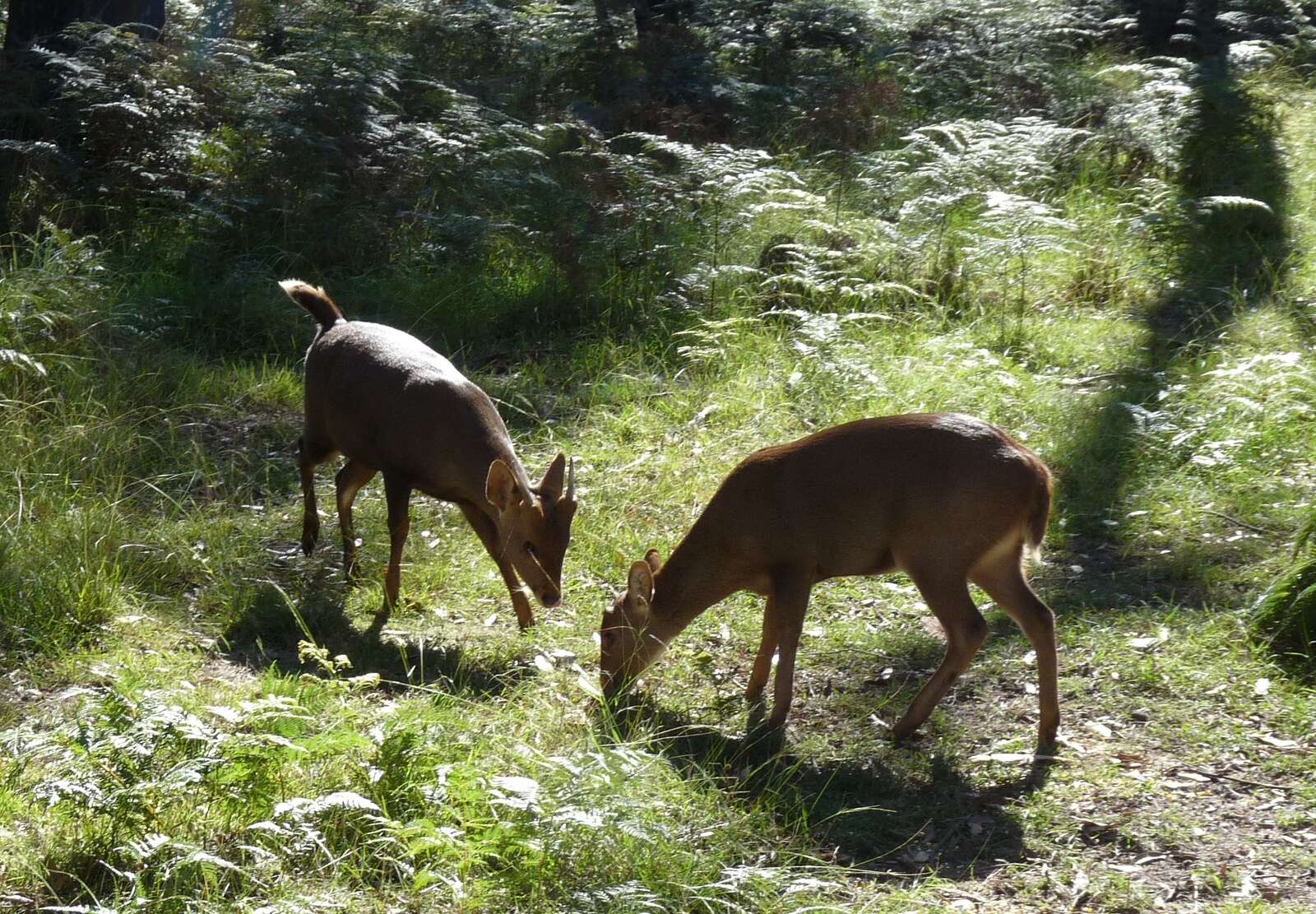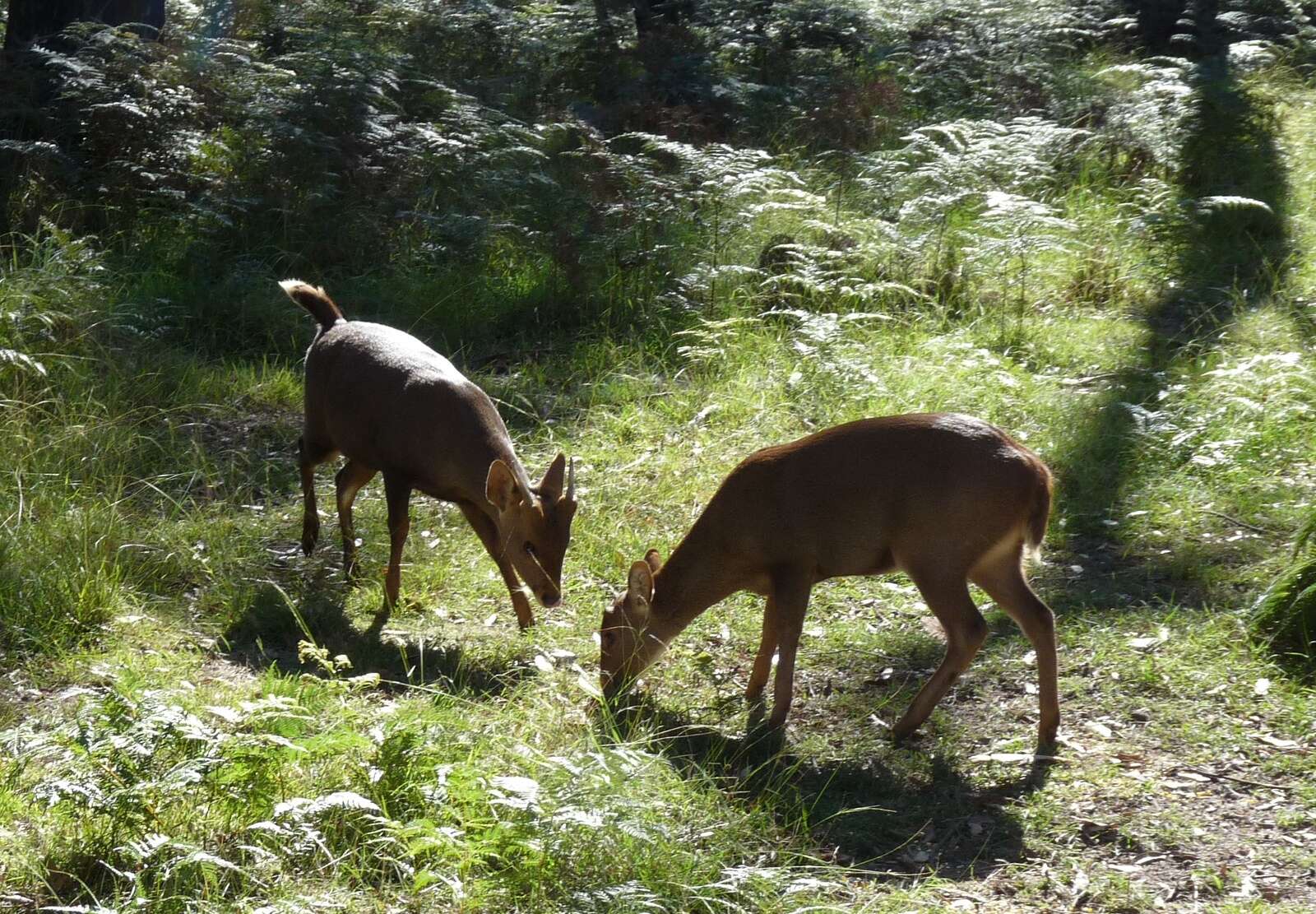
I subsequently bought a 30-hectare paddock adjoining an extensive area of public land covered in coastal scrub. My block had ‘better’ soils than found on sandy coastal hog deer country but inferior to those found along the river valleys that hog deer also favour. It also had a dam so once the sheep were gone, the local hog deer had easy access to water and reasonable quality pasture.
Over several years I establishing 12 hectares of native trees and shrubs to provide escape cover, while at the same time trialling some of the management ideas that I had picked in the U.S. or from the internet.
Food Plots
Since there was reasonable quality grass and sub-clover on the paddock I saw no need for food plots as the numerous hog deer, wallabies, wombats and kangaroos that visited between dusk and dawn were obviously attracted by what was on offer. A lack of farm equipment and the high cost of contractors were also factors in choosing not go down that path.
On poor sandy country that lacks quality pasture, food plots are probably going to be a higher priority and Peter Mcdonell’s several recent articles in this magazine offer some insights into how to tackle such a program.
Mast
Soft fruits such as apples and persimmons, and nuts from the likes of oak and beech trees, (collectively known as ‘soft and hard mast’) can be a large part of the diet of white-tailed deer in the U.S., particularly over the autumn and winter months, and many hunter and landowners there put a lot of effort into managing mast producing trees to provide feed for the deer and as an attractant during hunting seasons.
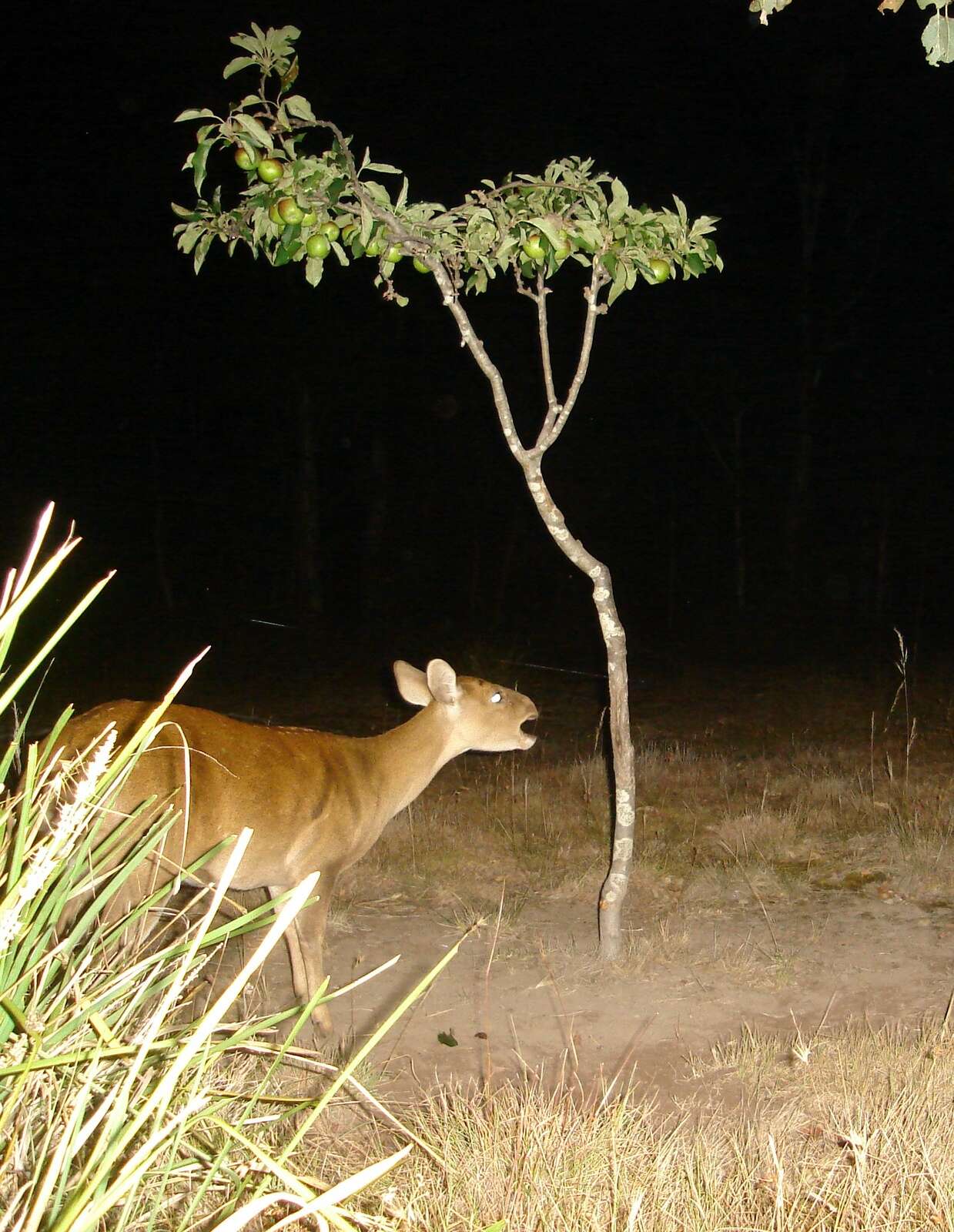
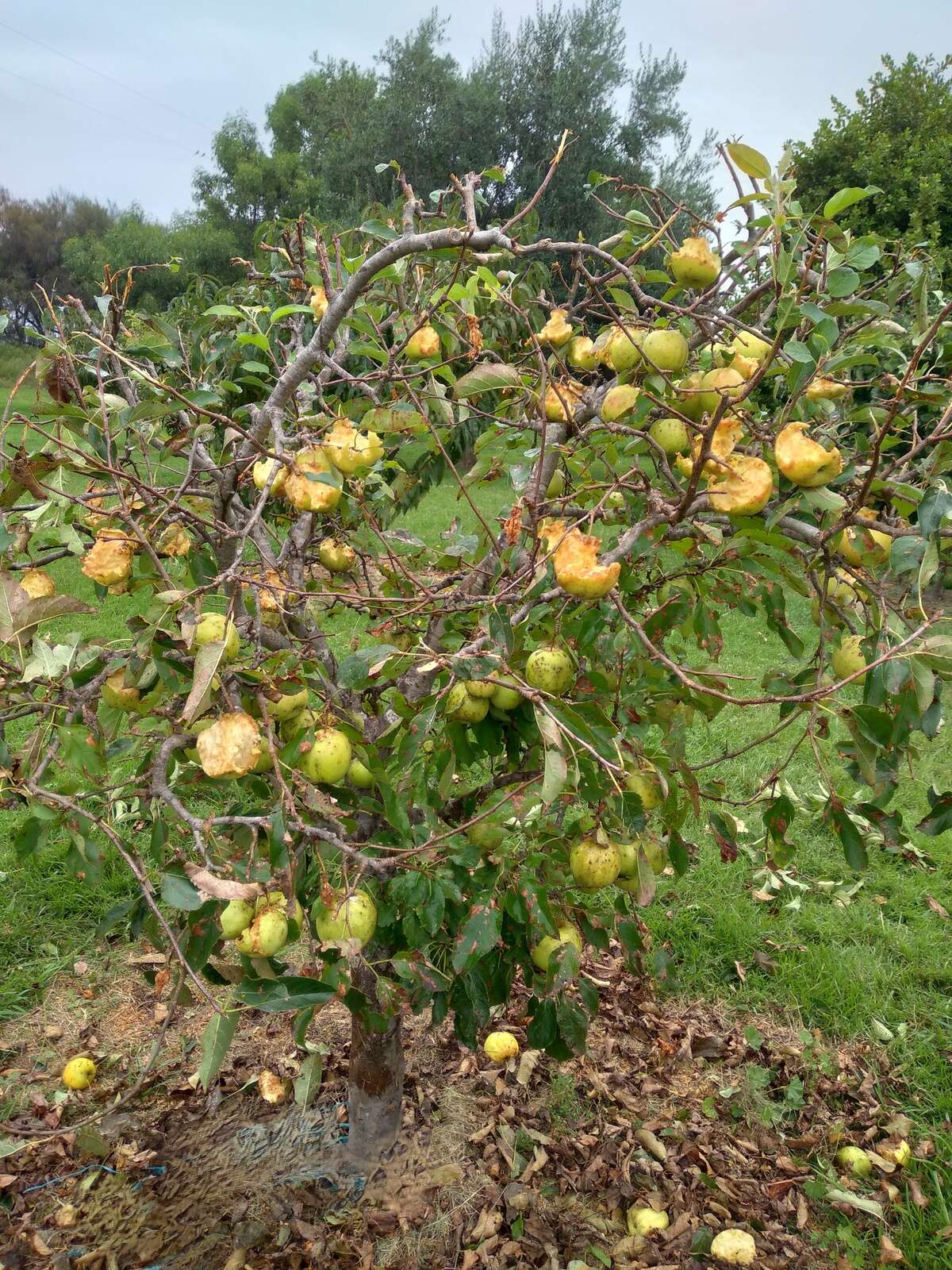
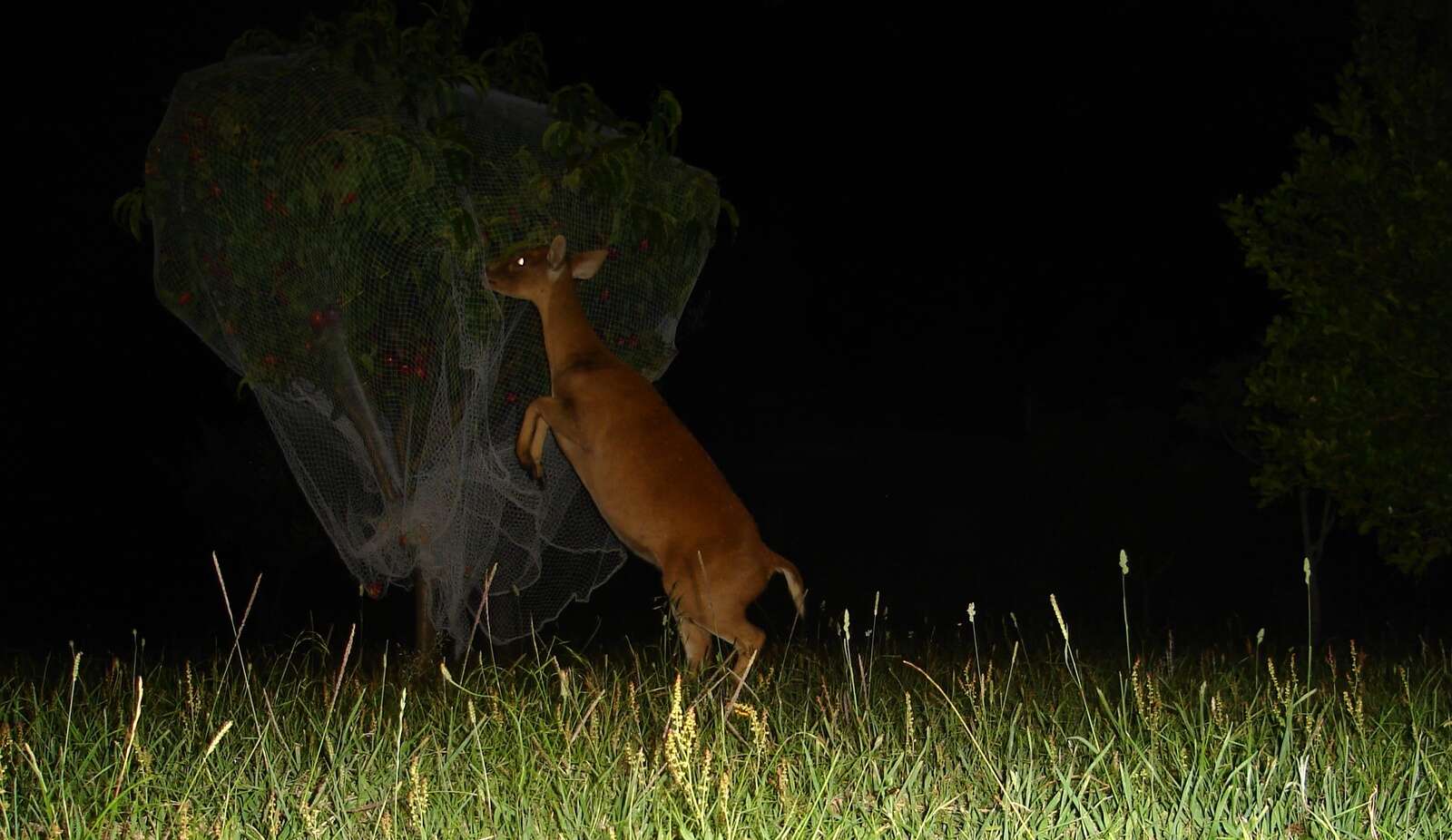
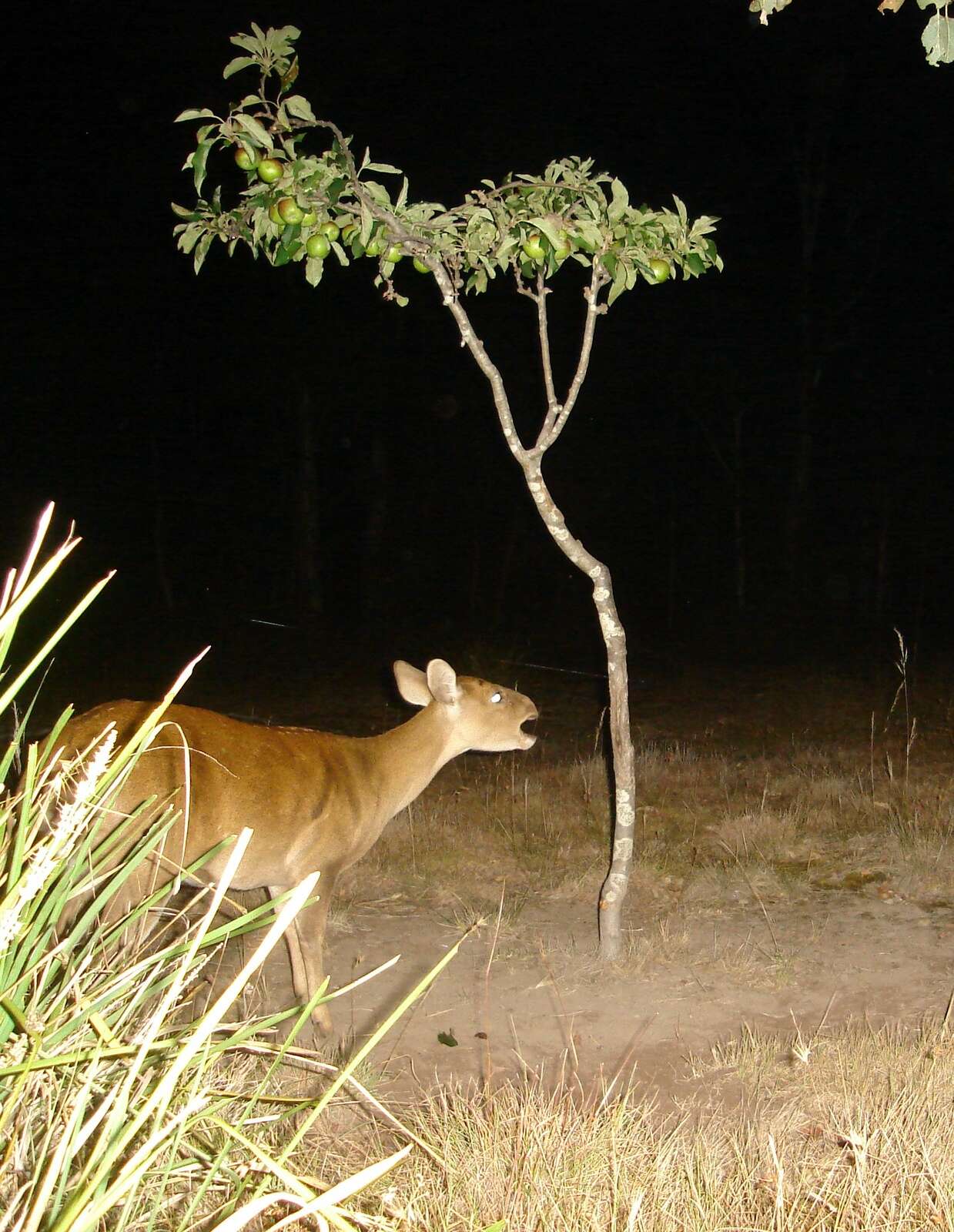
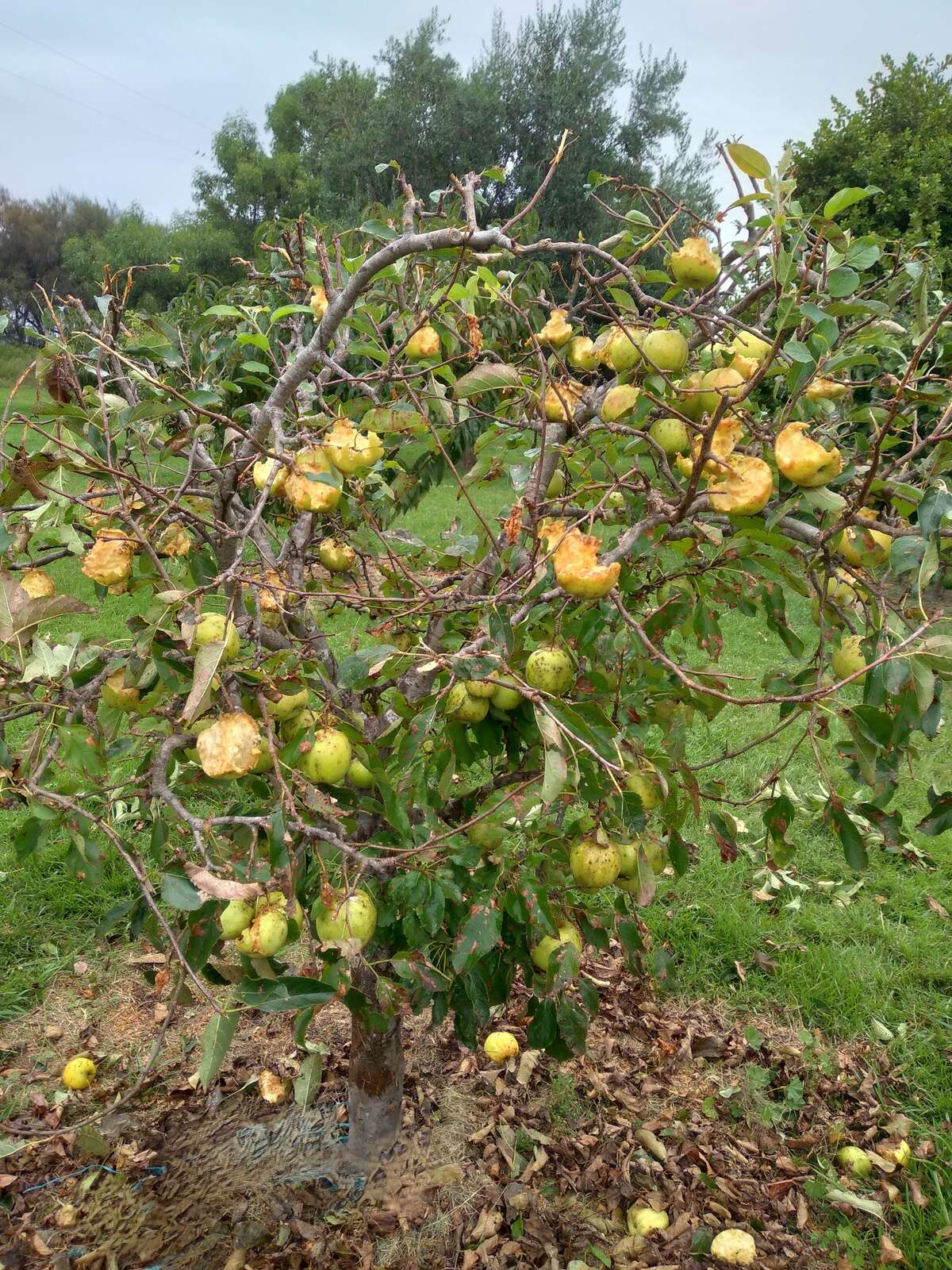
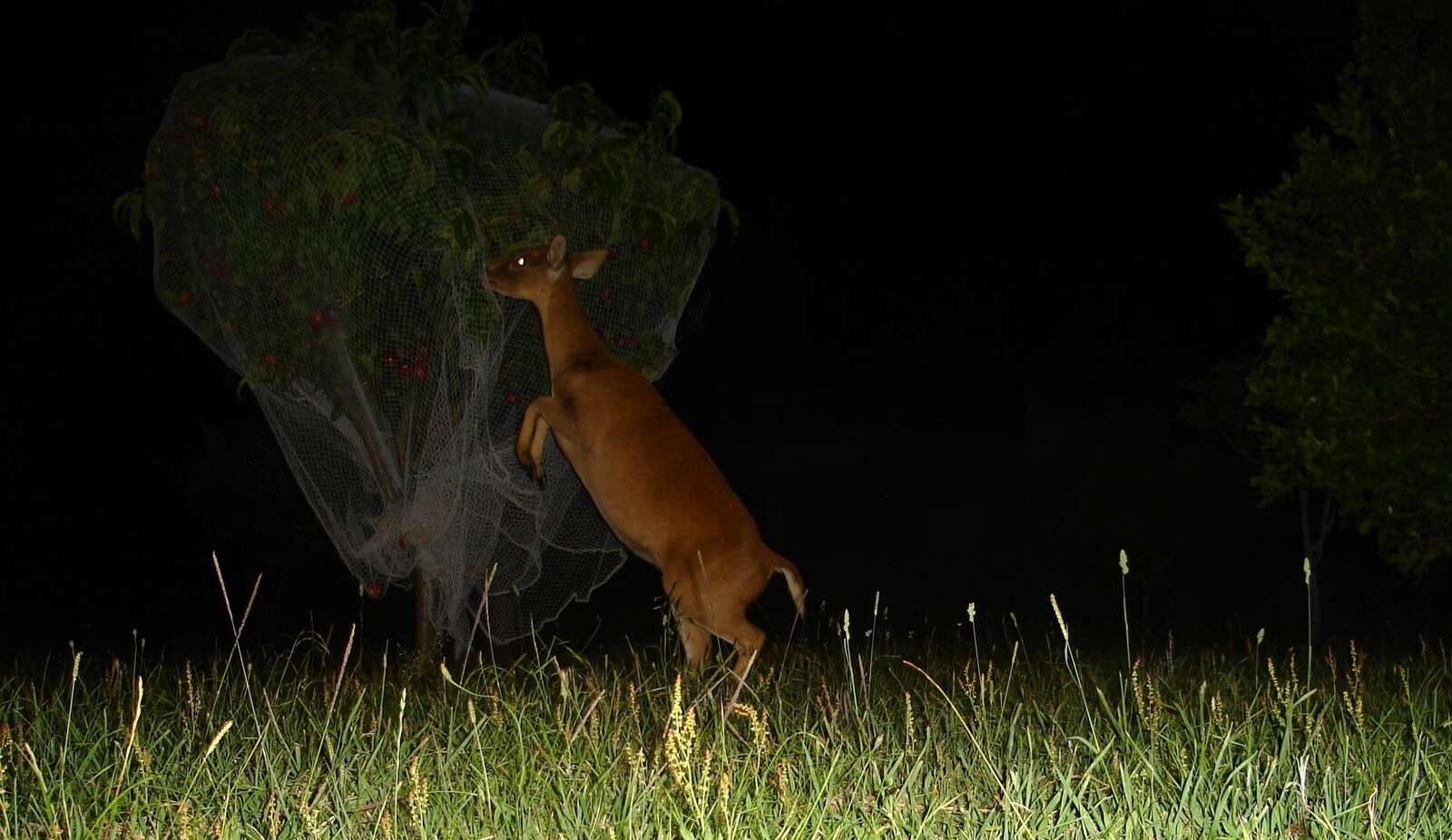
Unlike the U.S., coastal Gippsland has no equivalent native fruit or nut trees so the decision was made to plant non-native species to investigate whether hog deer would similarly respond to a new food source. It soon became clear that apple and peach trees need better soil and supplementary watering to give reasonable fruit production. The deer were attracted to any fruit grown, but hordes of grey headed flying foxes, rainbow lorikeets and other birds arrived while the fruit was still green and left virtually nothing for the deer. Needless to say, no fruit persisted into autumn.
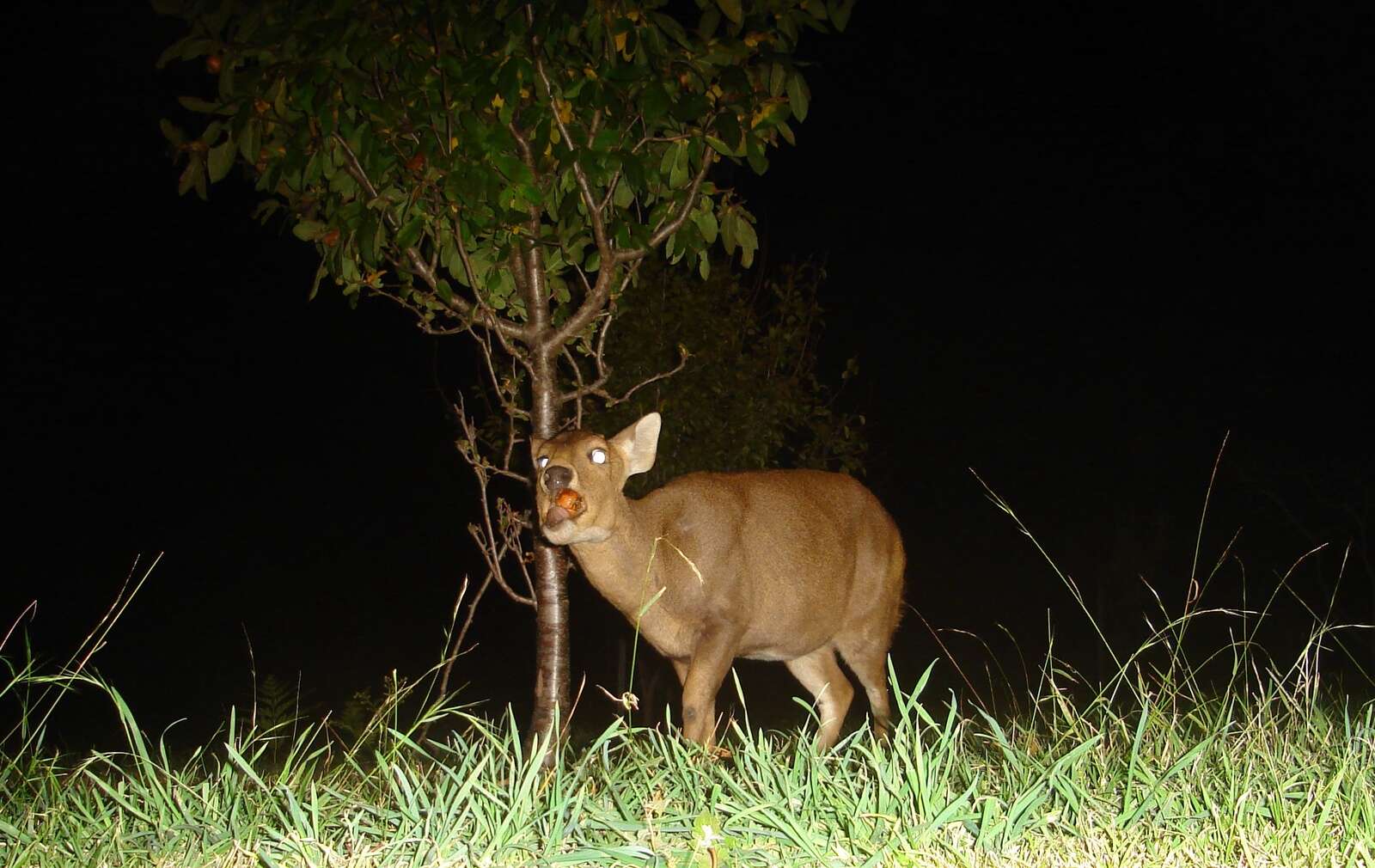
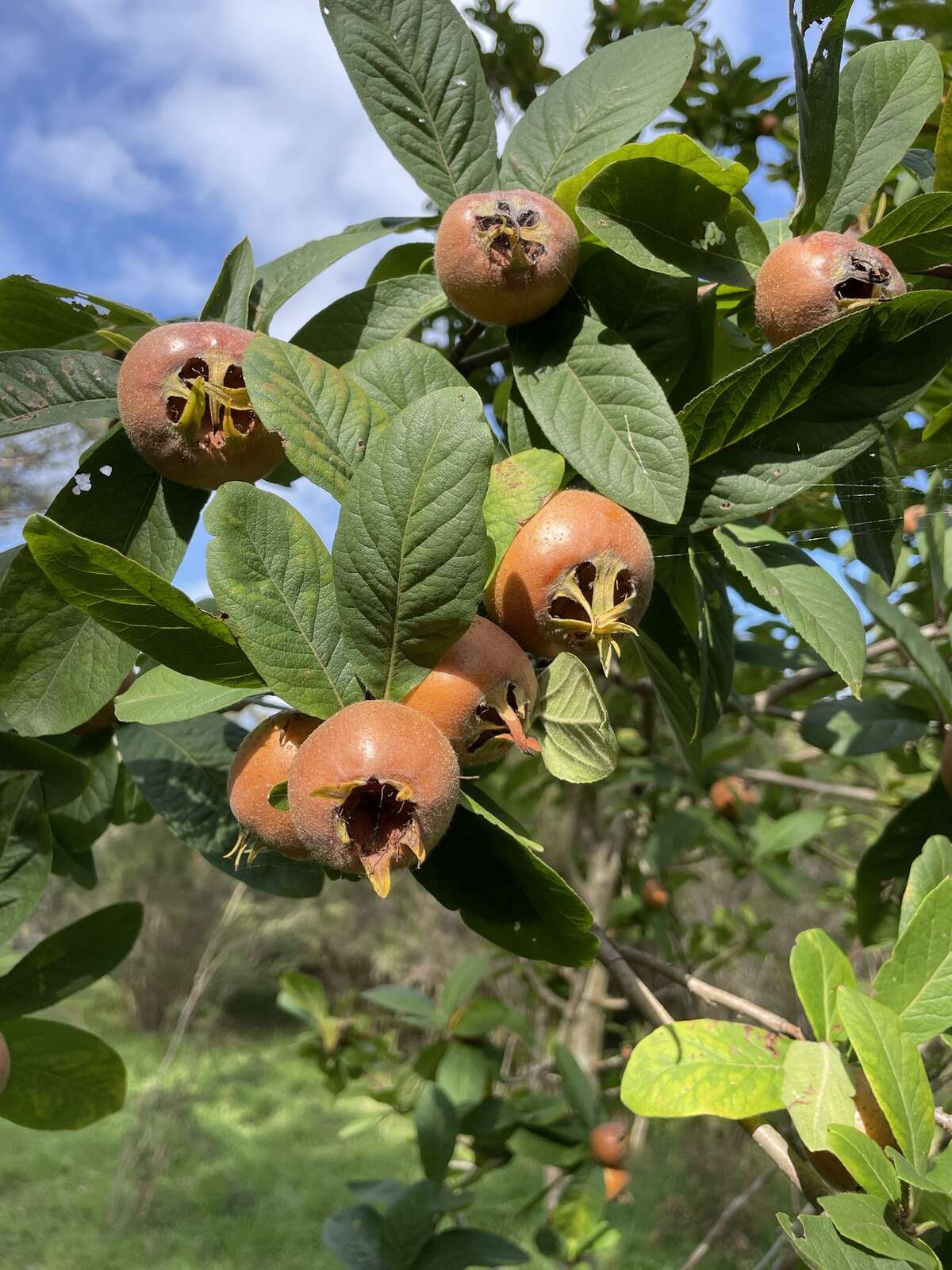
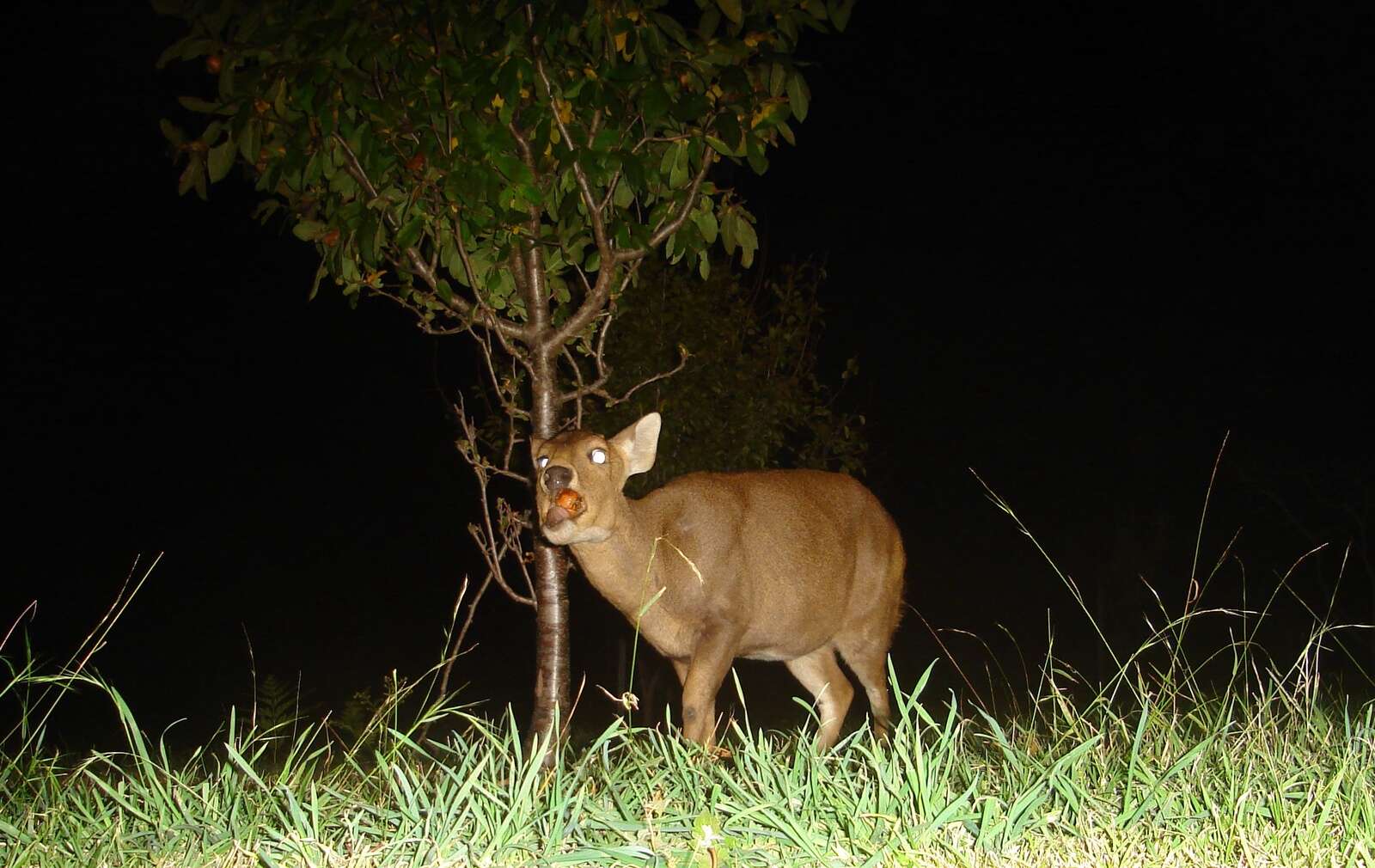
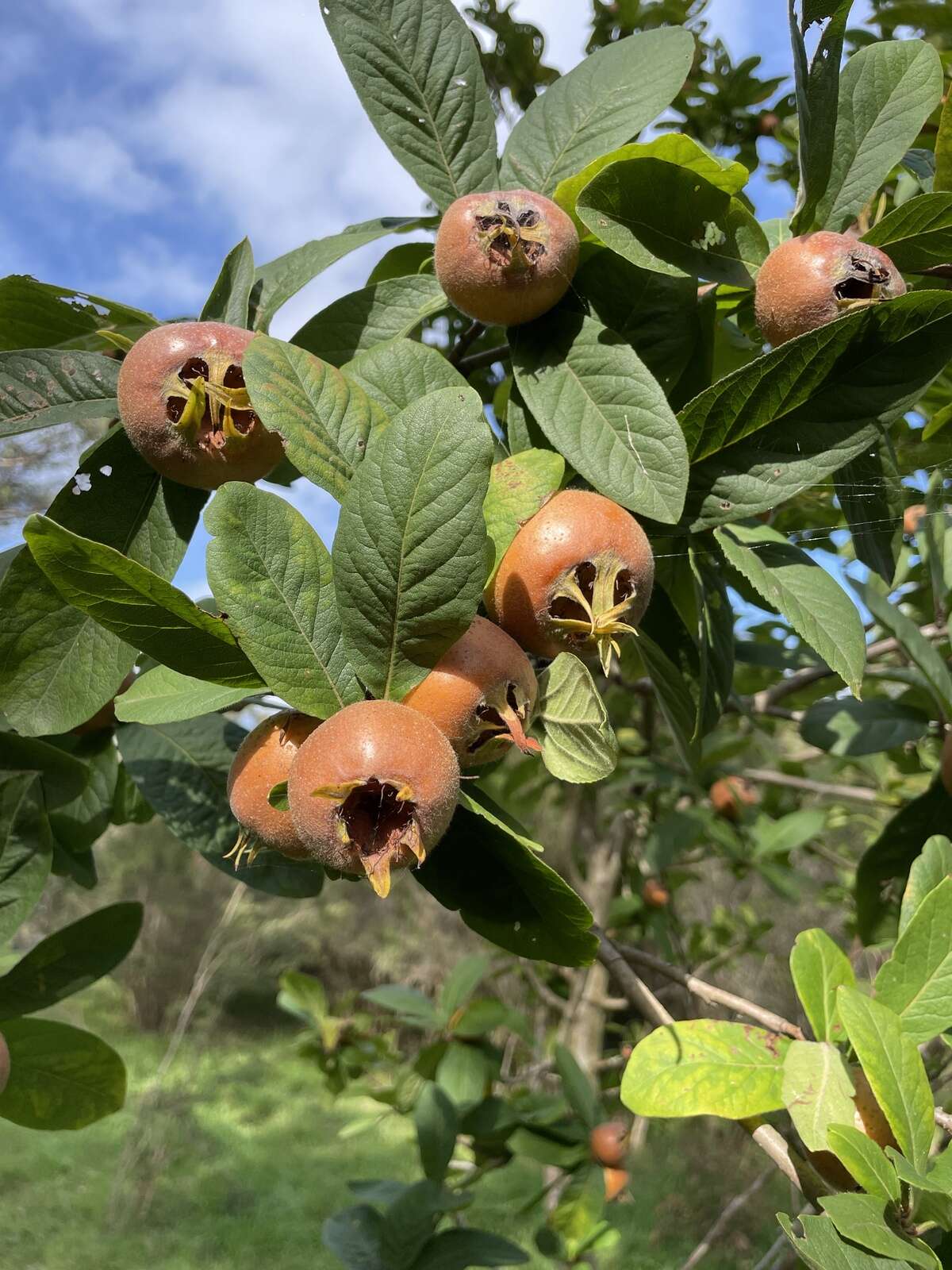
Along the way, I had noticed that crab apple and medlar trees didn’t seem to attract lorikeets and flying foxes to the same extent as commercial fruit trees. Several medlars were subsequently planted and their fruit survived the native wildlife and, more to the point, a trail camera confirmed that the deer ate the fruits that persisted well into the autumn. While the fruit was eaten, it was unclear whether they were favoured above the other food sources that were available.
English oak trees struggled on my block, but eventually they started to produce acorns. Deer and other animals and birds visited the area and the acorns disappeared from under the trees, but whether the deer ate any was unclear from the many trail camera photos obtained. I am told that penned hog deer will eat acorns, indicating that wild deer will probably do likewise. But, again, are acorns favoured above other foods?
Post-Fire Browse
Burning areas to clear the forest floor and stimulate the growth of highly palatable understory plants is a widely practiced deer management activity in the eastern U.S. and is promoted as a cheaper option than planting food plots to attract and feed white-tailed deer.
I was wary of experimenting with fire, but then a wildfire burned part of my block, which gave me an answer anyway – there was no response by palatable understory species, probably reflecting the reality that coastal Gippsland does not have the fast-growing ‘weedy’ native plants that dominate the U.S. white-tailed deer range. In my situation there was little to be gained from a regrowth of unpalatable bracken, wattles and Burgan, so I scratched the idea of using fire as a management strategy.
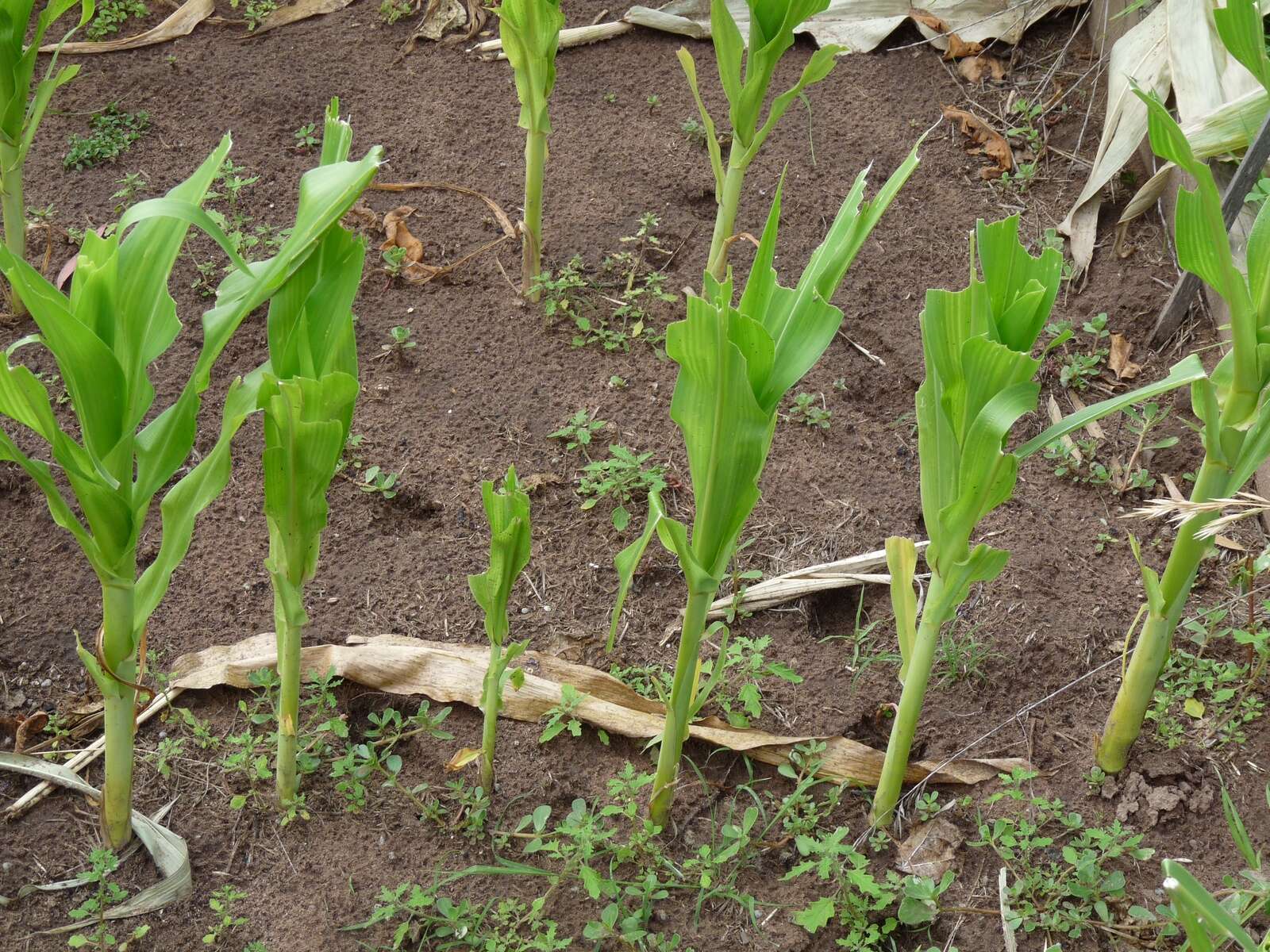
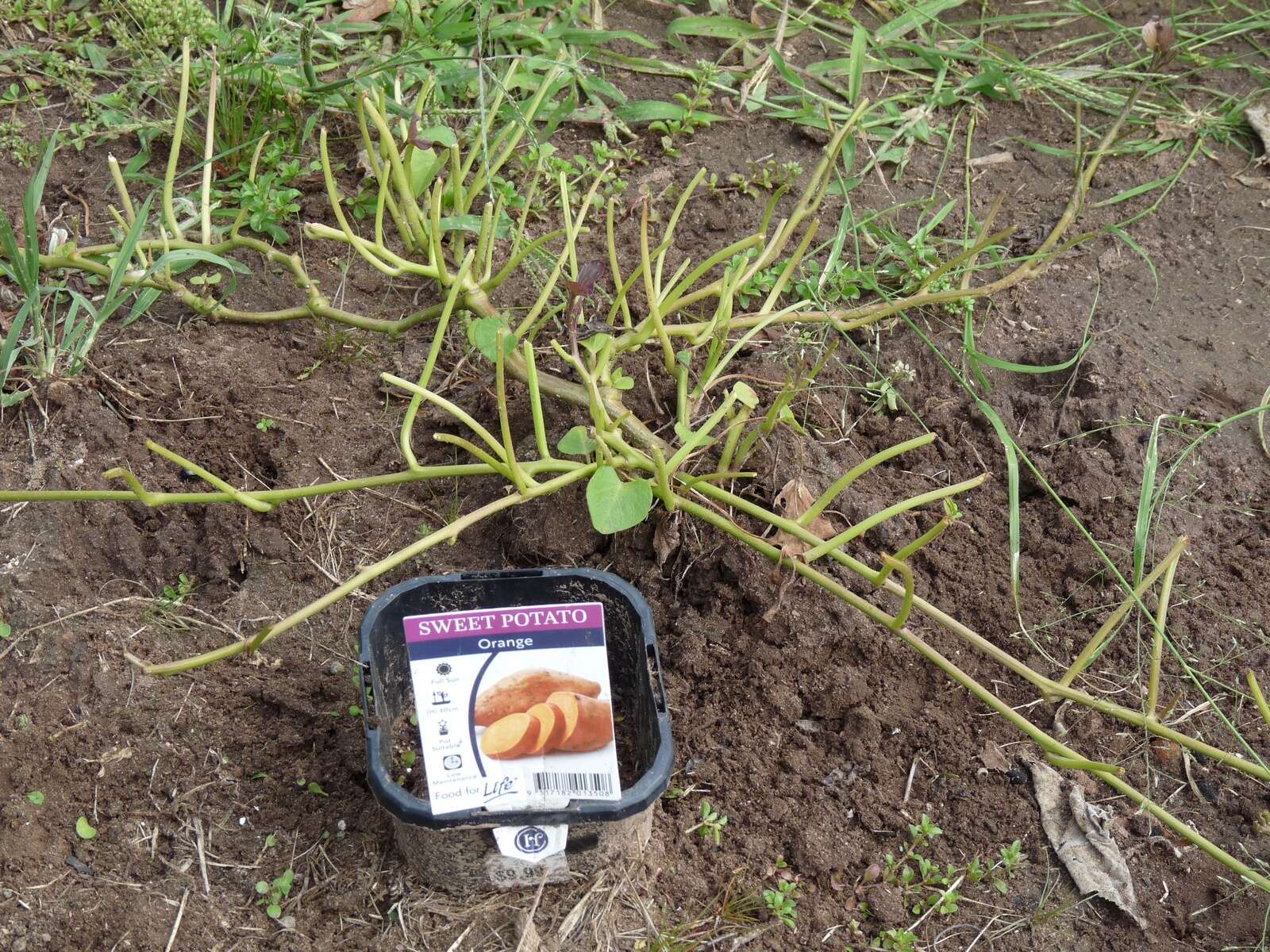
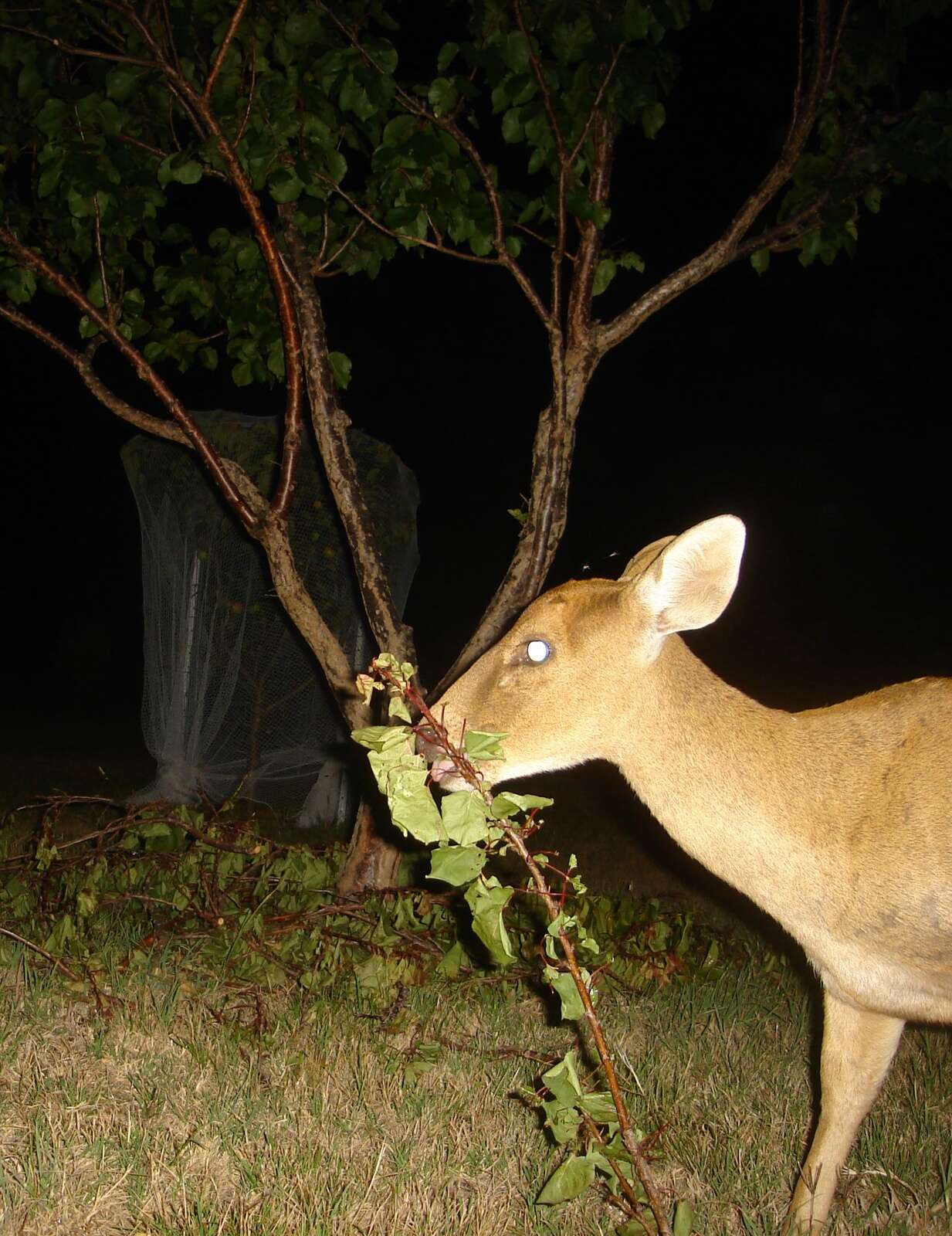
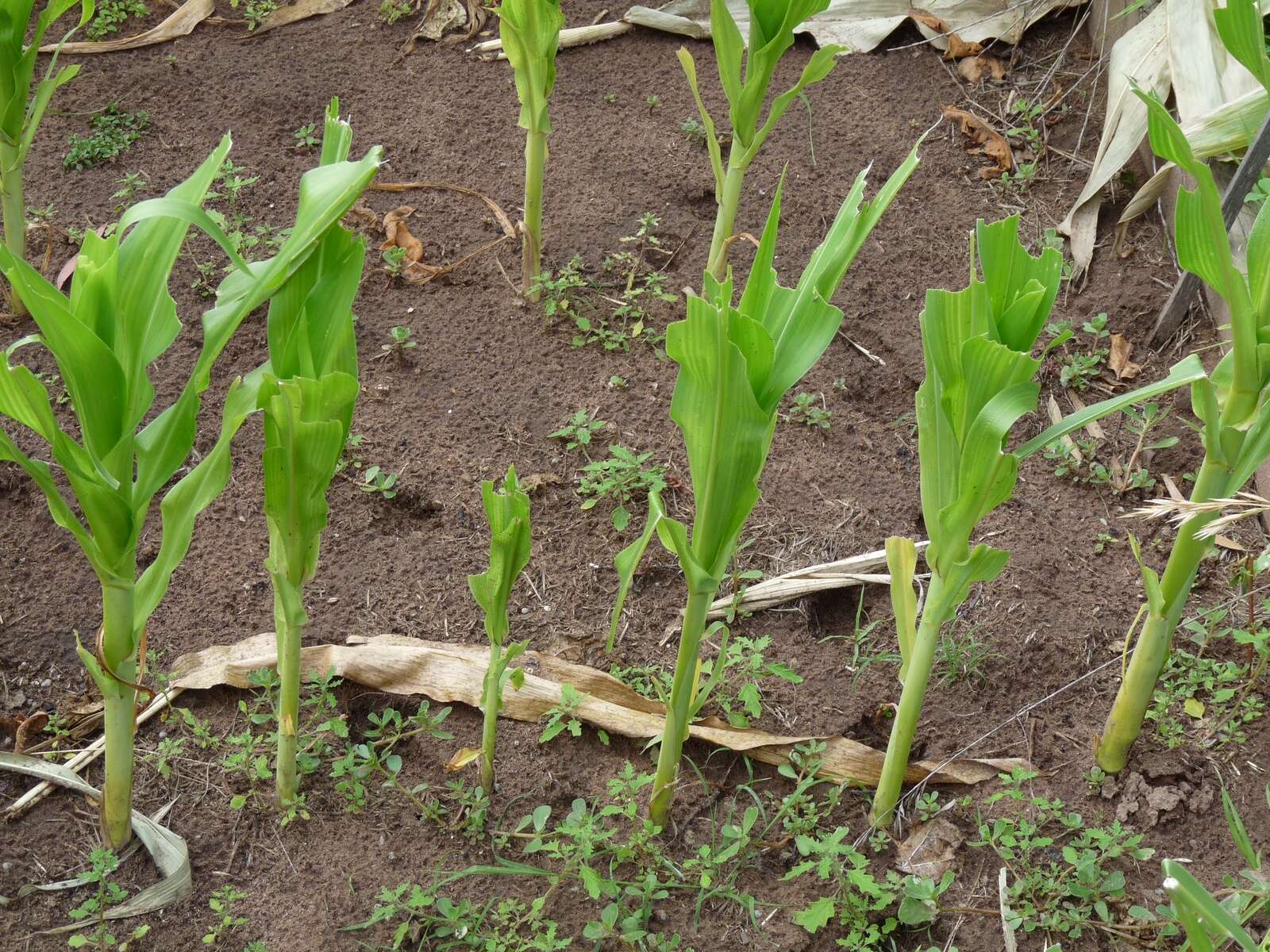
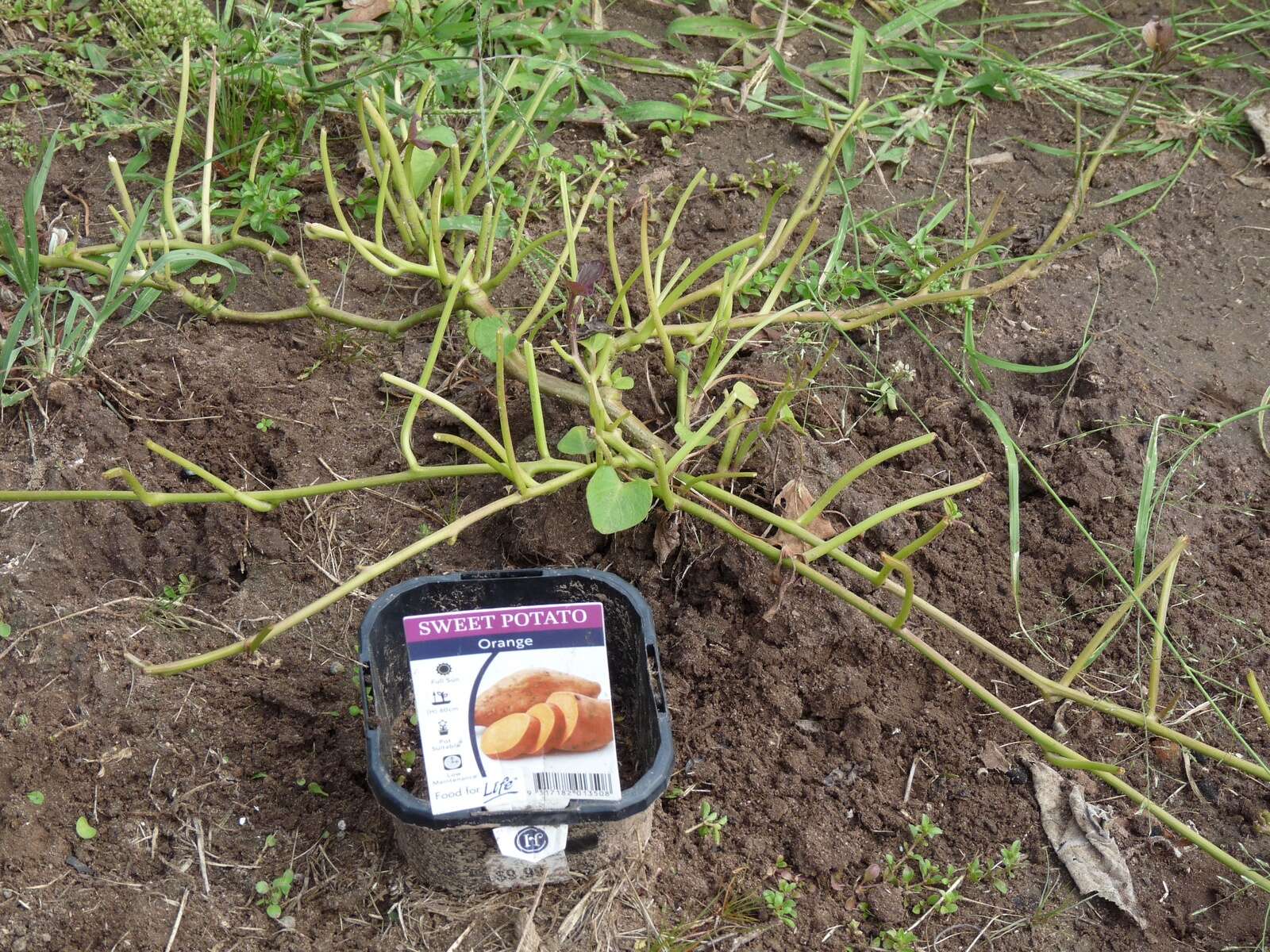
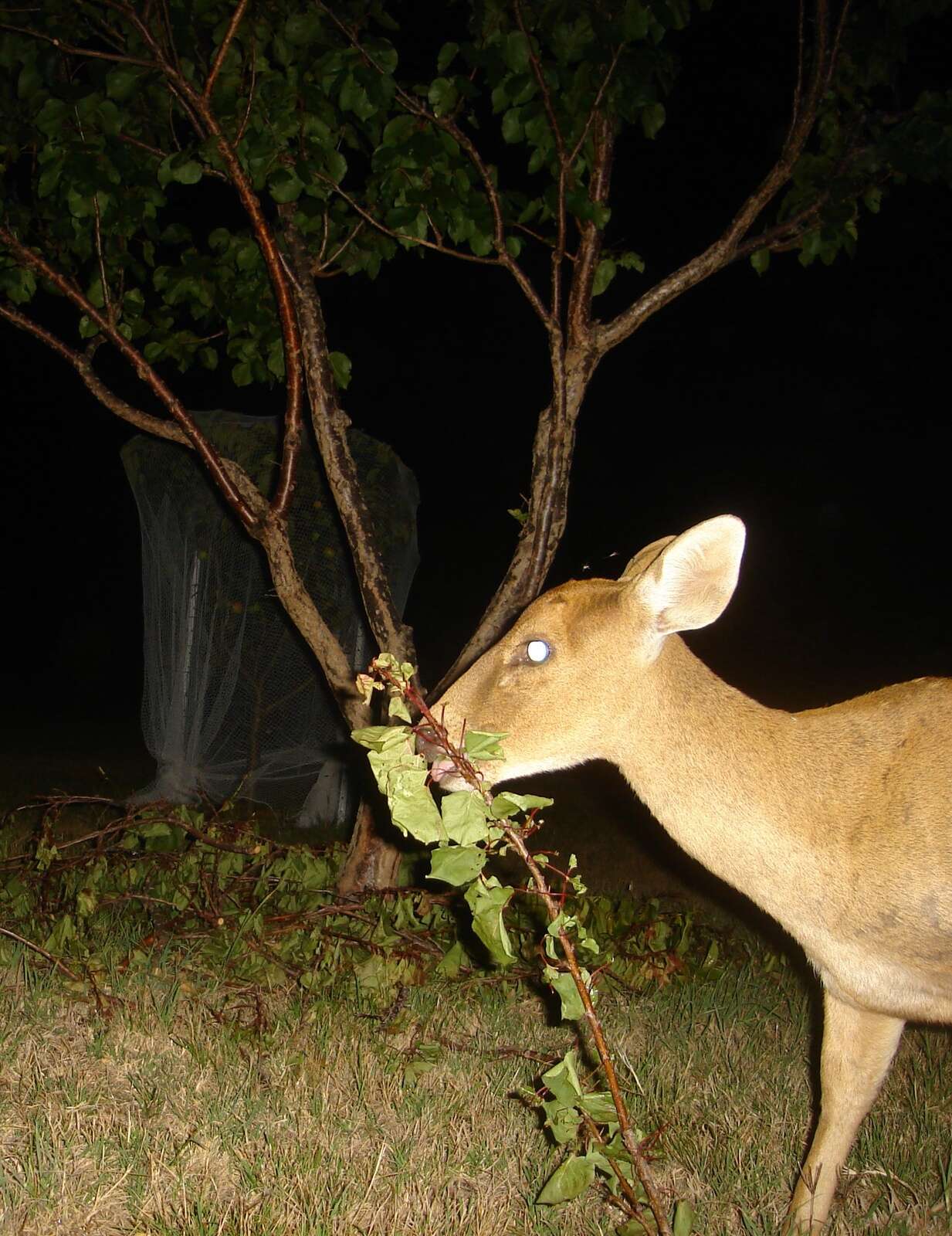
However, by inadvertently leaving the gate open to my garden patch on a couple of occasions, I did gain an insight into how hog deer would likely respond if we did have the palatable understory species to follow fire – night-time visitors gave my young sweetcorn, broad bean, potato, carrot and sweet potato plants a thorough going over and, perhaps more surprising, also stripped the leaves off the pruned branches of an apricot tree.
Tree lucerne or tagasaste is perhaps analogous to post-fire weeds and is often promoted as a potential feed for hog deer as it will supposedly grow in poor sandy soil, is drought tolerant and provides edible foliage throughout the year. I planted a few as a trial but they were slow growing and there was no evidence that hog deer found their foliage attractive. I understand that others have come to the same conclusion.
Dry Feeds
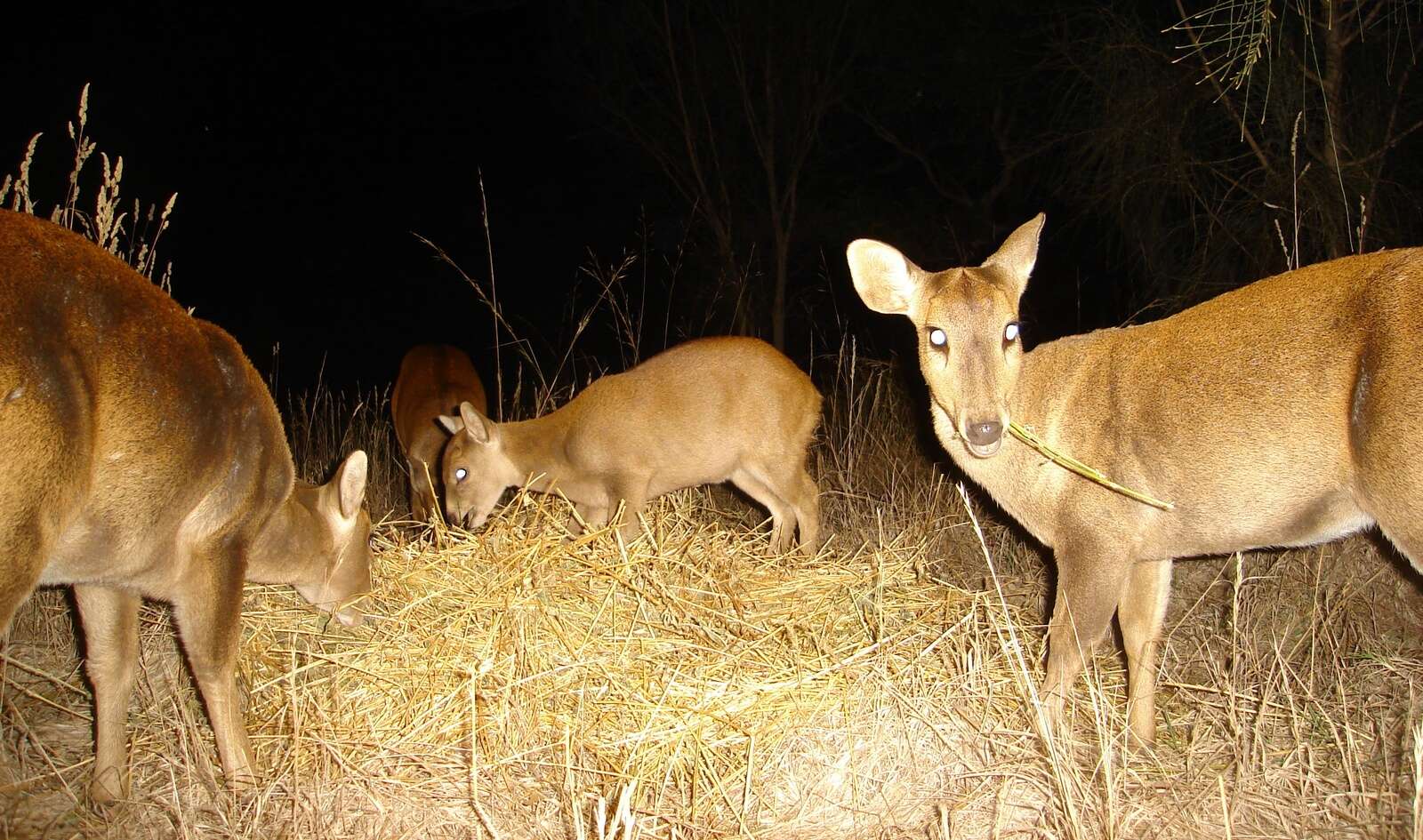
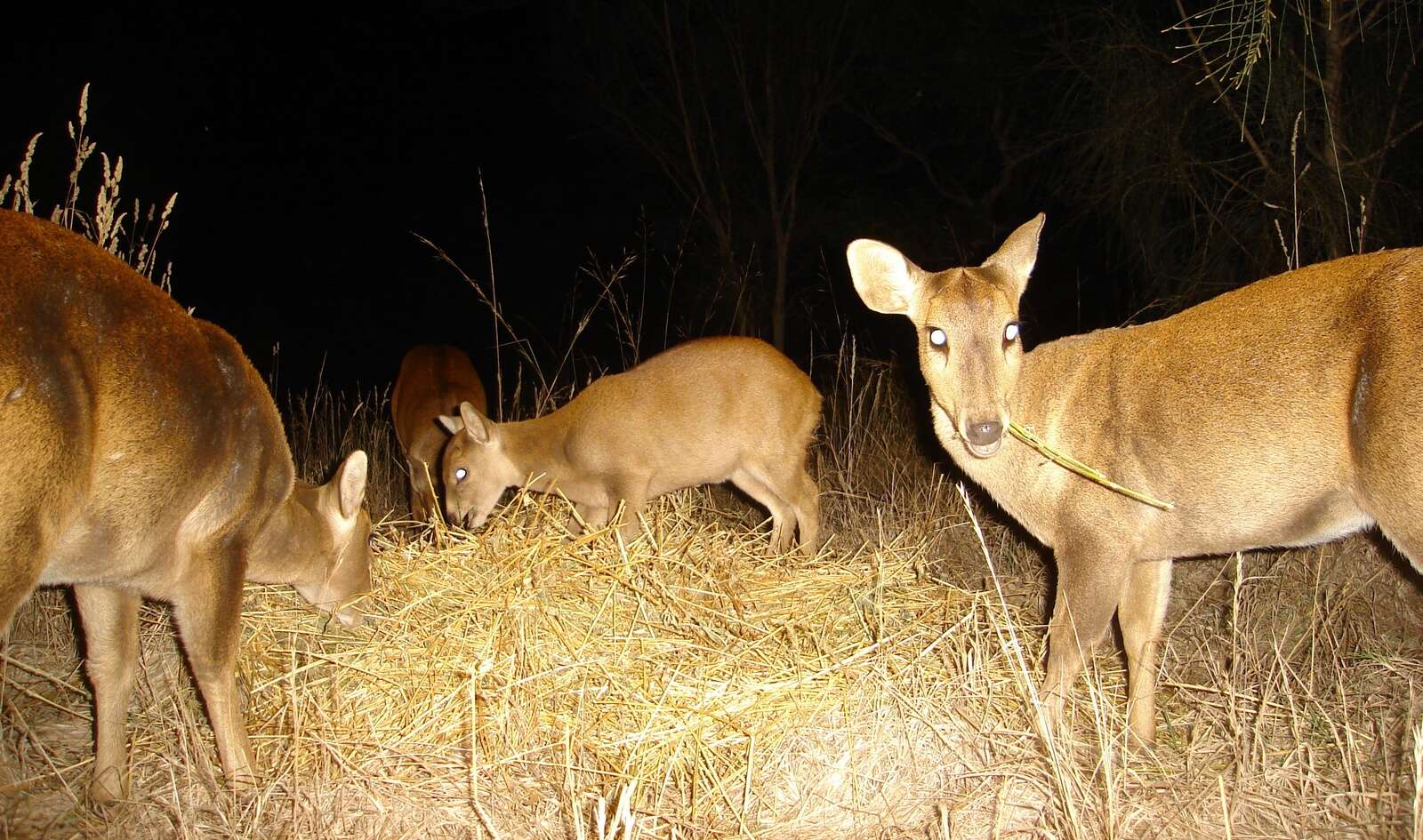
I was surprised when a large round bale of lucerne hay meant for my cattle was torn into and eaten by visiting hog deer. Lucerne hay then became my go-to feed to attract and monitor the deer on my property. Initially, small-bale biscuits of lucerne hay were used, but then I found that lucerne chaff was easier to handle and just as attractive to the deer. Whether the deer would find grass or oaten hay attractive remains untested, but I suspect that this is unlikely.
Mayze and Moore in their book The Hog Deer record that hog deer are attracted to crushed oats, particularly when laced with molasses powder. I am also aware that penned hog deer eat lupins, and suspect that they would find all grains attractive. A neighbour who was feeding calves with pellets also had hog deer coming to his feeders to take their share.
Other Observations
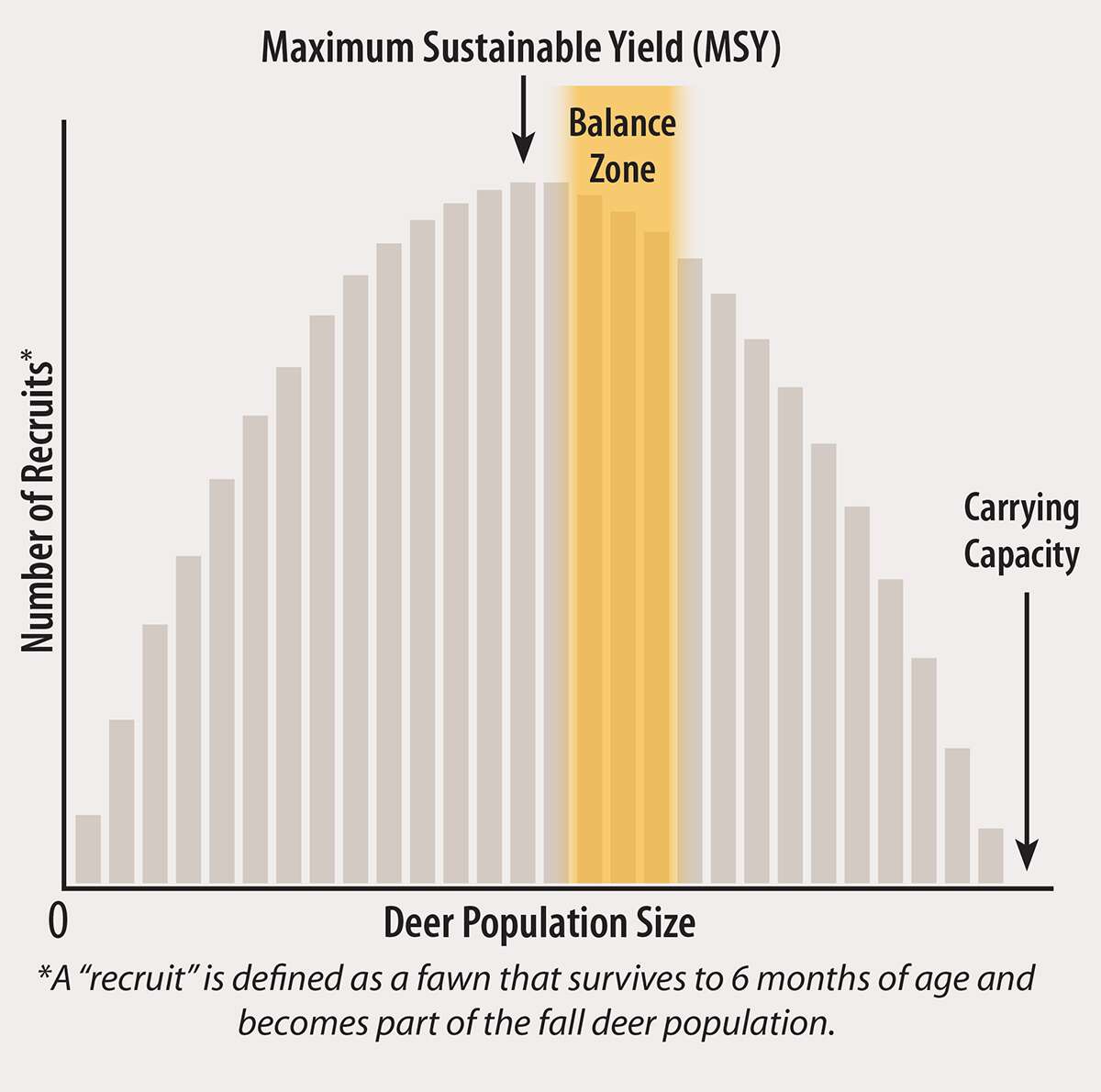
Unlike the U.S., where white-tailed deer are native and the most significant herbivores, when we in Gippsland are managing hog deer we are dealing with an introduced species that is not the dominant herbivore. In most instances our hog deer range also carries lots of grey kangaroos, black wallabies, wombats, rabbits and, more recently, sambar. Away from farmland the carrying capacity of an area of hog deet habitat must take into account these other species.
Reference has already been made above to the grey-headed flying foxes and rainbow lorikeets and their liking for fruit, but along the way it became apparent that black wallabies ate everything that the hog deer did, wombats and rabbits were attracted by lucerne chaff, but kangaroos seemed to ignore everything other than pasture. However, animals will often ignore foods that they are not familiar with, so that it is possible that over time, what is acceptable or preferred by different species might change.
Conclusions
The resources that I could commit to investigating the food preferences of hog deer were limited and restricted to just one area of the hog deer’s Gippsland range, so that what I have described here can only be very preliminary observations that may not apply right across the hog deer range or under different circumstances – pointers but certainly not the final word.
My efforts, meagre though they might be, show that hog deer are probably not that different to white-tailed deer in the U.S.A. in the extensive range of foods that they find attractive – pasture grasses and clover, browse, soft and hard mast, lush green vegetation, high quality hay, various grains and calf pellets.
While it is likely that food plots will improve the carrying capacity of hog deer country, it remains to be seen whether controlled burns or the planting of soft and hard mast trees would deliver any worthwhile benefits and under what circumstances. Clearly, the feeding of lucerne, grain calf pellets is going to be very expensive and will contravene the Victorian Game Regulations if it is done to attract deer during the April open season.
It needs to be emphasised that any management work carried out to favour hog deer must be done in compliance with the Victoria game regulations, not just to take advantage of hog deer during hunting season. Always keep this in mind!