In the last few years, I have been entering into ballots for limited-access blocks. In October 2025, I entered and was unsuccessful in the Molesworth ballot. However, knowing this was an overwhelming possibility, I began working on my Plan B. Mentioning this to other Branch members, the group grew, and plans began to crystallise.
Our primary goal was to take a red stag representative of the area under fair-chase conditions on DOC lands. No thermals, just binoculars, spotters, rifles, boots, persistence, cunning and perhaps some luck. To achieve this, I planned to get into areas away from the hut network and beyond where all but the most dedicated guys would be walking. The timing was for the start of the roar and to be out before the Easter holidays, when most of the local hunters would take to the hills.
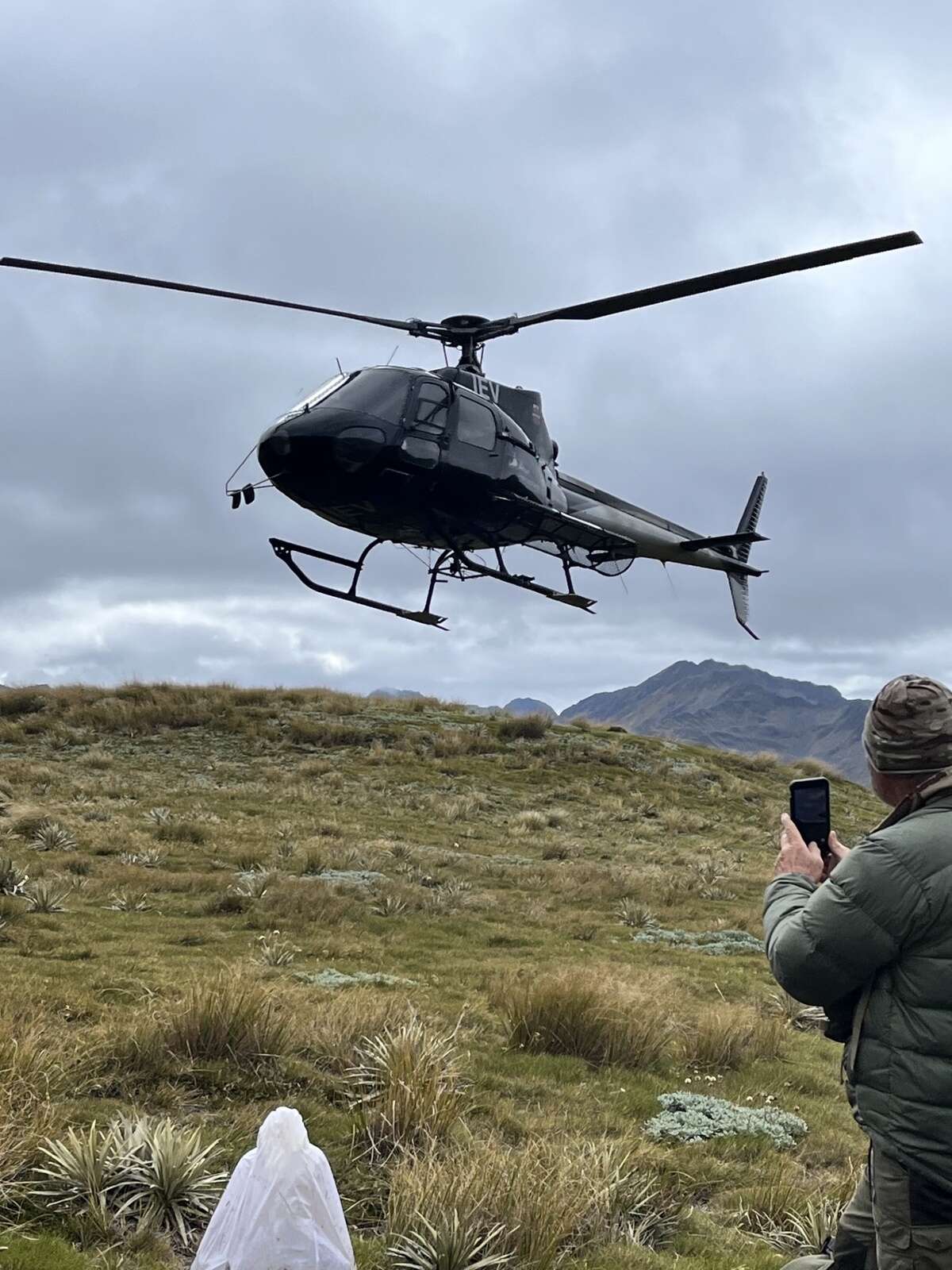
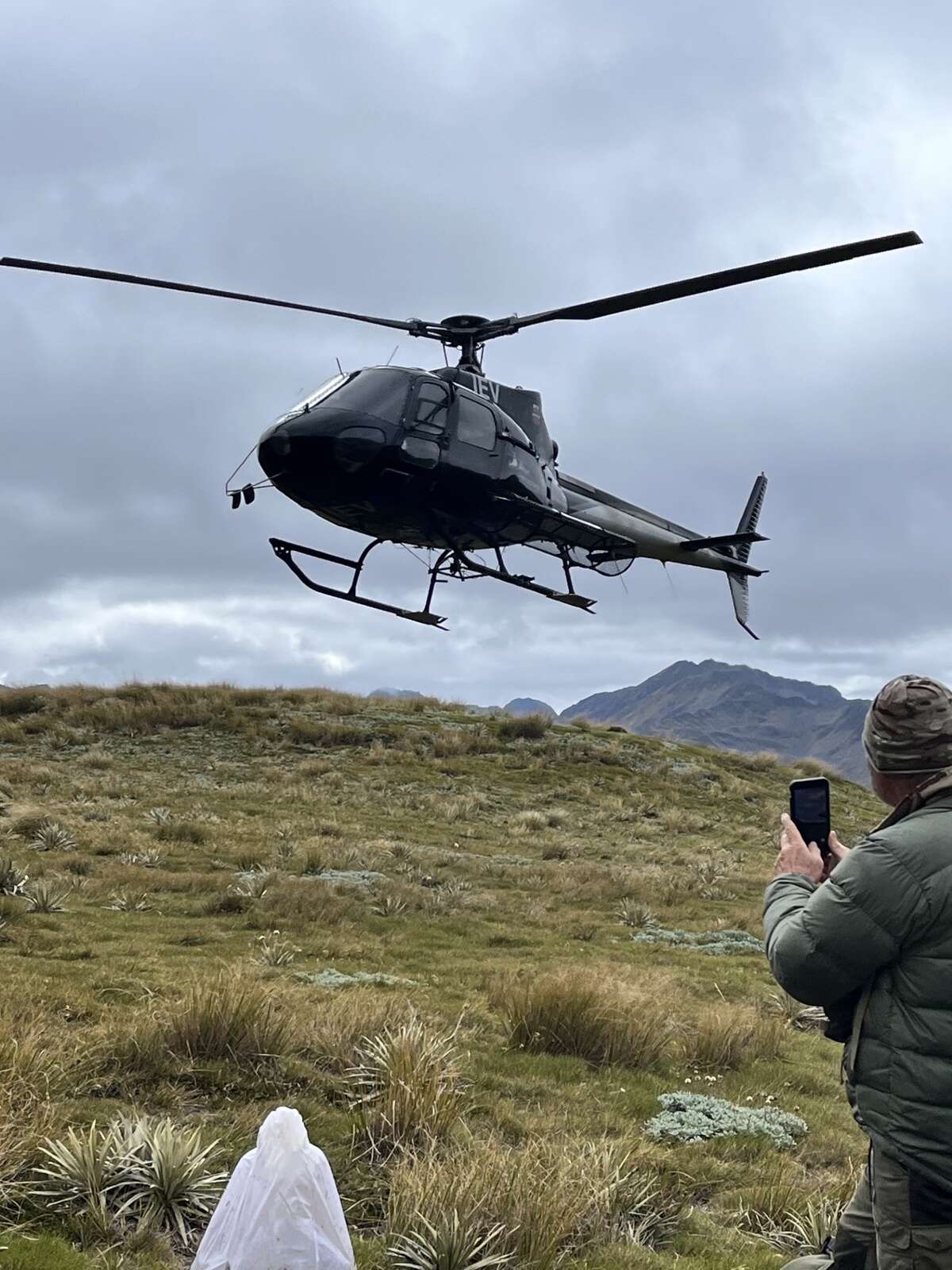
Based on recent information about animal numbers from a range of sources, an area in the Lewis Pass was selected. With the larger party of Des Buckhurst and Sam Bassily to share costs, a helicopter operator, Amuri Helicopters, was contacted to ferry us into and out of the block, allowing more time for hunting and saving some wear and tear on our bodies.
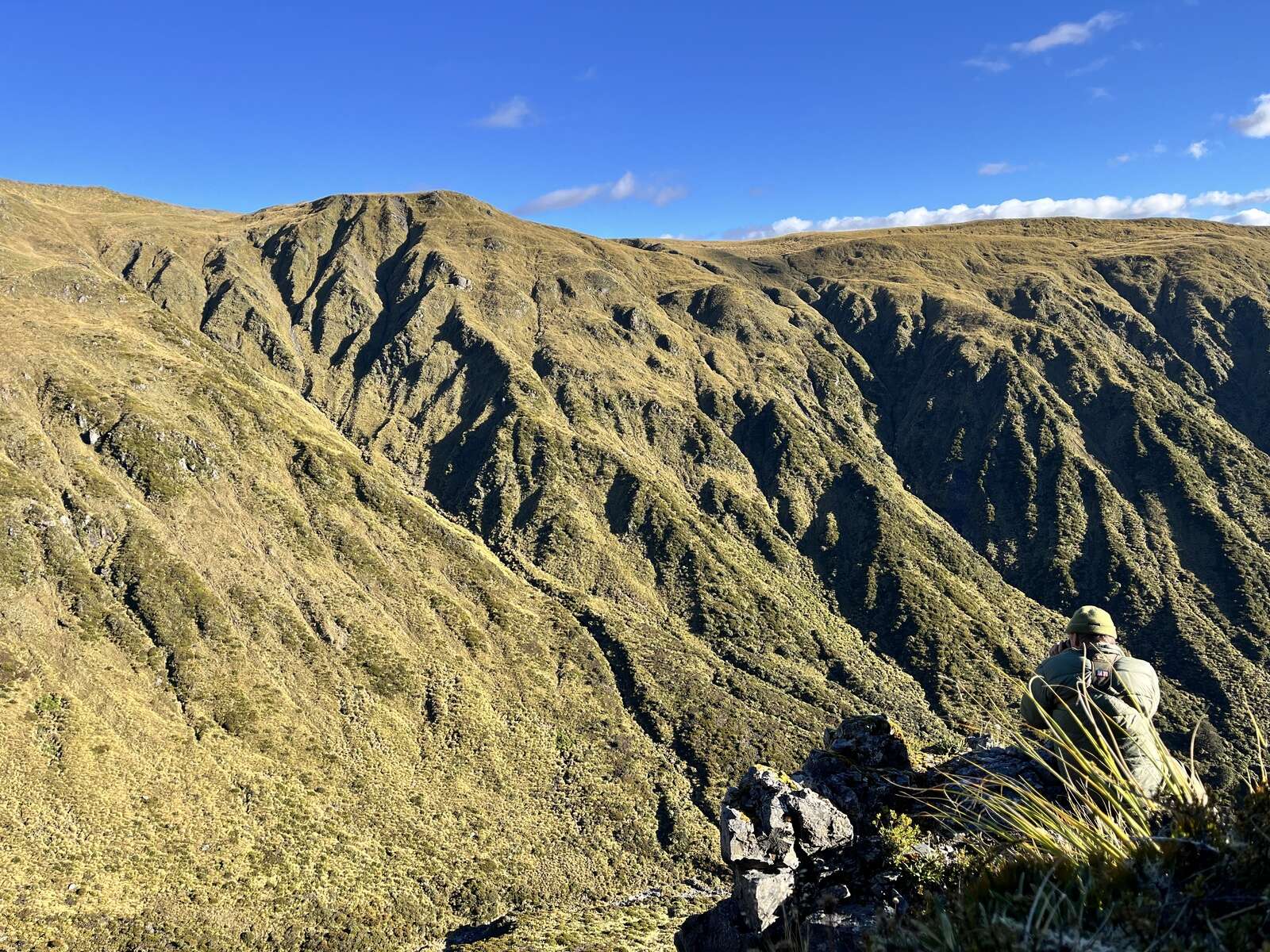
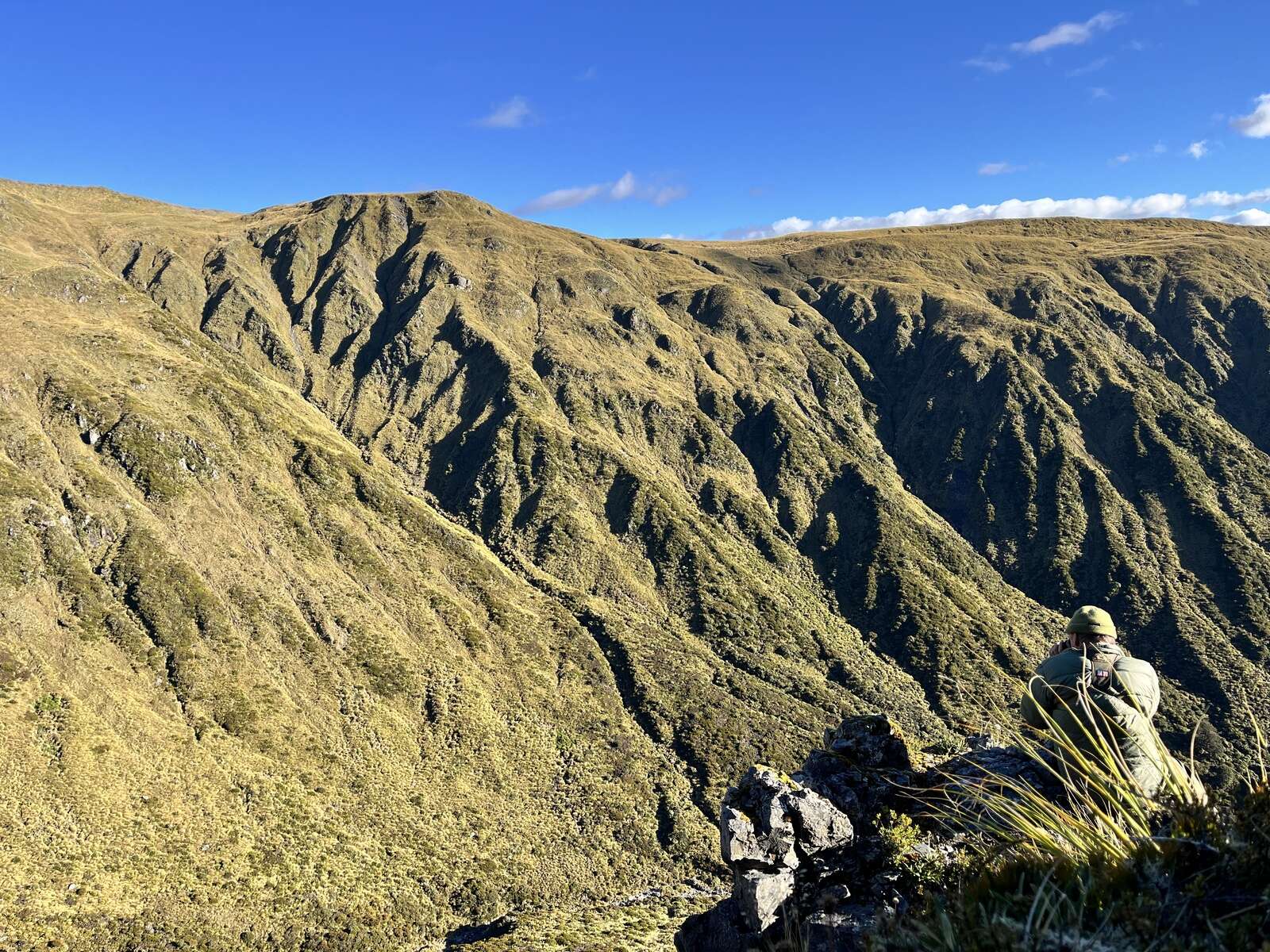
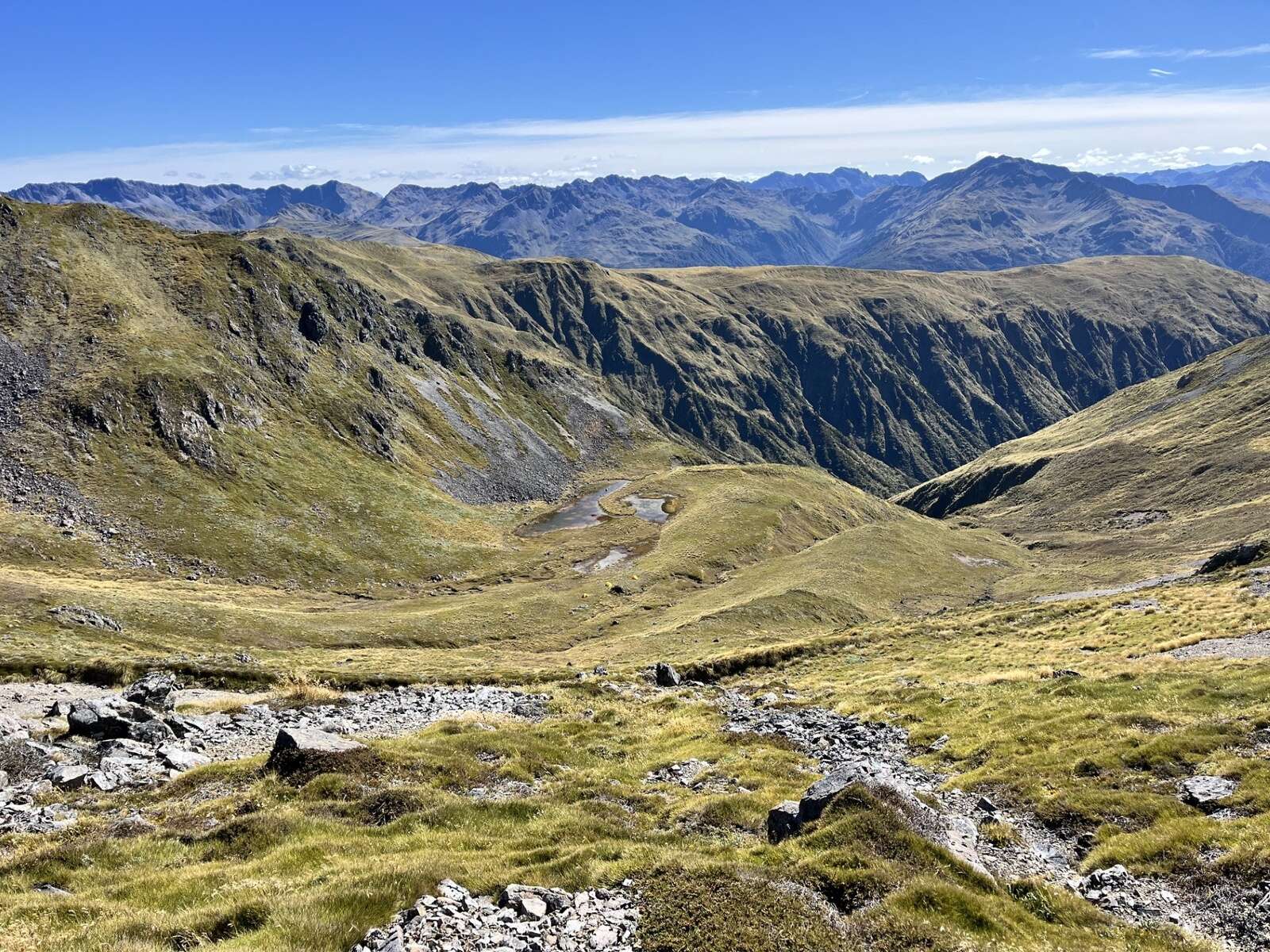
We flew into a large basin with a spring-fed tarn providing a water source. Located at 1,400 metres elevation, it was well protected on three sides by ranges towering up another 250 metres. A stream flowed from the basin into a large valley below our camp and then into the Hope River, providing options to climb down and hunt the valley below our campsite or climb up and move along the ridgelines to hunt several neighbouring watersheds.
The helicopter then left, due to retrieve us in 12 days. Their parting advice was: “Good luck. In five days you will get a severe storm - three days of rain, fog and winds of up to 100 kilometres per hour. Find cover or your tents will be ripped to pieces!” Those comments and advice stuck with us.
After setting up camp, we climbed the range into the system south of camp and spotted a group of red hinds at dusk. The next morning, we returned and saw both stags and hinds on the opposite side of the gully, moving along and down the ridgeline. Over the following days, we found stags, but despite several different approaches, we couldn’t get within shooting range. The gullies were 500 to 800 metres deep and just as wide midway down. At the top they were up to 1,000 metres wide, making any approach difficult.
Changing tactics, we dropped lower into the gullies and focused on areas of cover where a shot would be possible if stags appeared. This also corresponded with the stags starting to roar more frequently.
The change in tactics paid off on day four in the system below camp, when we dropped into the brush below the tussock and scree to observe three stags sparring. A difficult 400-metre cross-gully shot was taken and, despite what initially appeared to be a hit, all three ran off without showing any effects of being struck.
The downside of the new approach that day was more than nine hours of climbing up a creek bed, often on all fours, to reach the top of the ridgeline, get out of there and navigate home. In hindsight, this was a softener for what was to occur on most days with our new playbook.
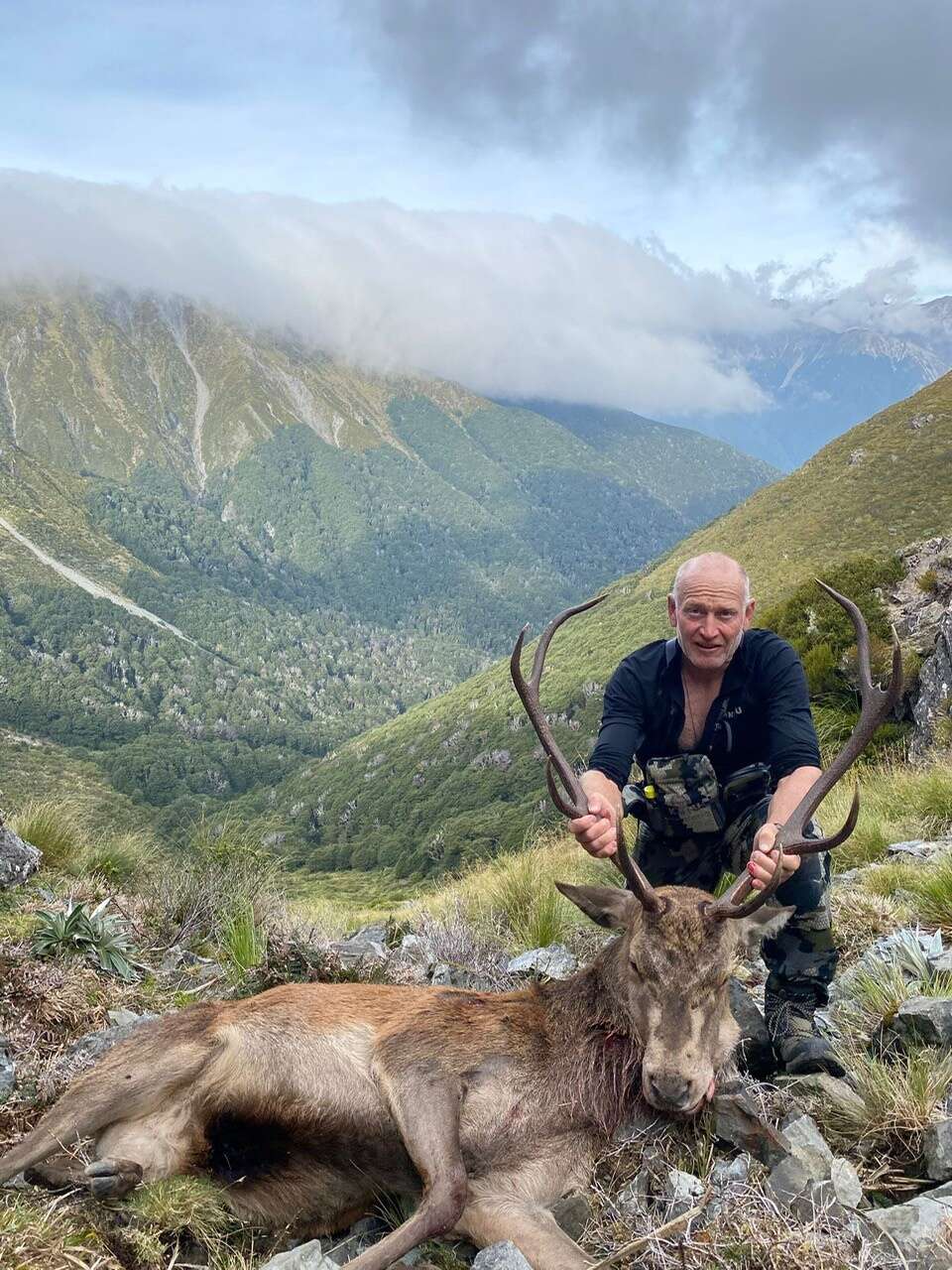
The following day, after a later start, we used the same approach in a new valley to get down onto a rocky outcrop that had a good view of the brush above the edge of the beech forest. Arriving at this spot in the middle of the afternoon, we quickly spotted a red hind and spiker. Shortly afterwards, a roar was heard down in the beech forest. Immediately after this, a stag responded to the roar from directly below our position.
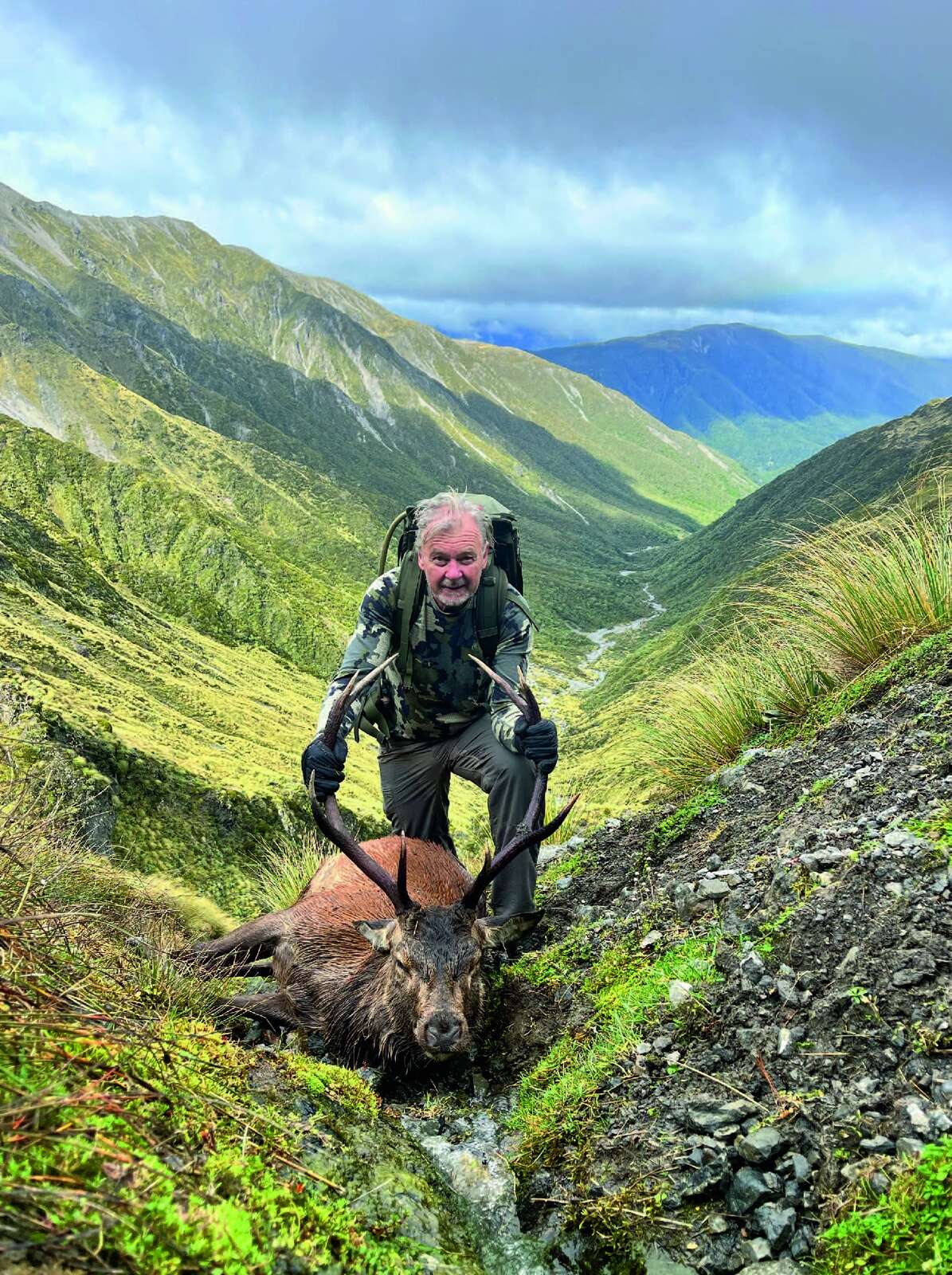
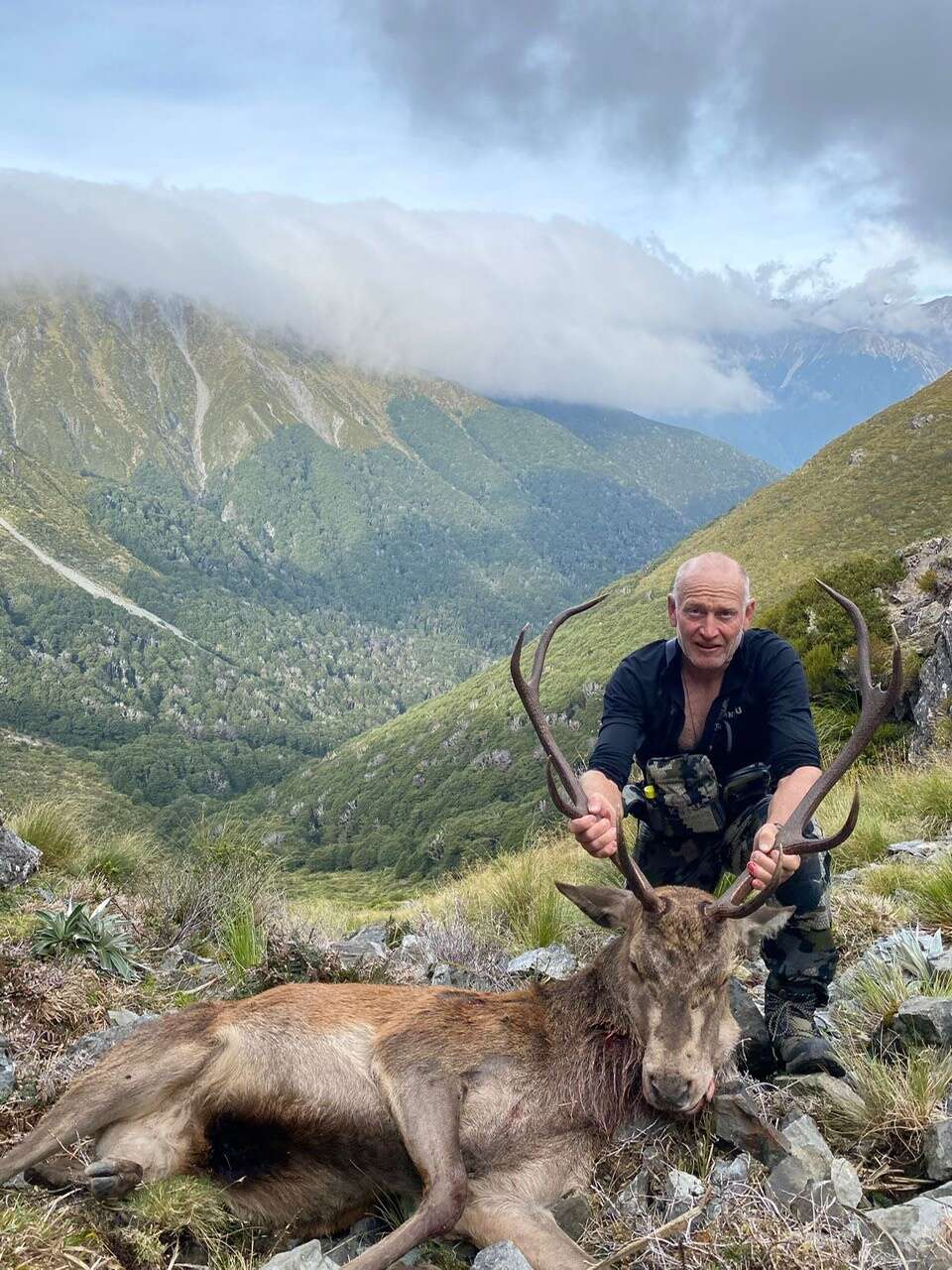
Chambering a round, I slowly got up, as did the stag, each of us looking to pinpoint the other. I had a view of only his head and neck, so I shot offhand. The stag ran off and down a rocky chute with me in pursuit. I stopped briefly and made another offhand shot through the chest. The stag went down and tumbled lower.
Crawling down to the stag, we began taking the head, backstraps and fillets. While doing this, we noticed the weather changing and a dense fog coming towards us. Starting the climb out, we reached the tops in dense fog and darkness at around 8.30 pm. Once on top of the ridgeline and questioning the outputs from our navigation tools, we started home. We were reassured shortly afterwards by the sight of Sam’s headlamp in the distance below.
The arrival of the fog signalled the beginning of three days of bad weather: fog, rain and winds of up to 80 kilometres per hour. Thankfully, we had relocated our tents to some dead ground, still in the basin but below the tarns. The slight depression shielded us from the worst of the wind gusts but left us wondering how robust our gear was as we waited it out.
Over the next three days, we lay in our tents, getting out for bathroom visits and one morale-boosting communal hot meal of garlic-and-onion-infused venison fillet, mashed potato and peas, served with a strawberry jus.
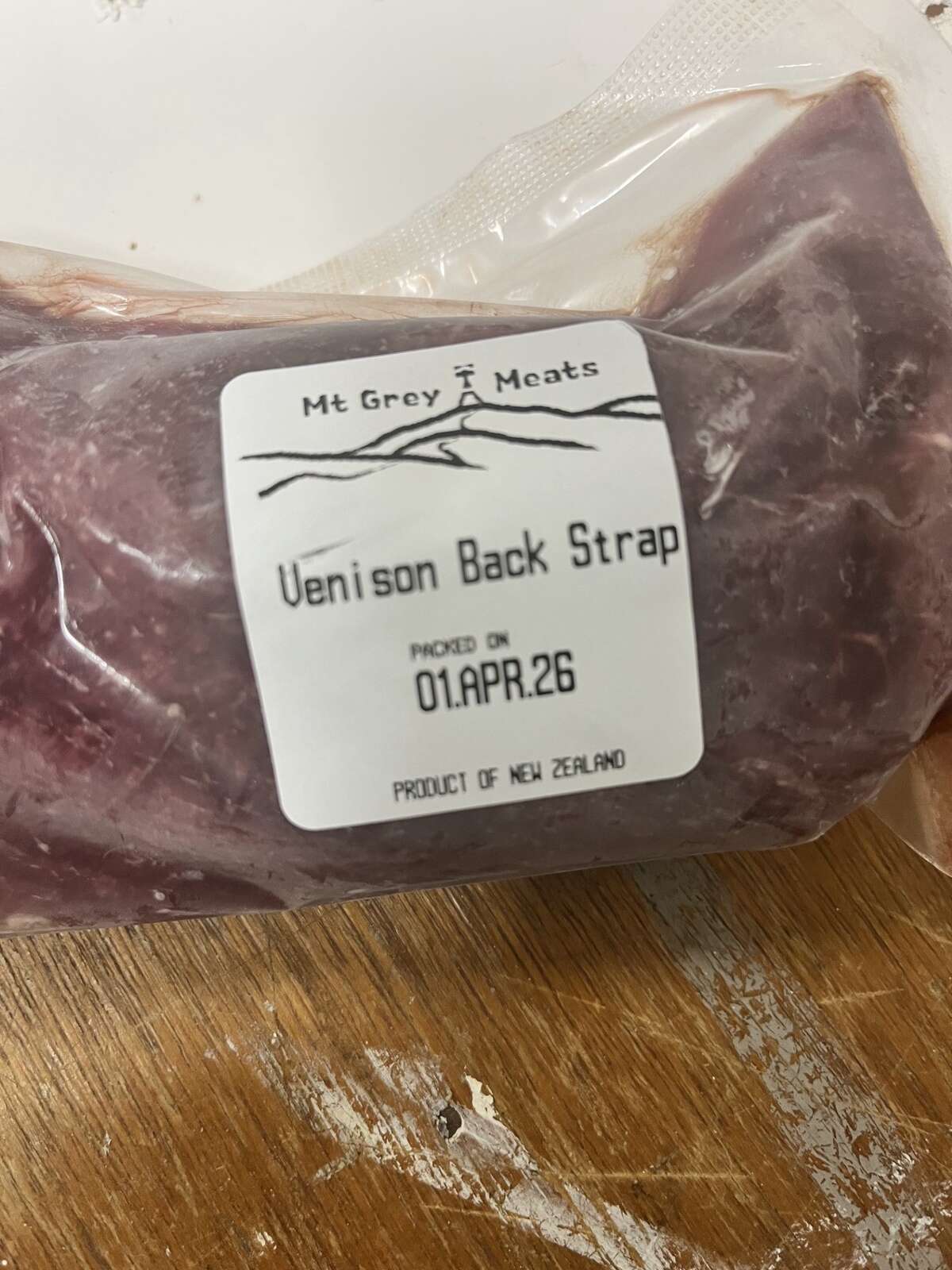
When the weather cleared enough to hunt again, four days remained. Des and I focused on getting his stag, while Sam concentrated on taking a meat animal for the Balmain dinner parties that would follow his return. To facilitate this, Sam had organised a home-kill butcher in Rangiora to package, label and freeze the meat, allowing it to be carried and imported into Australia.
We spent the next two days moving down into different valleys, looking for stags and hinds that we could approach within range. On the second day, in the third valley—the wind had blown us out of our earlier locations—we spotted a group of hinds higher in the head of a gully, in a sheltered sunny spot out of the cold wind and rain.
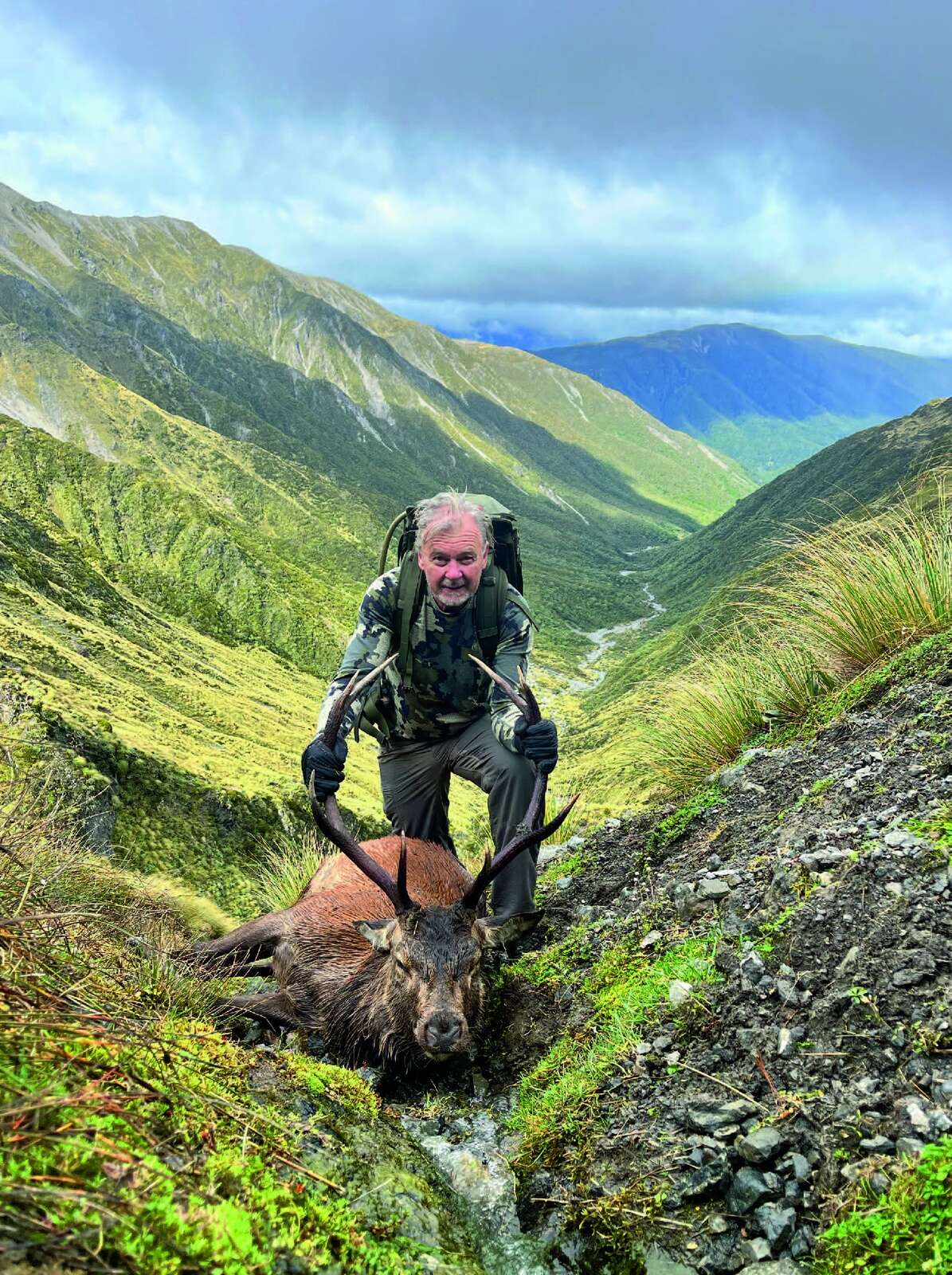
We crawled onto a bench about 300 metres from them. After waiting three hours until dark, listening to stags roaring lower down and watching a mob of four chamois, a roaring stag came to visit the hinds. Des made a difficult angled shot from just over 200 metres on last light, dropping the stag on the spot. Seeing the stag motionless and upside down in a stream, we left to complete the retrieval the following day.
Arriving back at camp, Sam informed us that he had also been successful, taking a spiker from the gully below camp.
The following day, we retrieved the meat and head from Des’ stag. What we thought would be a five-hour return trip became a nine-hour adventure because we could not come back the way we had gone in. This was due to the steepness of the final route taken down to the stag, while rain, wind and fog also slowed our progress across the tops - not to mention my navigation blip!
Having only a day left, with meat needing to be processed and frozen, heads requiring a taxidermist and expediter, and a thirst requiring quenching, we called the helicopter in.
In summary, it was a fabulous trip: great company, great country and plenty of animals seen. The red deer in this area originate from the Poulter and Nelson releases. Their heads often lack bez tines and do not have the mass of the Rakaia and Otago stags. For me, trophy value is reflected by the quality of the hunt and the effort required to be successful. You work for your stags in this country.
New Zealand hunting is very achievable and affordable. Animal numbers in many areas are high. However, you need to be organised, mountain-fit, and have a good level of relevant experience within your group that you can draw on to provide the best chance of success and safety.
If members would like more details, contact me through the branch network.