
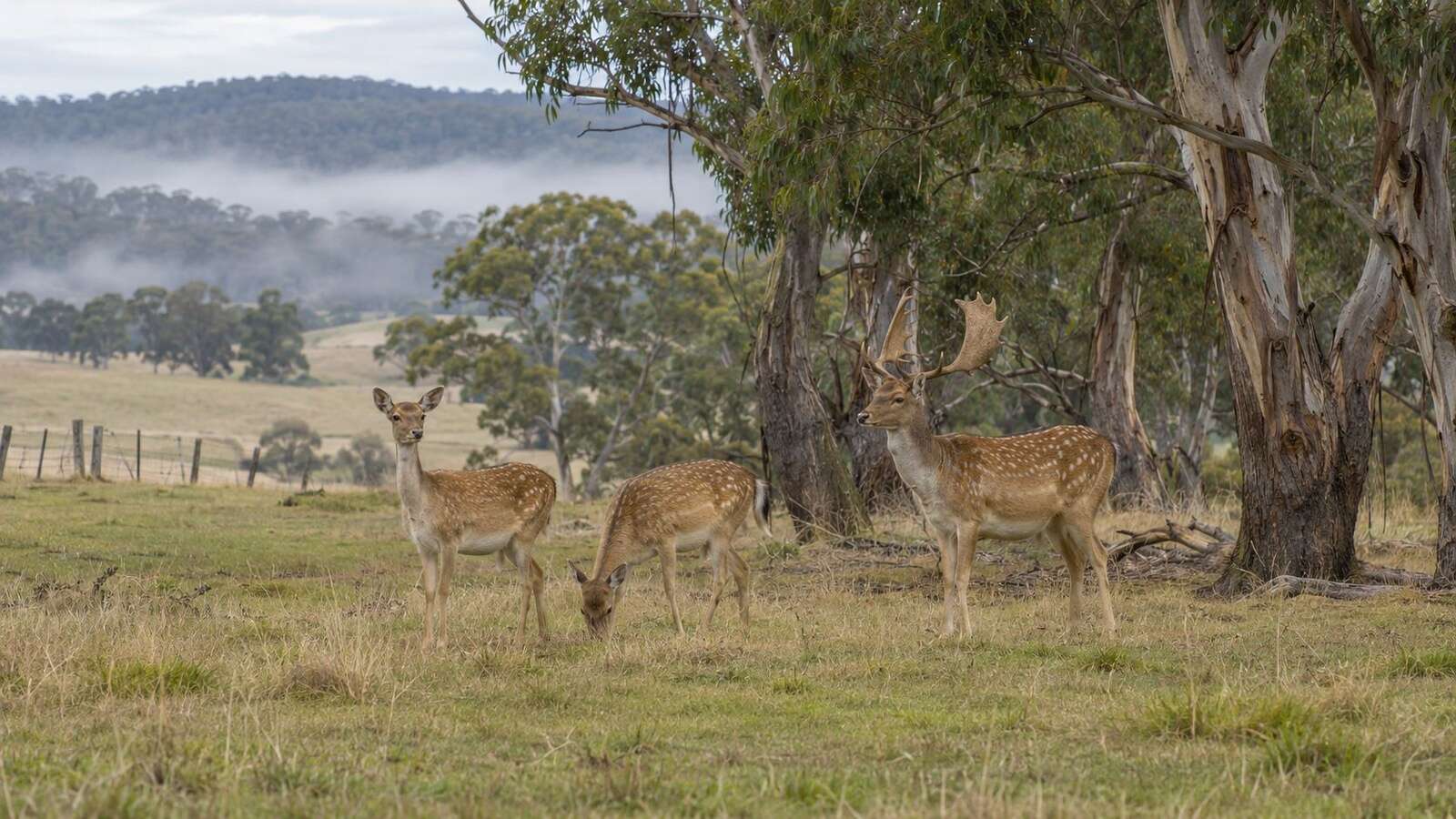
TasFarmers, the Australian Deer Association (ADA) and representatives from hunting clubs, rural Tasmanian businesses and the wider deer sector have put forward a joint proposal for the future of wild fallow deer management in Tasmania.
In a letter to Minister Gavin Pearce on 26 November, the signatories acknowledged the pressure a growing deer population places on landholders, agricultural producers and the environment. They also recognised the significant recreational, cultural and economic value of deer hunting in Tasmania. Their proposal would keep wild fallow deer classified as partly protected wildlife, give landholders and hunters more flexibility to manage deer, and review the changes after five years.
The letter was also signed by representatives of Field and Game Australia, Sporting Shooting Association of Australia - Tasmania, Charlton Hunting Club, Shooting, Hunting and Outdoors Tasmania, the Tasmanian Deer Advisory Committee and Shooters Fishers and Farmers, alongside the owners of Southern Range Sports, Sports Hut and Norwood Estate. That breadth gives the Government a starting point for reform backed by people who deal with deer in different ways.
The joint letter treats the classification of wild fallow deer and the rules that govern their harvest as separate policy decisions. The signatories want to retain partly protected status so deer remain recognised and managed as an established wildlife resource. They propose changing the harvest rules so landholders and hunters can respond to local impacts as they arise.
The submission calls for a 12-month open season for all wild fallow deer, including immature males, commonly called spikes. It proposes allowing the year-round harvest of spikes on public land where hunting is permitted, without additional permits or restrictions specific to those deer. It also calls for removing geographic hunting zones and the current tagging system to simplify administration. Land access and safety requirements would continue to apply.
The letter also asks the Government to review the minimum calibre requirement for does and other antlerless deer, subject to animal welfare and safety standards.
For primary producers and landowners, the letter proposes a single, ongoing permit for spotlighting deer on private property. Under the proposal, landowners could obtain the permit from NRE Tasmania and authorise approved hunters to manage deer on their behalf. The proposal keeps spotlighting on private property and cites public safety as the reason to exclude night hunting on public land.
The signatories also want revenue from recreational wildlife licences, including deer licences, directed to wildlife and rural crime enforcement. They propose a dedicated rural crime database to improve reporting and intelligence on offences such as trespass, stock theft, illegal timber removal and wildlife offences. Additional enforcement resources would support proactive patrols and investigations in areas identified through that reporting.
The joint letter asks the Government to work with stakeholders before deciding the future classification of wild fallow deer. The proposed five-year review would give Tasmania a chance to assess how the changes work in practice for landholders, hunters and rural communities.
For the ADA, working alongside agricultural and rural representatives brings those experiences into the same discussion. There is shared support for giving landholders practical ways to respond to deer impacts, recognising the value of recreational hunting and backing those changes with stronger enforcement.
Do you want to get the last Australian Deer news, events, updates & competitions directly to your inbox?
Enter your name & email below and we'll make sure you're the first to know!


