French hunting culture is rich, including respect for the game, meaningful rituals, and plenty of conviviality. When I was in the Army, I had the privilege of serving in Paris for three years, during which I was made very welcome and given plenty of opportunities to experience different types of hunting all over France. On this occasion I had been invited to join a Chasse battue (driven hunt) in a military training area in the Champagne region of northern France. It was a special hunt for the Fête de Saint Hubert, patron saint of hunting, and the opening of the season.
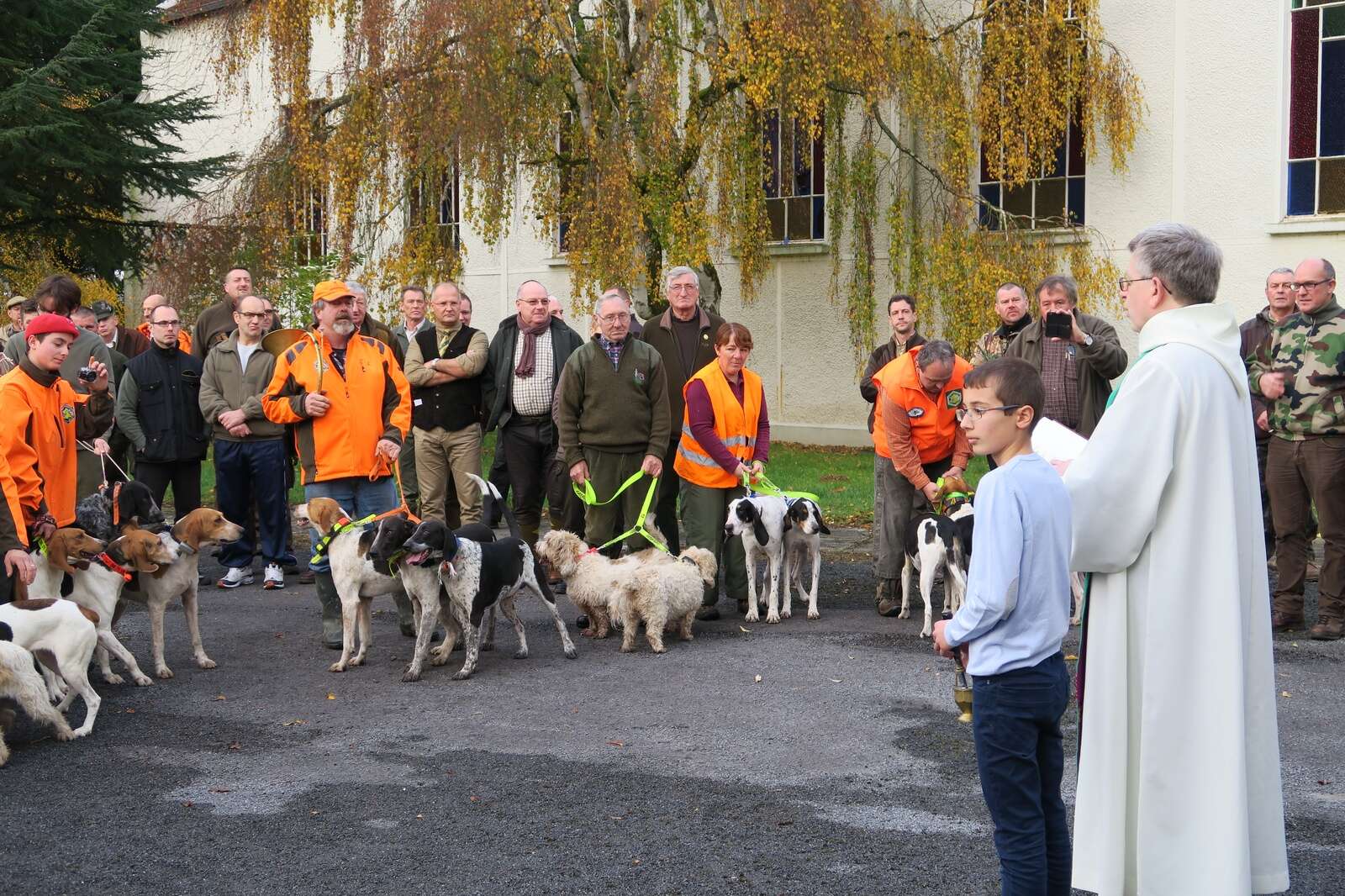
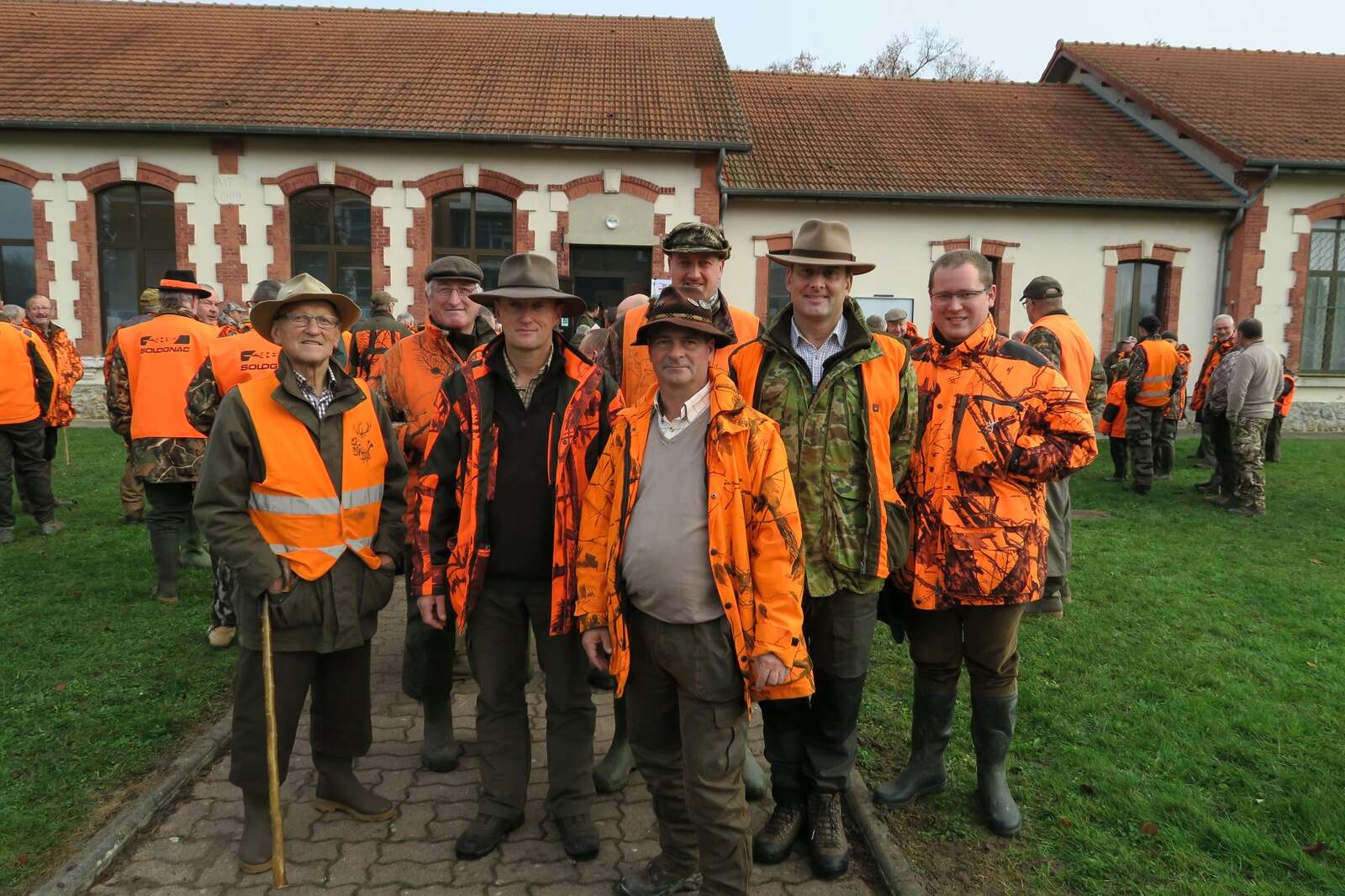
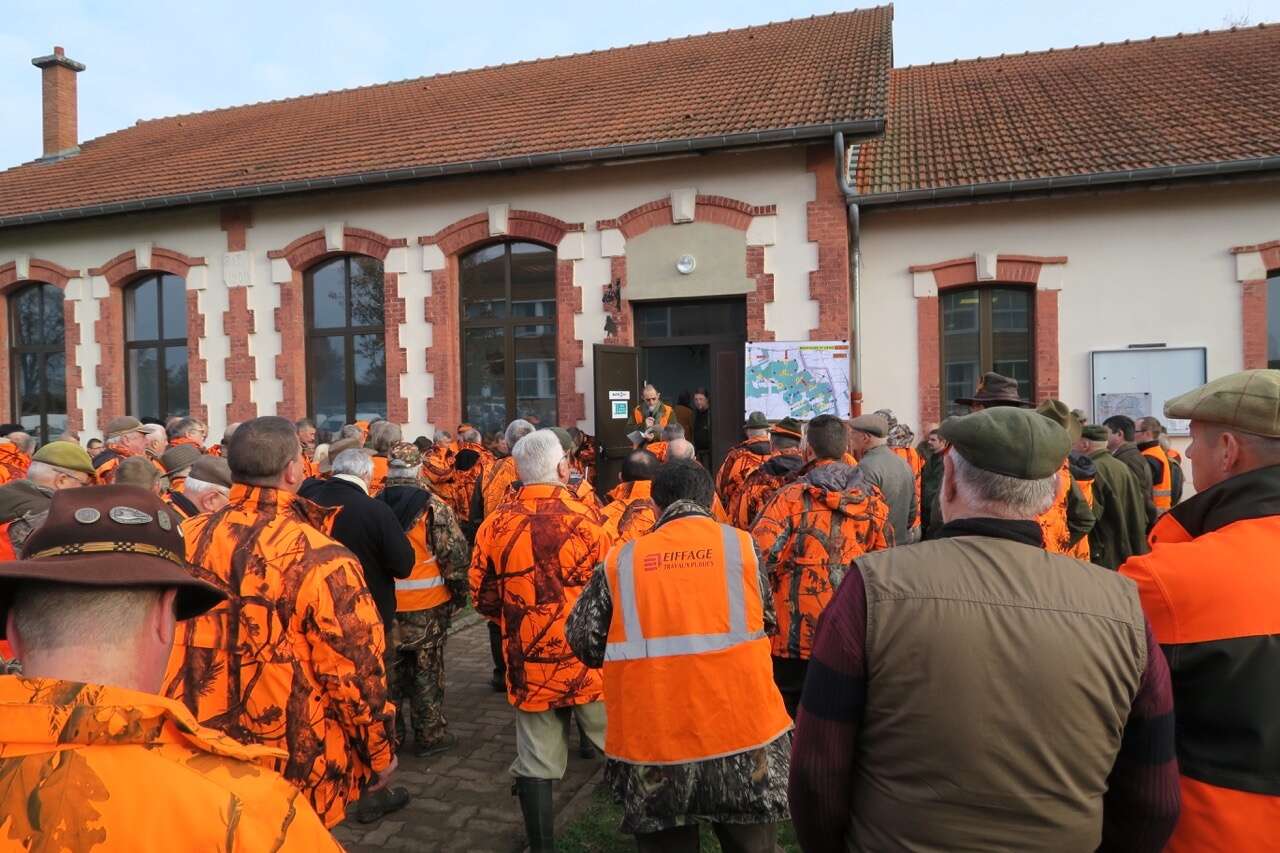
It was exciting to arrive and join the bantering blaze orange crowd of hunters. Our group was from the village of Bullecourt, where Australian troops had fought two major battles in World War 1. With us was Jules Laude AM (Mayor of Bullecourt, and an infantry veteran of the Algerian War), his son Eric (a French special forces and Gendarmerie veteran, now running a farm that includes the battlefield site), Guillaume (ex-paratrooper, now Gendarmerie motorcyclist), and me as their Aussie guest. After coffee and croissants, we celebrated a Saint Hubert Mass in the base chapel. I found this quite moving, and it was done with great style. The priest was delighted to have such a large (and brightly attired) congregation and wished us all “ Bonne chasse” (“Good hunting”), then we moved outside and he blessed the hounds. We were bound to have a good day!
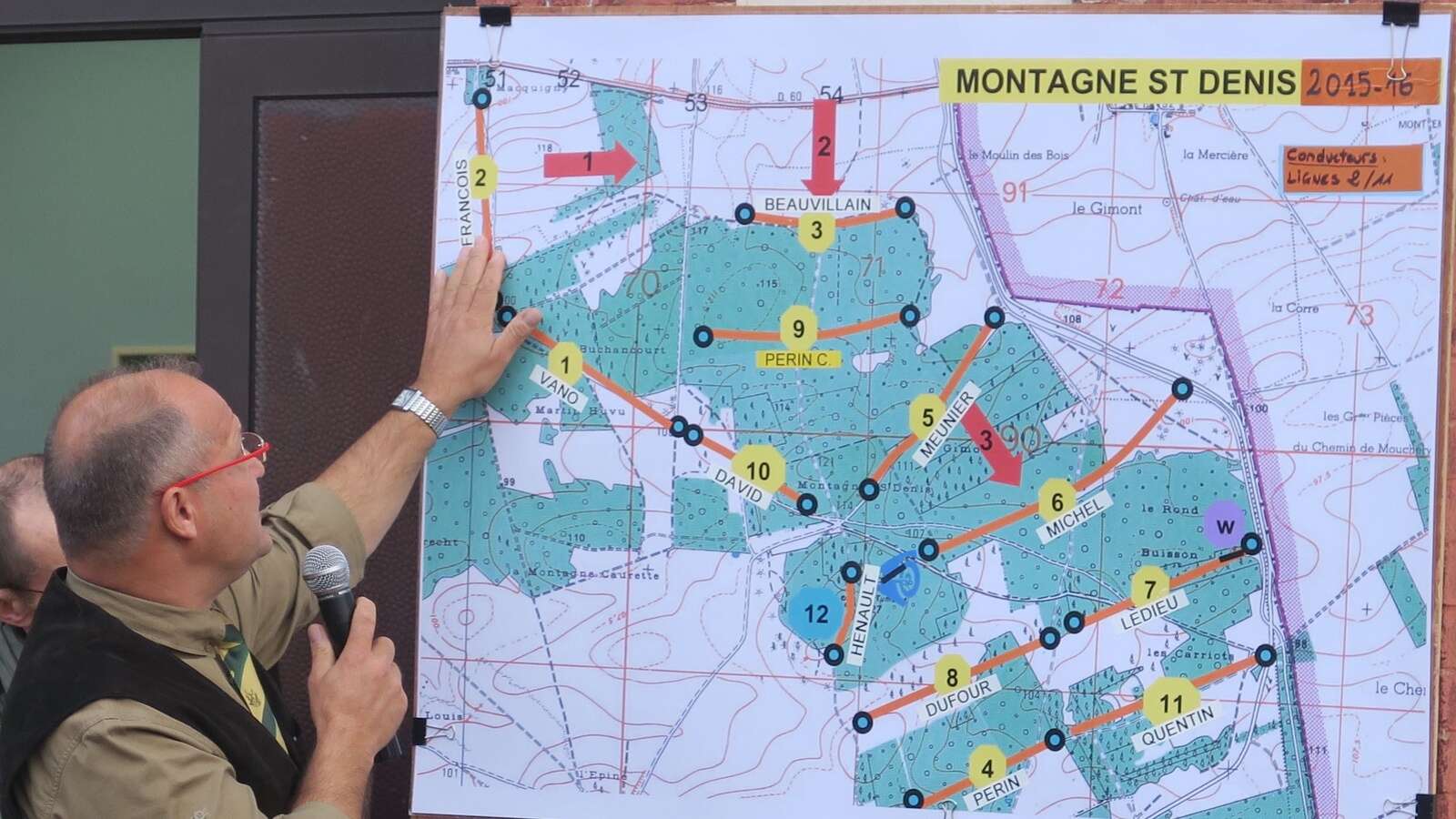
We received our hunt briefing from the Directeur de chasse (Hunt Master) who displayed impressive organisation and was very strict about weapon handling, arcs of fire and horn signals. This is essential given that everyone was using powerful centrefire rifles, typically .300 Win Mag, 9.3 x 74R, 7mm Rem Mag or similar. Most hunters use either semi-autos, straight-pulls or double rifles, with red dot sights. My Sako .270 Win with 3-9x40 scope wasn’t ideal, but it would have to do. Interestingly, the use of shotguns with buckshot is not permitted for driven hunts in France, for safety reasons.
Today’s scheme of manoeuvre was for a hundred chasseurs (hunters) in 11 lines arrayed through undulating terrain in the forest, to shoot at fast-moving game put up by twenty traqeurs (beaters) and their dogs. We were line 8 and would initially shoot southwards. Once the beaters had passed through all 11 lines, they would turn and work back in the opposite direction, so we would be rotating in place midway through. Each hunter is allocated a fixed post, with no movement allowed. We were to face away from the beaters working in the forest behind us, shooting after the game comes through our line. We were allowed to shoot cerfs (red deer stags; except me, as a non-member guest), biches (does), faôns (fawns), all chevreuil (roe deer), all sangliers (wild boar) except the bête de tête (lead animal, for social cohesion of the survivors) and laies suitées (suckling sows), plus any renards (foxes). It’s a lot to think about when the action is so fast.
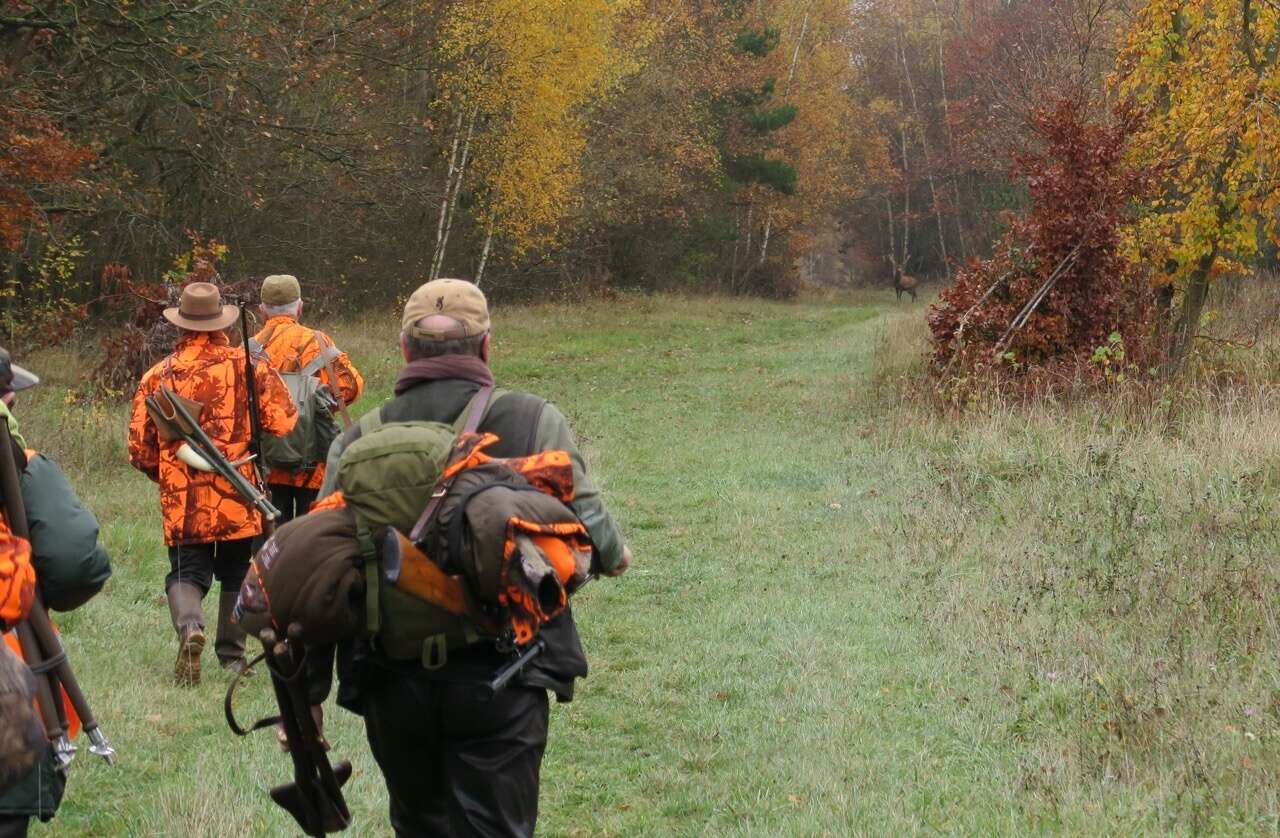
We received an auspicious welcome to our line, when a large stag met us at the edge of the forest. I quickly got a photo before he disappeared. Jules was beating, Eric was posted two up from me, with an Army reservist named Vincent in between us, then Guillaume on my left. I had reasonably thick forest both front and rear, with about a 20 metre alley between. I paced out my 30 degree arcs (five paces towards the next hunter, then three paces away from the beaters’ direction of approach) and marked them with fluoro pegs – not much shooting area left really. I was positioned in front of a brushwood screen, with another directly opposite me for when we changed direction, and a tripod stool to sit on, as we would be at our posts for about four hours.
We had been told to get set up quickly and quietly, to be ready for game put up by the first disruptions to the forest calm. Good advice, as only a few minutes later a herd of red deer came past on our shooting side, running right to left. As I heard later, Eric had glimpsed a large stag typically deeper into the forest than the others, so he held his fire on the rest. Vincent shot at an 8-pointer, which kept running, and the bigger stag veered away, gone without presenting a shot. The herd then ran in front of me, fleetingly visible 15 metres into the forest. I was just trying to identify a doe or fawn and avoid the stag when Vincent shouted “ Tirez, tirez! J’ai blessé le cerf!” (“Shoot, shoot! I’ve wounded the stag!”). Quick change of plan, as I was now allowed to try and finish it off for him. I swung on as the stag crossed in front of me, then fired when he crossed a gap and the crosshairs were just in front of his chest. The shot felt good, though he kept running, then Guillaume fired on my left. I couldn’t see what happened, but Guillaume gave four blasts on his horn, indicating a stag had been shot. He gestured that he thought he was down but couldn’t see him. Exciting stuff, and it was tantalising to have to wait to find out the result.
Nothing came near me for a while, but I saw two boars bolt past another hunter down the line followed by a futile hasty shot, then a female roe deer wandered nonchalantly across the alley in the same place. I was waiting to hear someone take a very easy shot, but it turns out that she was perfectly in the no-shoot zone between two hunters.
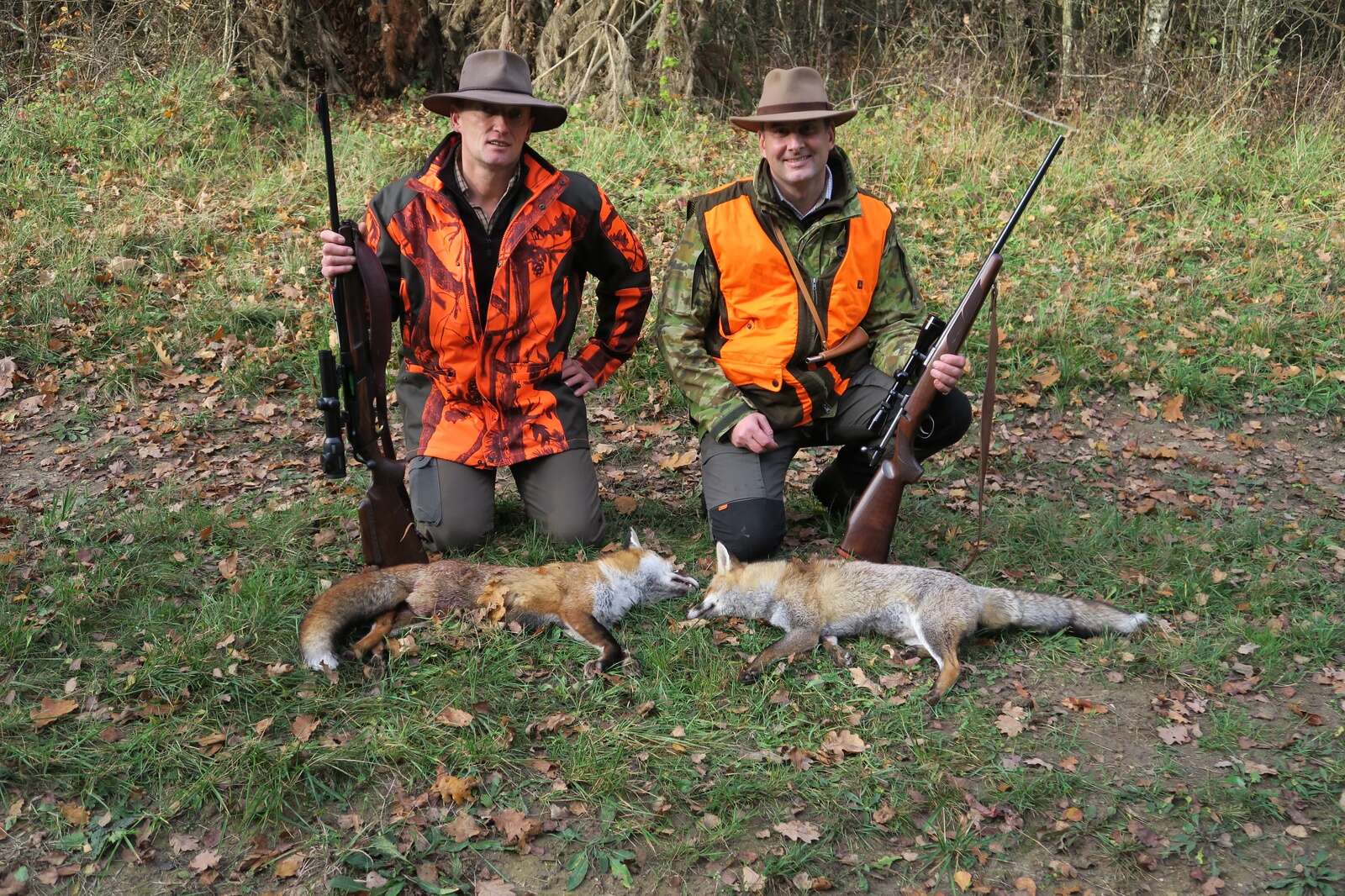
I was very motivated and had no difficulty remaining alert and prepared since it felt as if anything could happen at any moment. I then saw a fox heading towards Guillaume and looked across to check he’d seen it. He shouldered his double rifle so again I waited for a shot to ring out. Nothing. Then I saw the fox reappear, heading towards my arcs of fire, and I made ready. As soon as he crossed into my shooting area he stopped and peered at me, just visible under a branch. I quickly lined up on his chest and fired. The shot felt good, though perhaps a touch low. More tantalisation, as he disappeared from view, and again I had to wait for the result.
The beaters appeared so, while we changed sides and reset our pegs, Guillaume was able to take a look in the forest fringe. Hurrah – both the stag and my fox were there, dead! Much hullabaloo and banter as the beaters re-organised themselves then headed off again. They’d covered a lot of ground, and seen a lot of game, so were pleased that we’d had some success. We didn’t see much after that, until we heard five horn blasts, signalling the end of the hunt.
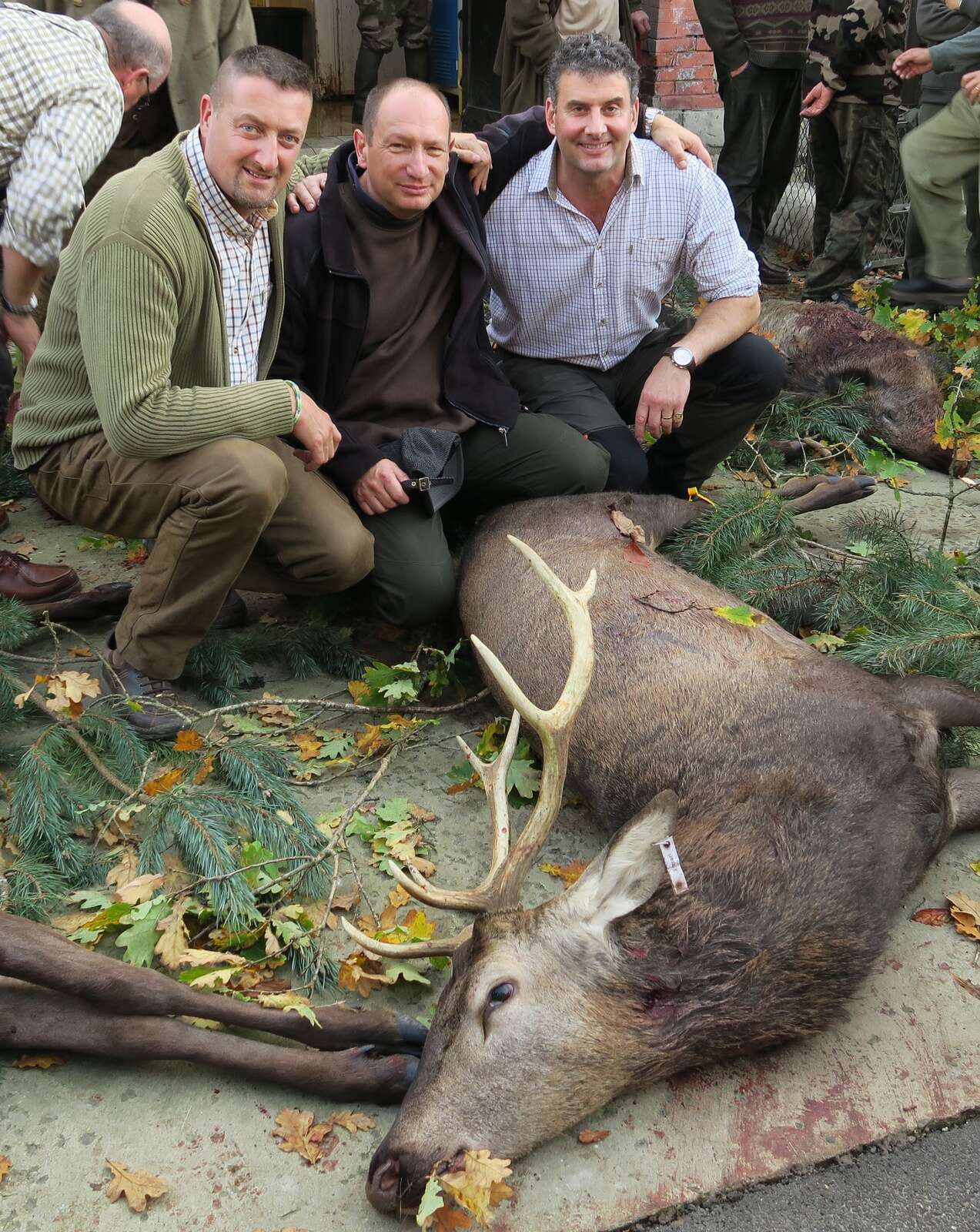
I recovered my fox, and found I was correct in thinking my shot was on the low side, but actually straight through his heart. It had a beautiful thick pelt with lots of silver – shame it was not feasible to tan it and bring it home from France. Eric had got one too. I then quickly joined the others as they followed-up on the stag. Easily found, it had dropped just out of sight into a hollow, stone dead. It turned out that it had been shot three times – twice in the lungs by Vincent and me, then in the neck by Guillaume. Much celebration and talk of Franco-Australian cooperation on the field of honour – a very special hunting moment.
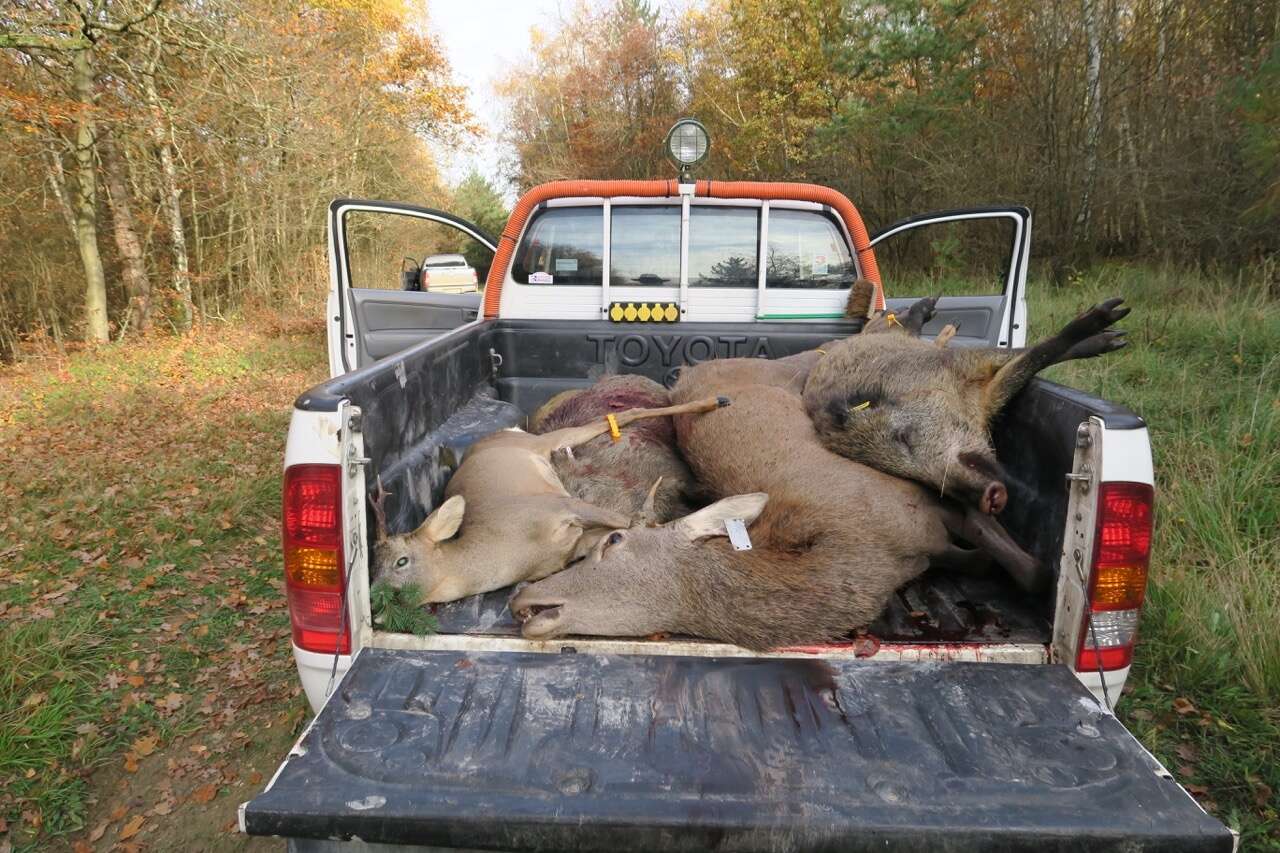
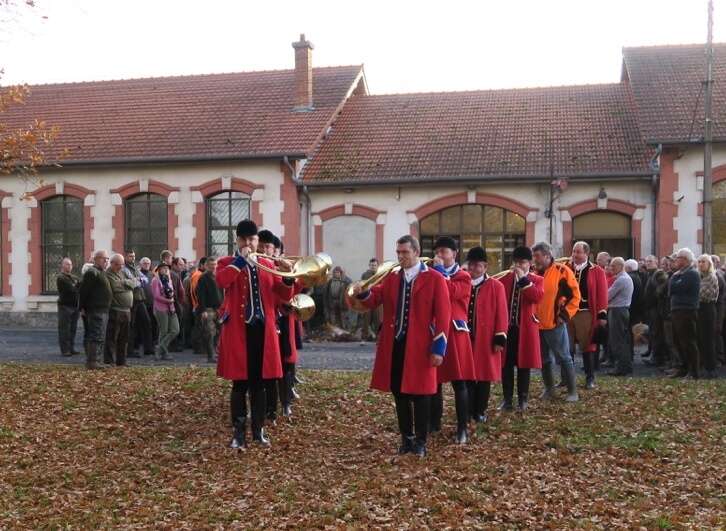
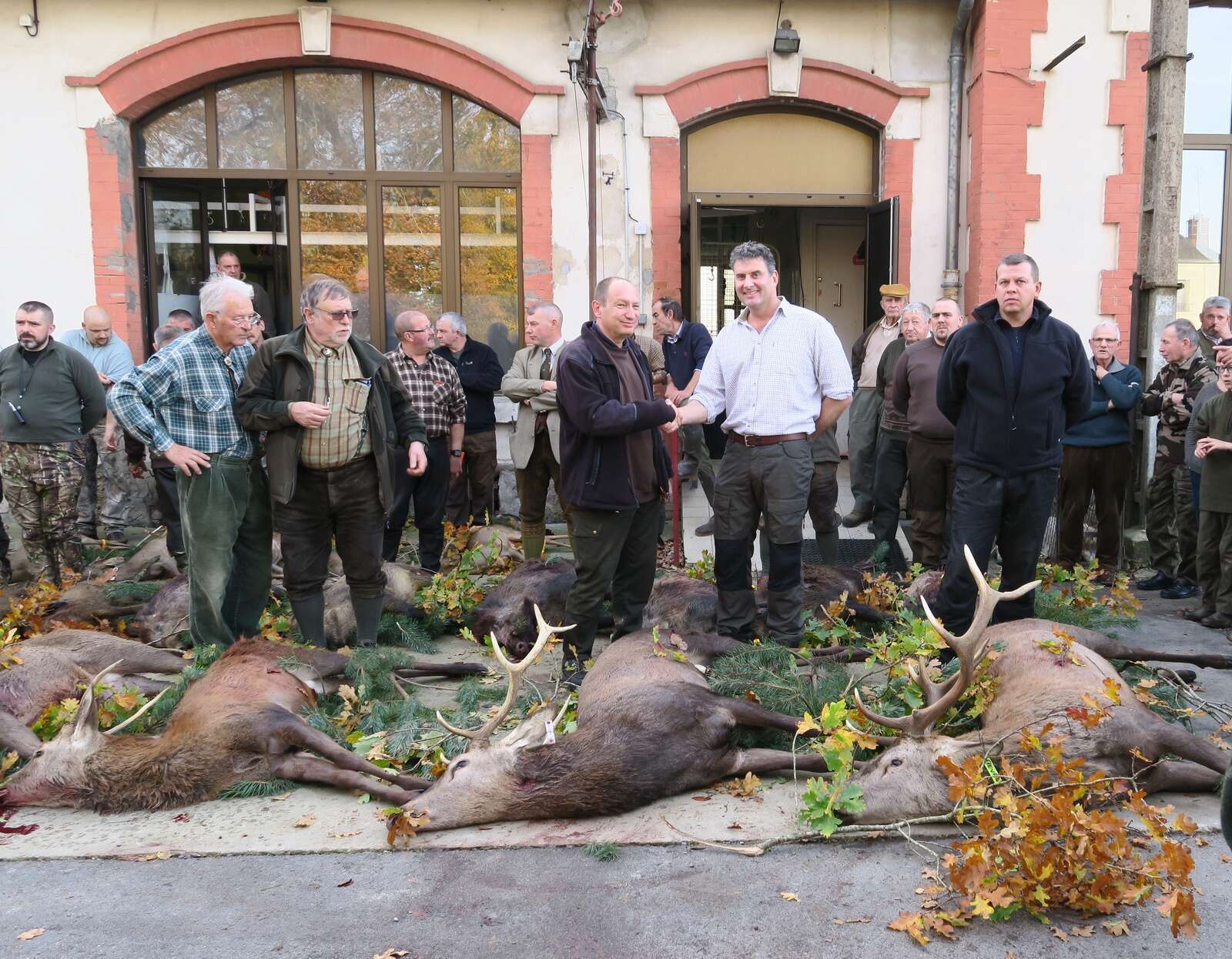
Overall, it had been a very successful day for the club, with two reasonable stags, a handful of does and smaller stags, many wild boar and roe deer, and our two foxes. We all gathered back at the hunting lodge to celebrate the day. At the tableau ceremony, respects were paid to the game with a tune for each species played by the Cornes de chasse (hunting horns), and handshakes from the Hunt Master for the successful hunters. As the first to hit it, Vincent stood by his stag, with Guillaume and me also congratulated for having assisted, then I dropped back and was congratulated for my fox.
Since it was his first stag, Vincent was treated to the full blooding ritual. Along with a couple of other first-timers, he knelt down and the Hunt Master smeared blood from the deer onto their faces - rather grisly, but I suppose honouring the significance of the moment and the reality of taking a life for sport. All this ritual and symbolism really added to the experience.
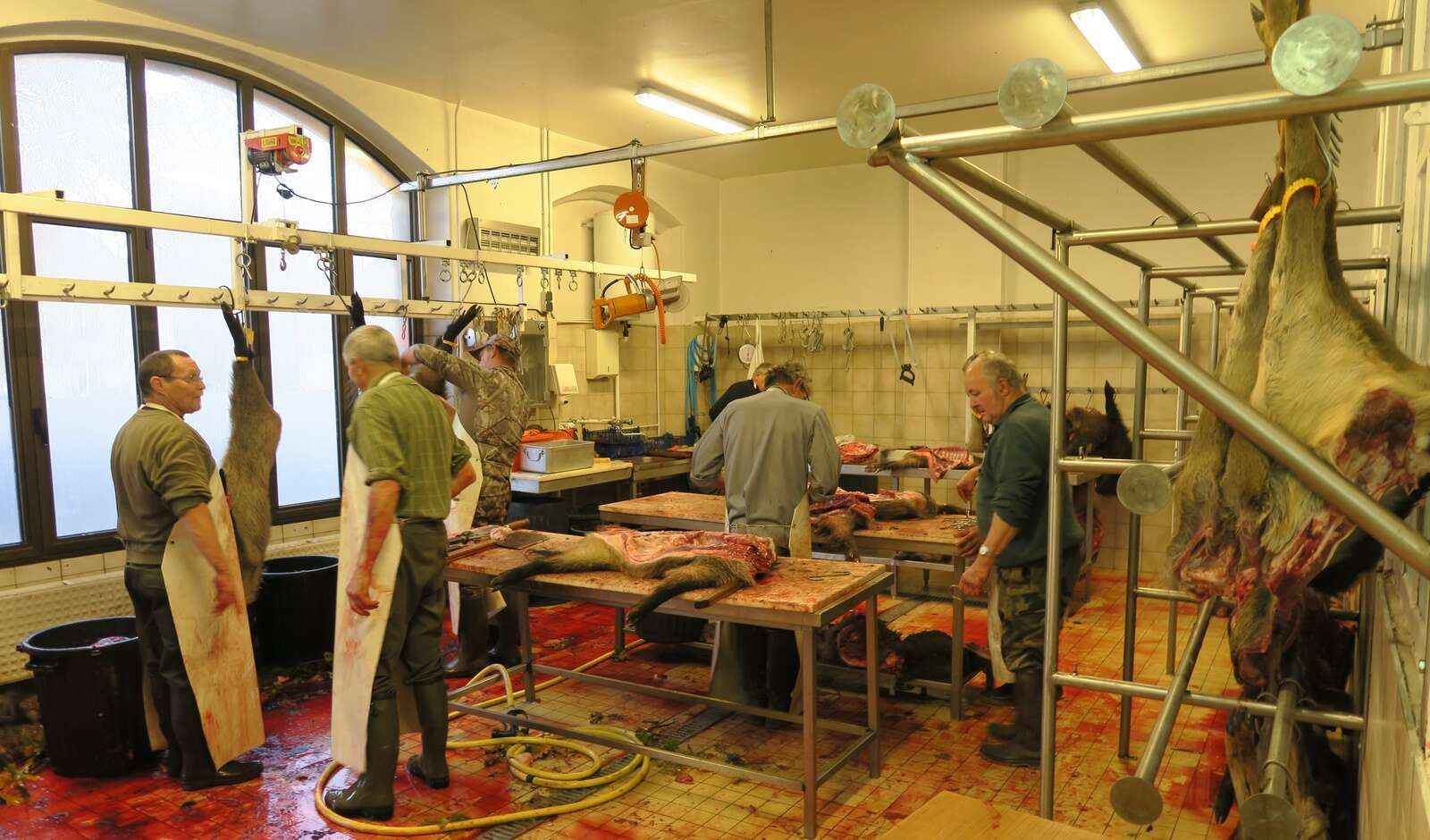
We then enjoyed a meal and a few drinks in the hunting lodge, with plenty more banter and stories. Meanwhile, all the game was loaded on hooks in a well set-up butchering room and quickly dealt with by a remarkably efficient team of volunteers. Nothing was wasted, and every hunter was entitled to a share of the meat to take home. Interestingly, the French word venaison (venison) means any game meat, not just deer.
I presented the Directeur de chasse with an engraved plaque for the hunting lodge, including some Australian military memorabilia and battlefield shrapnel from Bullecourt. Four divisions of 1 ANZAC Corps had fought two major battles there in 1917, briefly capturing the Hindenburg Line as the first Allies to break in. The battles were extremely costly, with 10,000 casualties, and the advances made were tragically soon lost again. Hard lessons were learned, then applied superbly by General Sir John Monash and the Anzac Corps at the battle of Le Hamel in 1918. Australian service in France in both World Wars is well-remembered, and it was a privilege for me to represent our country in this way.
All in all, it was a terrific day’s hunting, full of enjoyable moments and symbolism. The French approach adds a lot to the experience and is thought-provoking for what could be done in Australia. Our risk profile would be different about the hunting itself, but the cultural aspects are interesting.