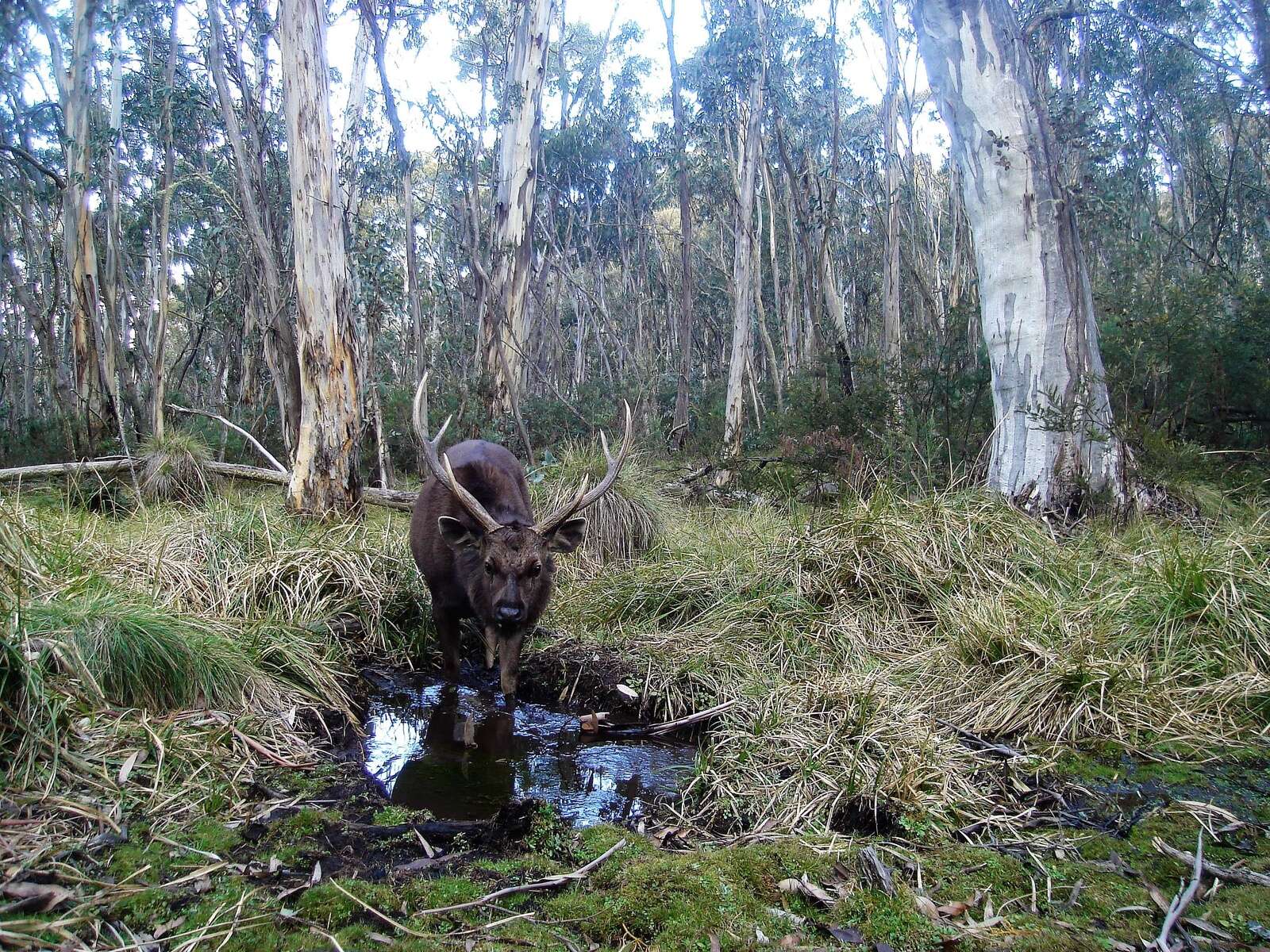
How a series of Australian studies are helping answer one of the biggest questions in modern wild deer management.
By Sean Kilkenny
For decades, one of the biggest questions in Australian deer management has remained surprisingly difficult to answer: what measurable contribution does recreational hunting make to the management of wild deer populations?
It is a question that has generated strong opinions but comparatively little Australian science. Recreational hunters have long argued that they play an important role in managing deer populations, while others have questioned whether hunting can deliver meaningful outcomes at a landscape scale. Despite the strength of those views, much of the evidence informing Australian discussions has traditionally been drawn from overseas research. While studies from New Zealand, Europe and North America have made important contributions to our understanding of deer ecology and management, Australia's landscapes, deer species, hunting systems and public land arrangements differ. If decisions about wild deer management are to be based on the best available evidence, Australia ultimately needs an evidence base developed under Australian conditions.
That process is now well underway. Over the past decade, a series of independent research projects, government initiatives and policy commitments have begun answering some of the most fundamental questions surrounding wild deer management. Although much of this work has taken place in Victoria, the knowledge generated has significance well beyond a single state. Wild deer are now established across several Australian jurisdictions, each facing similar challenges in understanding deer abundance, distribution, ecological impacts and the role of different management tools. Rather than representing isolated pieces of research, these studies collectively demonstrate how scientific understanding develops over time, with each project contributing another piece to a much larger picture.
The starting point for that journey was not recreational hunting at all. Before managers could evaluate whether any management program was effective, they first needed a reliable understanding of the deer populations themselves. Recognising that significant knowledge gaps existed, the Victorian Government's Deer Control Strategy identified the need to improve information about deer distribution, abundance and impacts across the state. Funding provided through the strategy enabled the Arthur Rylah Institute to undertake Australia's first comprehensive statewide assessment of wild deer abundance on Victorian public land.
The resulting survey marked an important milestone in Australian wildlife management. Through systematic field surveys and statistical modelling, researchers estimated that approximately 191,000 wild deer occupied around 74,500 square kilometres of Victorian public land and produced regional density estimates for Sambar, Fallow, Red and Hog Deer. For the first time, wildlife managers had a scientifically derived benchmark describing the distribution and abundance of deer across an entire state. Until then, discussions about deer numbers had relied largely on harvest returns, local surveys, and field observations, each of which provided useful information but none of which could deliver a consistent statewide baseline.
Importantly, the abundance survey was never intended to determine whether recreational hunting was effective. Its purpose was considerably more fundamental. In wildlife management, understanding the starting point is essential because future monitoring depends upon having a reliable benchmark against which change can be measured. Whether populations increase, decrease, or remain stable over time can only be assessed with confidence in the original estimate. Although undertaken in Victoria, the project addressed a challenge common to every Australian jurisdiction where wild deer are established and laid the foundation for future research.
Once researchers had established where deer occurred and how abundant they were, attention naturally shifted towards understanding why deer were more common in some landscapes than others. One of the most significant Australian contributions to that question came through research published in Australian Zoologist, which examined Sambar Deer occurrence throughout Victoria's Mountain Ash forests. Researchers surveyed 86 sites across Yarra Ranges National Park, Melbourne Water's closed catchments, and adjoining State Forest, examining how environmental variables such as forest age, proximity to waterways, topography, and land tenure influenced the likelihood of deer presence in each landscape.
Several findings reinforced observations familiar to experienced hunters. Sambar Deer were strongly associated with waterways and particular forest age classes, supporting long-held observations about preferred habitat. Perhaps more significantly, the study found higher probabilities of deer occurrence within Yarra Ranges National Park and Melbourne Water's closed catchments than within the neighbouring State Forest. Unsurprisingly, those findings prompted discussion about whether differences in recreational hunting opportunity may have contributed to the observed pattern.
The researchers, however, were appropriately cautious in their interpretation. Land tenure reflects much more than whether hunting is permitted. State Forests differ from National Parks through timber harvesting history, road density, public access and a range of other management activities, any of which may also influence deer distribution. Rather than concluding that hunting explained the differences, the authors identified land tenure as an important ecological variable while acknowledging that further research would be required to determine which aspects of land tenure were driving the observed pattern. In doing so, the study did exactly what good science should do: it answered one question while identifying the next.
That next question was explored more directly through Emma Bellot's Honours thesis, completed at RMIT University. Conducted within the Jerusalem Creek section of Lake Eildon National Park, the study compared adjoining hunted and non-hunted areas using remote camera arrays and spatial capture-recapture modelling to estimate absolute deer density. By selecting neighbouring study sites with broadly similar environmental characteristics, the research sought to minimise many of the factors that often complicate wildlife studies and focus more directly on differences associated with hunting access.
The findings were striking. Bellot estimated approximately 2.3 Sambar Deer per square kilometre within the hunted area compared with around 8.6 deer per square kilometre in the adjacent non-hunted area, while camera detections were also substantially higher where hunting was not permitted. On face value, the results provide some of the strongest Australian evidence to date suggesting that recreational hunting may influence local deer abundance.
Equally important, however, was the care taken in interpreting those findings. The study examined one landscape during a single survey period and did not directly measure hunting effort or harvest rates. Although the research design deliberately selected comparable sites, other environmental factors may also have contributed to the observed differences. Rather than claiming recreational hunting had definitively caused the lower deer density, the thesis concluded that hunting was associated with substantially fewer deer and recommended that the relationship be investigated across multiple landscapes before broader conclusions were drawn.
Viewed alongside the earlier Australian Zoologist research, Bellot's work contributed another important piece to the emerging evidence base. Two independent Australian studies, using different methodologies and examining different landscapes, had both identified relationships between land tenure, hunting access and deer occurrence. Neither claimed to provide the final answer, but together they demonstrated why larger, landscape-scale research was both justified and necessary.
Fortunately, that broader investigation was already underway. Importantly, it was not initiated because of the Honours thesis or the earlier Australian Zoologist paper. Rather, it arose from a separate commitment within the Victorian Government's Sustainable Hunting Action Plan 2021–2024, which recognised the need to better understand the contribution recreational hunting makes to deer management. Among its commitments was a clear objective to determine the role of different forms of recreational hunting in both initial and ongoing deer reduction programs. In other words, the policy acknowledged that recreational hunting already formed part of Victoria's deer management framework, while recognising that stronger scientific evidence was needed to better understand where, when and how it contributes to management outcomes.
To deliver that commitment, the Game Management Authority commissioned the Arthur Rylah Institute to undertake what is expected to become Australia's most comprehensive investigation into recreational hunting's contribution to deer management. Unlike the earlier studies, which each addressed individual pieces of the puzzle, this research has been designed to examine management outcomes across multiple landscapes over several years. Researchers are monitoring changes in deer abundance alongside vegetation condition and other ecological indicators, providing an opportunity to assess recreational hunting under a range of environmental conditions and management settings. Whatever the eventual findings, the project represents the first coordinated Australian attempt to evaluate recreational hunting at a scale that reflects how deer are actually managed across the landscape.
Viewed together, the progression of research over recent years is striking. The Deer Control Strategy identified the need for better information and funded the statewide abundance survey. The Australian Zoologist study examined the environmental factors associated with deer occurrence. Emma Bellot's Honours research explored whether hunting was associated with differences in local deer density. The Sustainable Hunting Action Plan then committed the government to evaluating recreational hunting as a management tool, with the Arthur Rylah Institute now delivering that commitment through landscape-scale research. None of these projects was designed to answer every question, but together they illustrate how scientific understanding develops incrementally, with each study informing the next rather than replacing the previous one.
Another aspect of this story deserves attention because it highlights how policy decisions can create opportunities for future research. Following many years of advocacy by the Australian Deer Association, regulated recreational deer hunting has been introduced into both the Snowy River and Errinundra National Parks. The most obvious outcome has been an expansion of hunting opportunities, but there is also an important scientific benefit that is often overlooked.
Because the statewide abundance survey established baseline deer estimates before hunting commenced in these parks, researchers can now monitor how deer populations respond over time under a new management setting. This should not be interpreted as suggesting that Victoria previously lacked suitable areas for studying recreational hunting. Recreational deer hunting already occurs across extensive areas of public land, including numerous national parks. Rather, the addition of Snowy River and Errinundra increases the diversity of landscapes available for comparison, strengthening future research by allowing scientists to examine whether similar patterns emerge under different environmental conditions.
This is where ADA's advocacy intersects with the broader research story. The Association did not commission the science, nor has it sought to influence its findings. However, by helping secure regulated hunting access within these parks, it has contributed to creating additional landscapes in which future research can be undertaken. The value lies not in predetermining the outcome of science, but in expanding opportunities for robust scientific investigation. Better research benefits everyone involved in deer management, regardless of what the results ultimately show.
Although much of the work described here has been undertaken in Victoria, its significance extends well beyond the state's borders. Wild deer are now established across several Australian jurisdictions, each with different legislation, landscapes and management priorities. While the management objectives may differ between states, the underlying questions remain remarkably consistent. How many deer are there? Where are they concentrated? What impacts are they having? Which management tools are most effective under different circumstances? Developing an Australian evidence base allows those questions to be answered using information generated within Australian landscapes rather than relying solely on overseas experience.
For many years, Australian discussions about deer management have understandably drawn heavily on international research. That work has been invaluable and will continue to inform wildlife management into the future. However, Australia's forests, deer species, hunting systems and public land arrangements are unique. The research now underway represents an important shift towards understanding those systems on their own terms. Whether future policy discussions occur in Victoria, Tasmania, New South Wales or elsewhere, they will be stronger if informed by evidence generated under Australian conditions.
Perhaps that is the most encouraging aspect of this story. No single study will determine the future of wild deer management, nor should it. Good science progresses through the gradual accumulation of evidence, with each project contributing another piece to an increasingly complete understanding of the issue. The Deer Control Strategy established the baseline. Independent researchers explored how deer distribution and abundance varied across different landscapes. The Sustainable Hunting Action Plan committed to evaluating recreational hunting as a management tool, and the Game Management Authority's current research is now bringing those threads together through the most comprehensive Australian study undertaken to date.
The outcome is larger than any individual research project. Australia is steadily developing its own evidence base for wild deer management—one that is objective, transparent and directly relevant to Australian conditions. Whatever conclusions emerge from current and future research, they will be stronger because they have been developed in Australian landscapes, by Australian researchers and within Australian management systems. That is good for hunters, good for land managers and, ultimately, good for informed wildlife policy.
Author's Note
This article captures a point in time in what is an evolving field of Australian research. Several of the studies discussed remain underway, and future findings may strengthen, refine or challenge our current understanding. That is how science should work. As new research becomes available, Australian Deer will continue to report on its findings so readers can follow the development of Australia's evidence base for wild deer management.