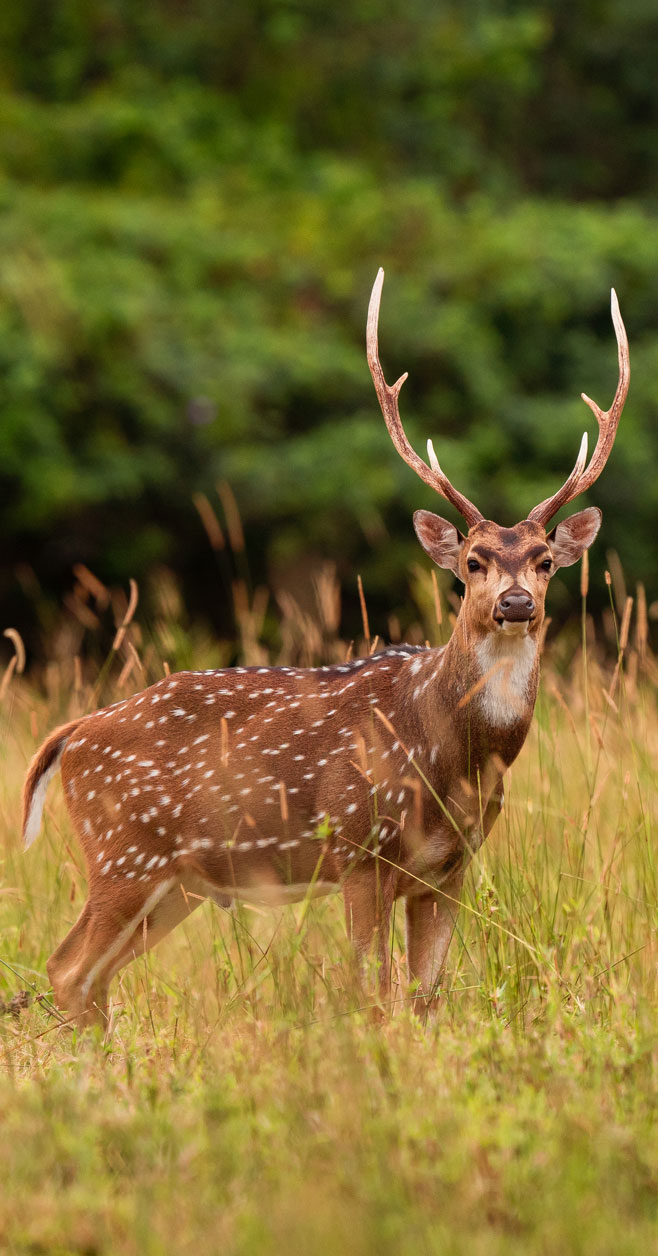
How DNA helps us understand the origins and genetics of sambar deer in Australia and New Zealand
Sambar deer are a familiar and important species to many Australian hunters, land managers and conservationists. They are admired for their size, resilience and adaptability, yet they are also at the centre of ongoing debate because of their environmental, economic and social impacts. Adding another layer of complexity, sambar deer are considered Vulnerable in their native range across parts of Asia, while thriving – and spreading – in Australia and New Zealand.
A recently published scientific study examined the genetic makeup of sambar deer in Australia and New Zealand to answer some long-standing questions: Where did our sambar deer originally come from? How genetically diverse are they? Do different regions hold distinct populations, or is it all one big, connected herd? And what does all this mean for management, hunting and conservation?
At first glance, genetics might seem far removed from day-to-day deer management. But DNA can tell us things that are impossible to see just by looking at animals in the bush.
Genetic studies can help answer questions such as:
These answers are critical for two very different reasons.
First, sambar deer were introduced into Australia and New Zealand, and they remain subject to controversial management plans. Managers need to know whether local control efforts are likely to work, or whether new deer will simply move back in from surrounding areas.
Second, sambar deer are declining in their native range due to habitat loss and overhunting. There is growing international discussion about whether introduced populations could act as ‘genetic reservoirs’ – a source of animals or genes that could one day help rescue native populations.
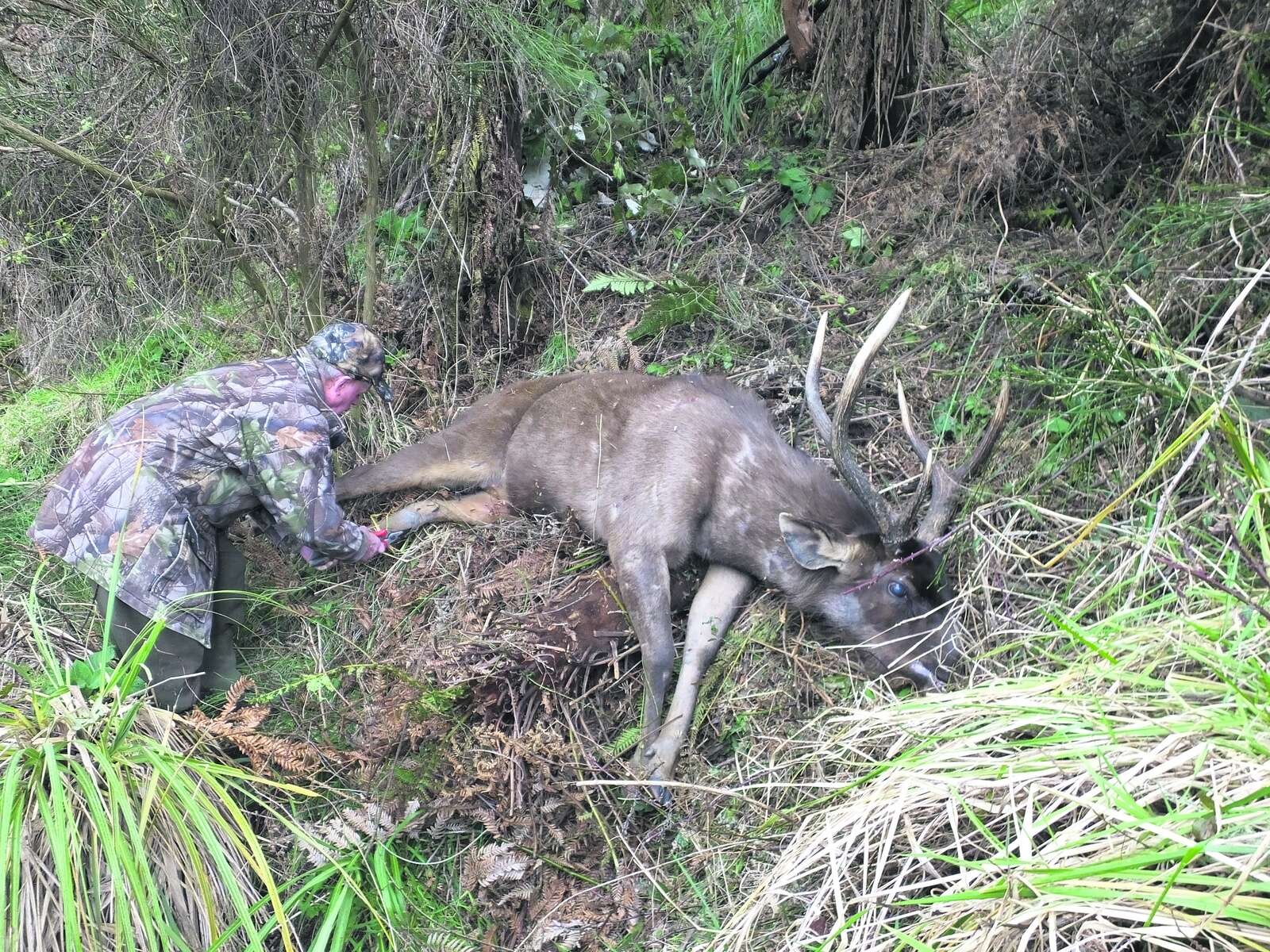
To explore these issues, researchers analysed DNA from sambar deer harvested by recreational hunters and management programs across Australia and New Zealand.
Mitochondrial DNA (often shortened to mtDNA) is passed down from mother to offspring. It changes slowly over time and is useful for tracking ancestry and origins. You can think of it as a family surname that follows the female line.
A haplotype is simply a distinct version of this DNA sequence. If all animals share the same haplotype, it suggests they all descended from a very small number of founding females.
Nuclear DNA comes from both parents and gives a much broader picture of genetic diversity and mixing.
In this study, researchers used microsatellites. These are short, repeating sections of DNA that vary between individuals. They are excellent for:
Genetic diversity is essentially the variety of genetic options within a population. Higher diversity generally means better resilience to disease, environmental change and other pressures.
Populations founded by only a few animals usually lose diversity, at least initially. Whether that loss matters depends on how much diversity remains and how the population grows afterwards.
Historical records suggest that sambar deer were imported into Australia and New Zealand in the mid-to-late 1800s, but documentation is incomplete and sometimes contradictory.
By comparing the DNA of Australian and New Zealand sambar deer with samples from across the species’ native range, the researchers were able to clarify their origins.
Both Australian and New Zealand sambar deer are genetically closer to animals from India and Sri Lanka than to sambar deer from South-East Asia.
This is important because sambar deer across Asia are not all the same. There are big genetic differences between western populations (India and Sri Lanka) and eastern populations (such as Thailand, Malaysia and Indonesia).
The study found:
In simple terms, Australia and New Zealand did not get their sambar deer from the same place – and neither came from further east in Asia.
One of the most eye-catching results of the study was that:
This strongly supports historical accounts that both populations were founded by very small numbers of animals, possibly just a single breeding female in each case.
Despite this extremely narrow starting point, both populations have expanded dramatically in range and numbers.
When the researchers looked at nuclear DNA (using microsatellites), they found that:
This pattern is exactly what you would expect from a classic ‘founder effect’:
Importantly, although overall diversity is reduced, both Australia and New Zealand populations contain unique genetic variants not seen elsewhere.
This means they are not genetically ‘empty’ populations – they still carry potentially valuable genetic information.
Are there different sambar populations within Australia?
From a management perspective, this may be the most important question. If sambar deer in Victoria, New South Wales and the ACT formed separate populations with limited movement between them, then localised control might be effective? But if deer are constantly moving and breeding across the landscape, control becomes far more challenging.
What the genetics showed
Across the large, continuous sambar range in south-eastern Australia, the study found:
In plain English, this means that sambar deer across this region behave like one big, connected population.
There are no obvious genetic barriers preventing deer from moving and breeding over hundreds of kilometres.
Why is there so much mixing?
Several factors likely explain this result:
There simply has not been enough time or enough barriers for distinct genetic populations to form.
Because deer move freely across the landscape, removing animals from a local area is unlikely to provide lasting results unless:
In rugged alpine and forest environments, large-scale fencing is usually impractical and extremely expensive.
Eradication is not realistic
The genetic evidence supports what managers already suspect: eradication of sambar deer from mainland south-eastern Australia is not feasible with current tools.
Management efforts are therefore likely to remain focused on:
Could Australian and New Zealand sambar help save the species overseas?
This is where the story takes an unexpected turn.
Although sambar deer may be controversial here, they are declining in much of their native range. In theory, introduced populations could help by:
The study suggests that:
However, the authors are clear that genetics alone cannot solve the problem. If habitat loss and overhunting continue in Asia, moving animals back will achieve little.
There are also risks, including disease transfer and hybridisation with other deer species.
This research does not argue that sambar deer should be protected or promoted in Australia. Nor does it downplay their impacts.
Instead, it provides clarity.
It shows that:
At the same time, it highlights a broader reality of modern wildlife management: species can be a conservation priority in one place yet not in another.
Understanding that complexity – and grounding decisions in solid science – is essential if we are to manage sambar deer responsibly, both here and overseas.
Further Reading
Readers who would like to explore the full scientific study behind this article can find it here:
Rollins, L.A., Lees, D., Woolnough, A.P., West, A.J., Perry, M. & Forsyth, D.M. (2023). Origins and population genetics of sambar deer (Cervus unicolor) introduced to Australia and New Zealand. Wildlife Research, 50(8–9), 716–727.
https://doi.org/10.1071/WR22120
WIN TIKKA T3X LITE + BURRIS SCOPE
With firearms reforms actively underway across Australia, representation for deer hunters matters more than ever.
Join the Australian Deer Association during the campaign period and support experienced representation for deer hunting.
One new or returning member will be drawn to win a Tikka T3X Lite Stainless with a Burris scope.
Membership Benefits Include:
✓ Advocacy - Real Wins on the Ground
✓ Firearm & Public Liability Insurance
✓ Protect Public Land Hunting
✓ Education & Community
Proudly supporting the Australian Deer Association